


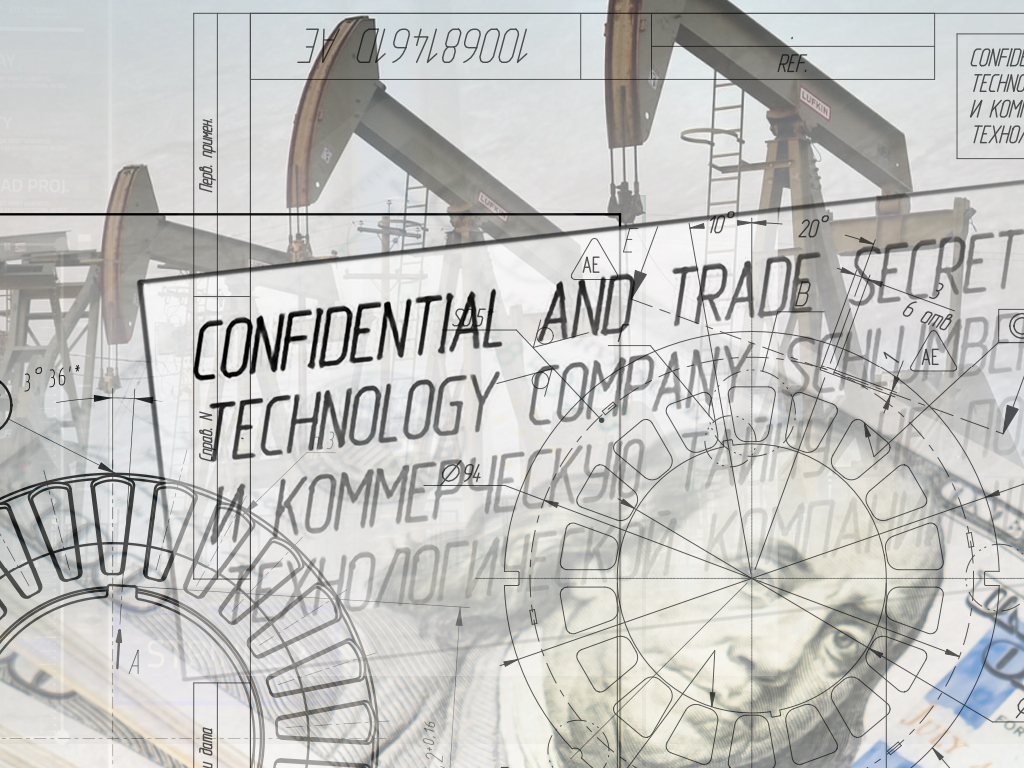
Dallas has obtained exclusive documents confirming that a major Western company continues to facilitate the manufacturing of oil production equipment in Russia despite international sanctions. The documents involve technology owned by global giant SLB (formerly Schlumberger), which has publicly stated that it exited the Russian market. The company did not respond to our request for comment. Given this lack of response, we are publishing all the materials provided by our Russian source, along with our analysis — in part informed by the corporation’s silence.
SLB (formerly Schlumberger), a global leader in the oilfield services industry, is preparing to celebrate its 100th anniversary in 2026.
Founded in France, the company has long been among the dominant players in the global energy sector. As of 2022, it ranked 349th on the Fortune Global 500 list, with assets approaching US$50 billion. Today, SLB is one of the largest energy groups operating in the United States, with its headquarters based in Houston, Texas.
The company operates through a complex corporate structure that includes dozens of subsidiaries across multiple continents. Russia is among the countries where SLB has maintained a significant presence. Despite ongoing international sanctions, SLB’s Russian division generated $1.4 billion in revenue in 2024 — approximately 4% of the company’s total annual revenue.
While this share may seem relatively modest for a corporation of SLB’s scale, the Russian market continues to benefit from access to its advanced oilfield technologies and high-quality servicing of wells and equipment.
In January 2025, SLB came under renewed scrutiny following the introduction of a fresh package of sanctions by the Biden administration targeting Russia’s oil and gas industry. These measures, introduced on January 10, 2025, prohibit U.S. citizens — regardless of their geographic location — from providing oilfield services, directly or indirectly, to any individual or entity located in the Russian Federation. The legal implications of these restrictions significantly increased the risk for U.S.-based companies operating in Russia, and SLB was widely expected to suspend or terminate its involvement in the region.
This investigation focuses on the indirect mechanisms that may allow such operations to continue — despite the legal and regulatory barriers in place.
“Schlumberger Technology Company”
In March 2003, Schlumberger Technology Company was registered in Tyumen, Russia. According to the Russian corporate registry, the company was founded by two Dutch legal entities:
- SCHLUMBERGER B.V., a private limited liability company, which holds a 99.9% stake (equivalent to 18.7 billion rubles of the company’s authorized capital);
- SCHLUMBERGER INVESTMENT SERVICES B.V., which holds the remaining 0.1% (valued at 17.9 million rubles).
As stated on the website of the Tyumen Chamber of Commerce and Industry, “Schlumberger Technology Company is a Russian company established by the international firm Schlumberger to implement Russia’s largest integrated investment project, which includes the construction of two plants and a training center.”
In essence, Schlumberger Technology Company operates as a subsidiary — or more precisely, a second-tier subsidiary — of SLB.
EXITED THE RUSSIAN MARKET?
In March 2022, SLB publicly announced that it would suspend all new investments in the Russian market in response to international sanctions. The most recent update on the official Russian Schlumberger website (slb.ru), dated March 22, 2022, includes a statement from Chief Executive Officer Olivier Le Peuch, issued from the company’s Houston headquarters, regarding the suspension of operations in Russia.
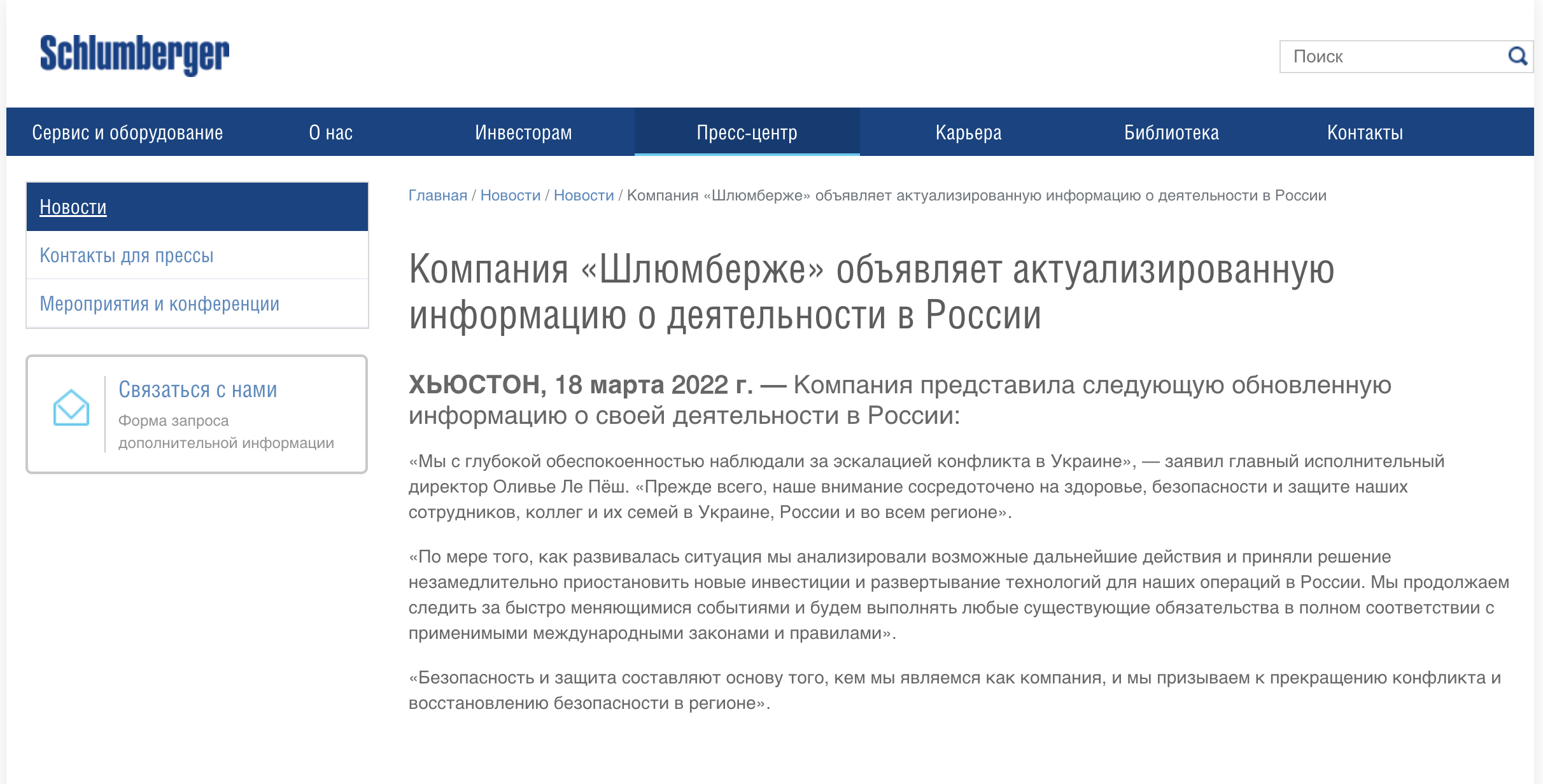
Olivier Le Peuch’s official statement
Despite these announcements, the Russian division has continued to operate — both directly and through intermediary structures.
In October 2022, the company underwent a global rebranding, officially changing its name from Schlumberger to SLB. However, the Russian subsidiary retained the name Schlumberger Technology Company. While this may appear as an attempt to distance the local entity from the parent corporation, documents reviewed by our team indicate an ongoing connection.
For instance, among the obtained materials is a bilingual contract — written in both Russian and English — which may suggest that Schlumberger Technology Company continues to be integrated into SLB’s global legal and corporate framework.
Additionally, the Russian entity maintains a web presence under the domain slb.ru, identical to that of the global brand, and its employees continue to use corporate email addresses ending in @slb.com.
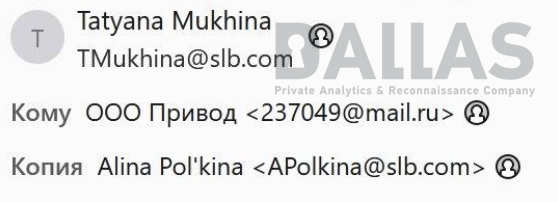
Schlumberger employees’ email addresses have the common domain @slb.com.
Our conclusions are based on documents and correspondence dated 2025. The ongoing use of @slb.com email addresses contradicts public statements by the company regarding a gradual winding down of its Russian operations in response to expanded sanctions. For example, in July 2023, SLB announced a complete halt of product and technology shipments to Russia from all its global business units.
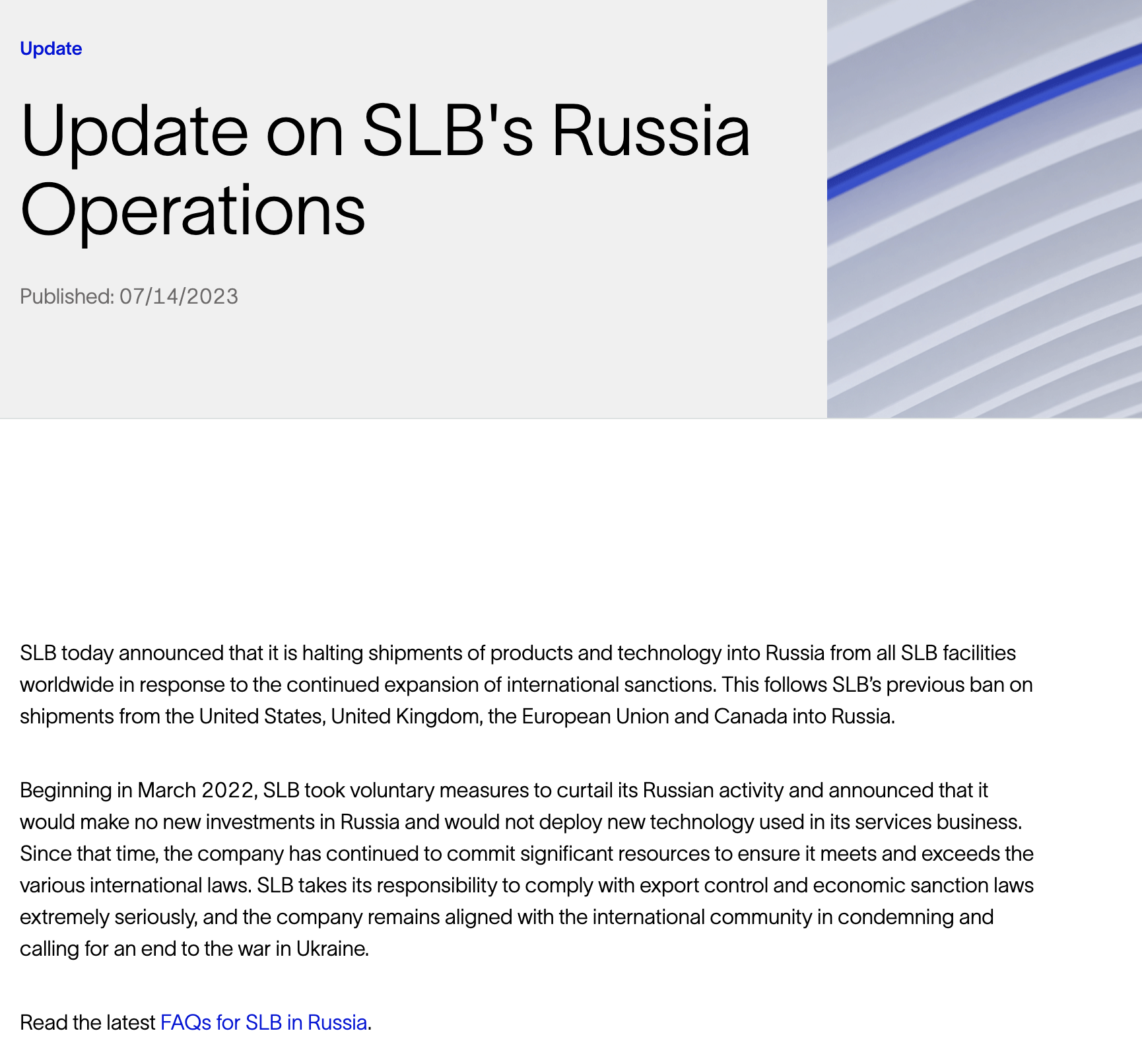
Nevertheless, available evidence paints a different picture. On one hand, SLB has publicly committed to scaling back its presence in Russia. On the other hand, the company’s own website, including the FAQs for SLB in Russia section, confirms continued activity in the country. In fact, rather than reducing operations, SLB appears to have expanded its presence in Russia since the start of the full-scale invasion of Ukraine.
According to Reuters, SLB capitalized on the exit of major competitors — Halliburton Co. and Baker Hughes Co. — which created an opportunity to further strengthen its position in the Russian market.
CONFIDENTIAL AND NOT FOR DISCLOSURE
On February 11, 2025 — just one month after the United States introduced a new package of sanctions targeting Russia’s oil sector — Schlumberger Technology Company (Russia) initiated a search for a contractor to manufacture a number of specialized components for its equipment, based on proprietary designs. One of the companies under consideration was the PROTON plant, located in Vladimir, Russia.
Among the documents obtained by Dallas is a non-disclosure agreement (NDA) outlining the procedures and methods for the transfer of confidential information from Schlumberger to PROTON. This information included materials designated as commercial secrets.
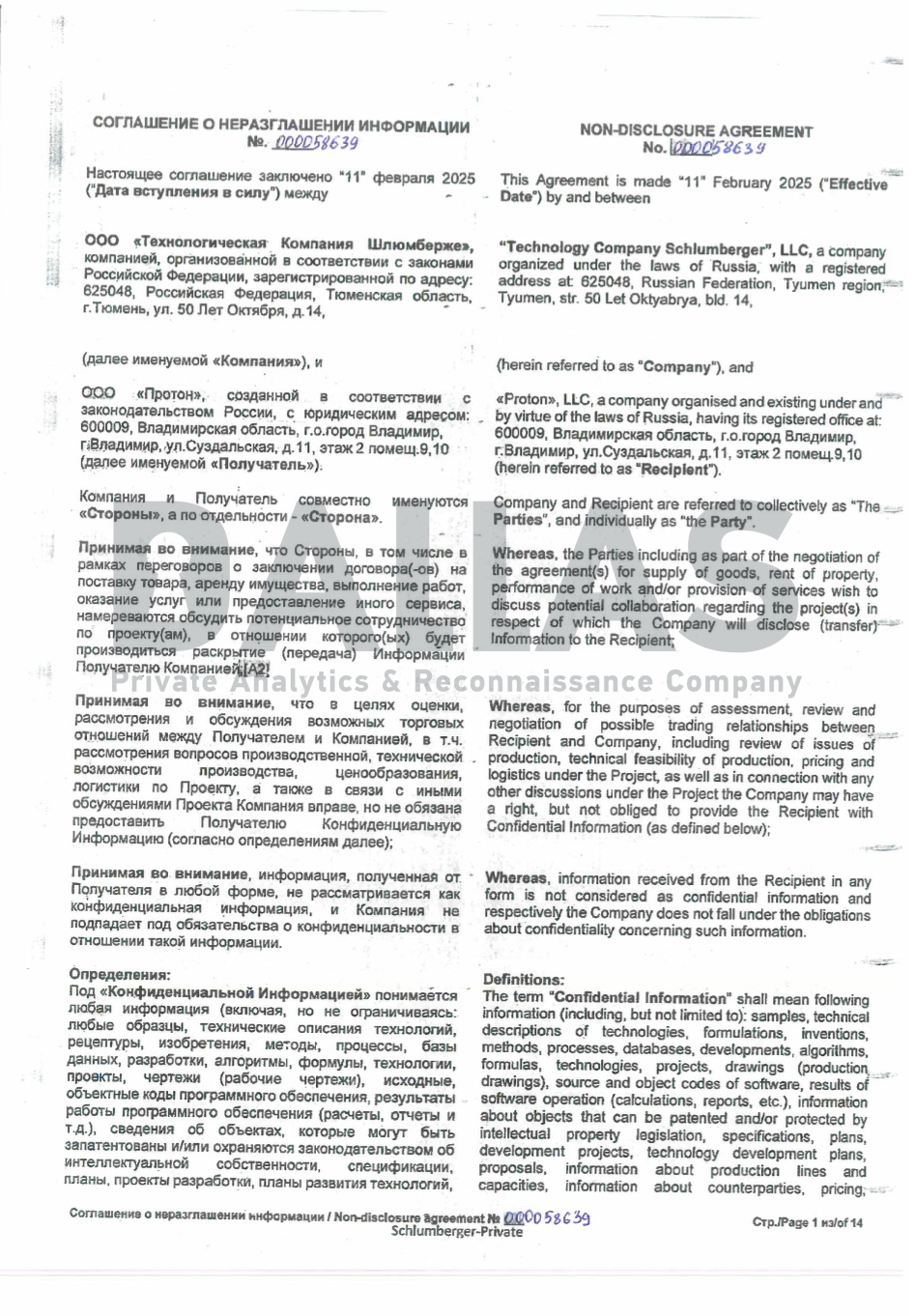
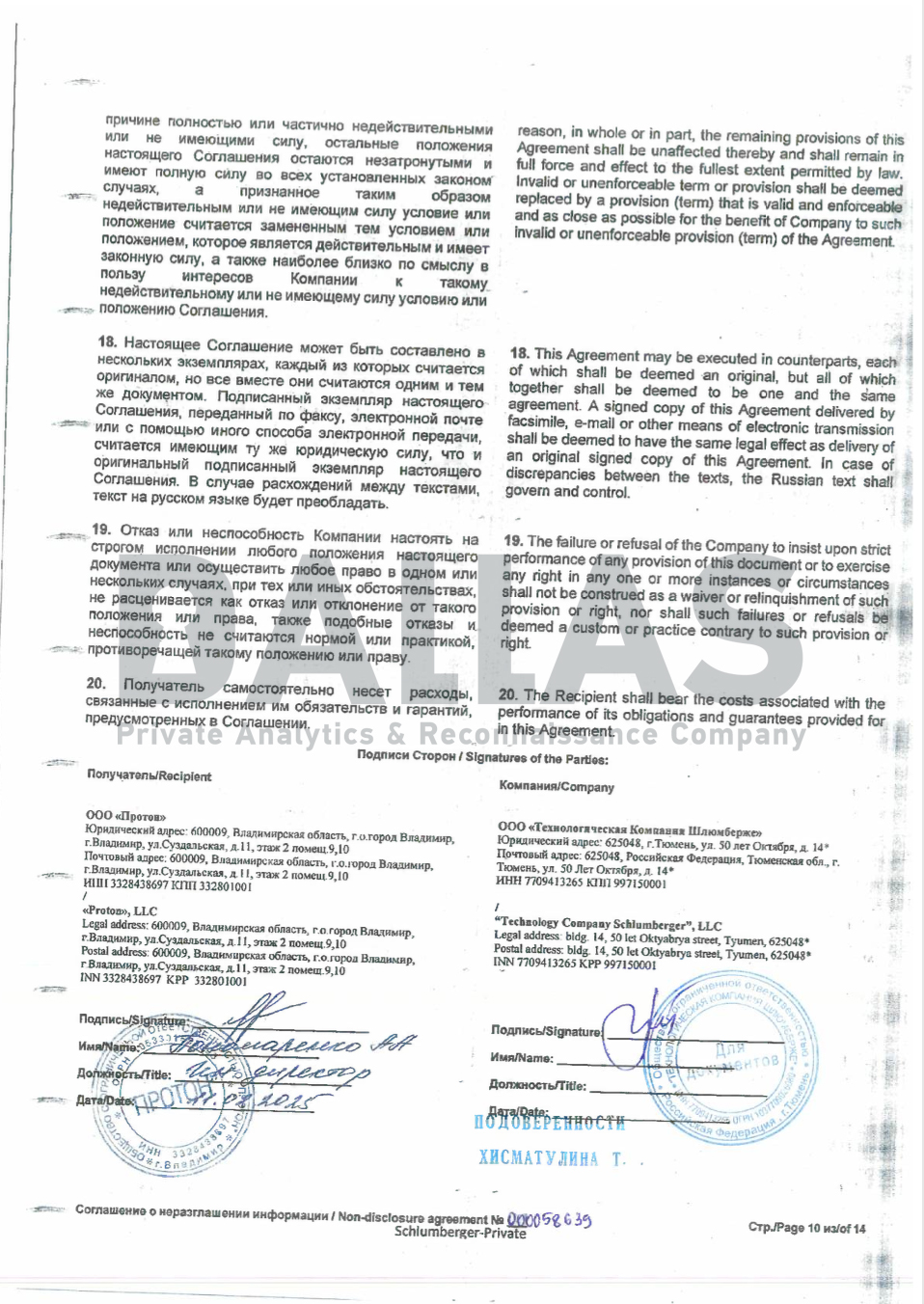
Non-disclosure agreement between Schlumberger Technology Company and LLC PROTON
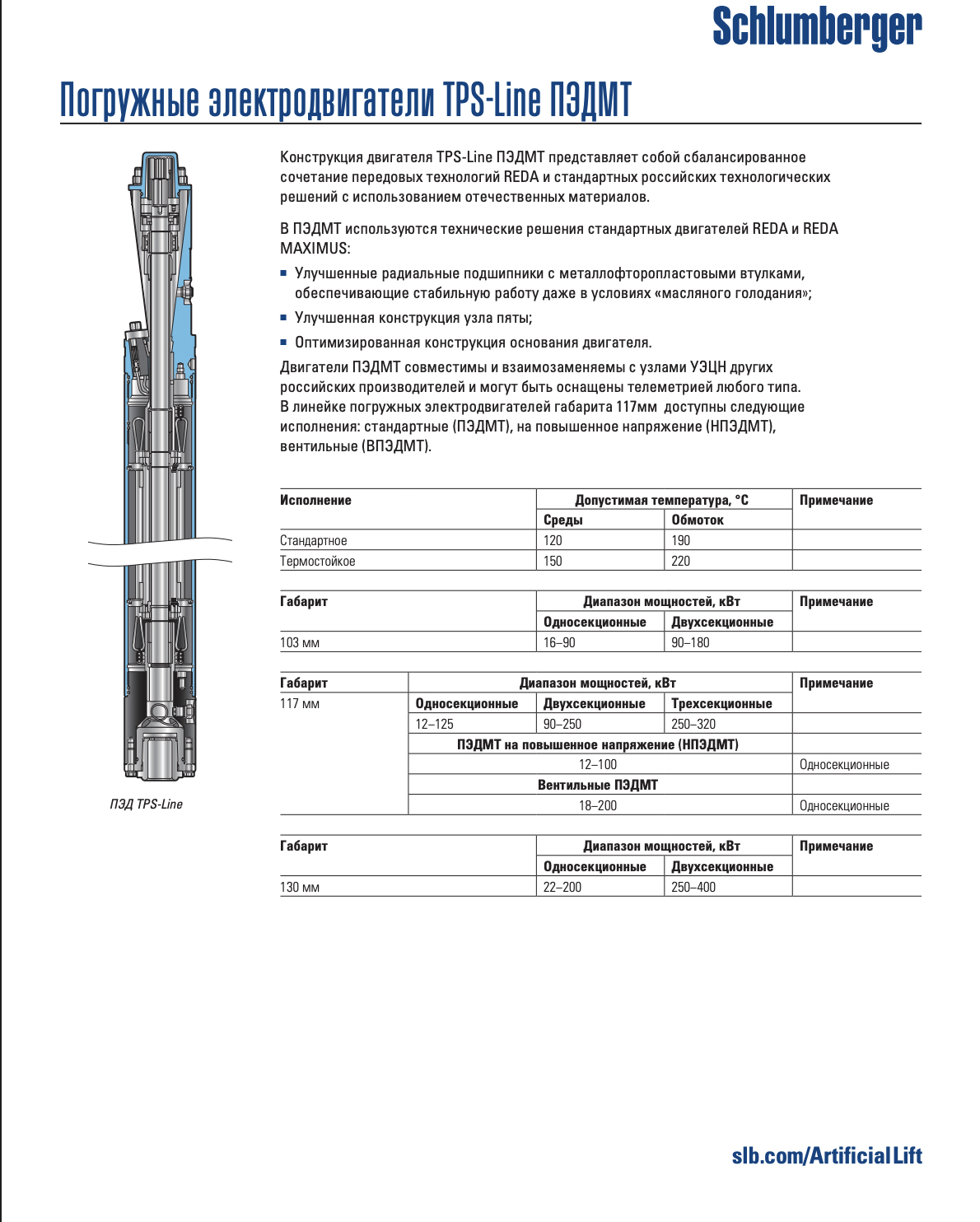
Six days later, on February 17, 2025, the parties signed a transfer and acceptance certificate. Its content indicates that Schlumberger provided PROTON with a package of engineering drawings required for the production of a rotor and stator for a 117 mm submersible electric motor (PEDMT-117). These electric motors are key components of electric submersible pumps (ESP) used in oil extraction. They are designed to pump reservoir fluids — which may contain oil, water, gas, and solid particles — from deep oil wells.
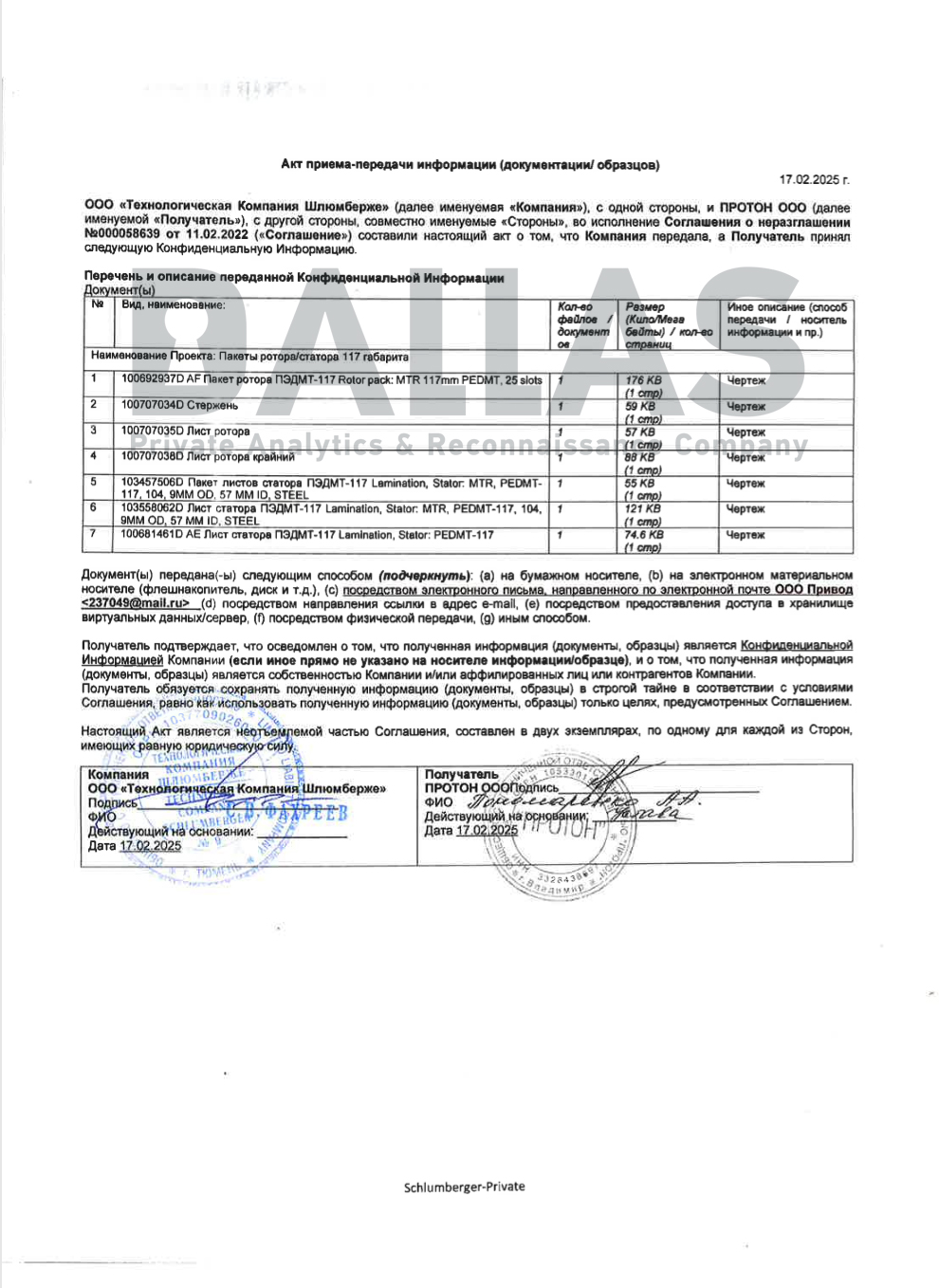
The transfer and acceptance certificate signed by the parties
Specifications of submersible electric motors manufactured by Schlumberger from the official product catalog on the Russian company’s website slb.ru
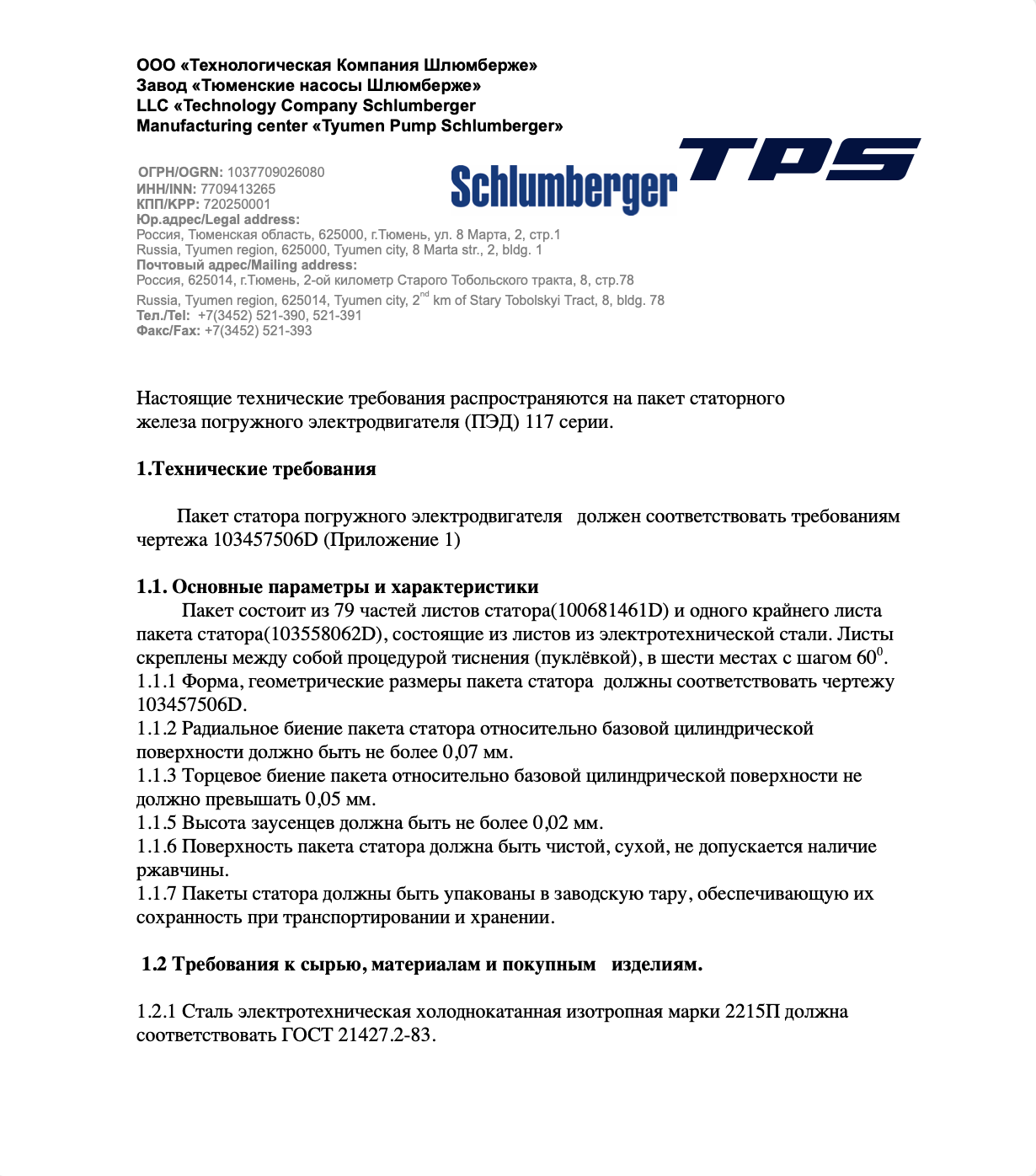
The files in Dallas’ possession include both technical specifications and detailed schematics. The nature of the documentation confirms that Schlumberger Technology Company contracts third-party manufacturers to produce certain equipment. In this instance, the transfer of proprietary technical drawings to a domestic contractor appears to have occurred in violation of existing sanctions.
In effect, Western technology owned by SLB was passed to an intermediary in Russia. As the intellectual property of a subsidiary remains the legal asset of the parent corporation, this transfer raises significant compliance and sanctions-related concerns.
The production and distribution chain appears to be as follows:
- Schlumberger Technology Company (Russia) received the manufactured rotors and stators from local third-party contractors;
- The components were assembled into oil production equipment at a factory in Tyumen;
- The completed equipment was then deployed to a Russian oilfield.
This equipment remains in operation, maintained by personnel from the Russian division of Schlumberger. It directly contributes to Russia’s oil revenues that continue to fund the country’s military and geopolitical actions, despite ongoing international sanctions.
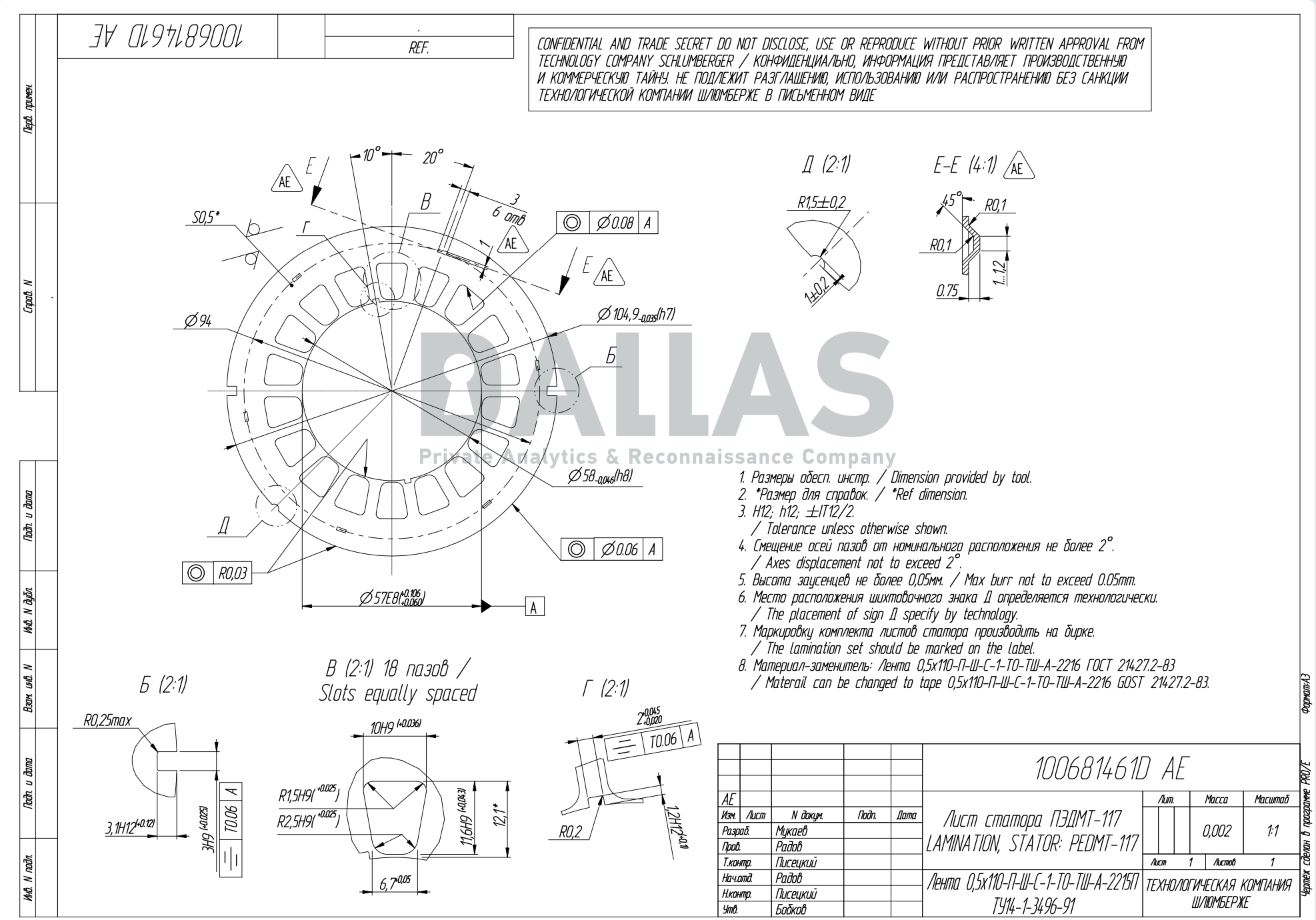
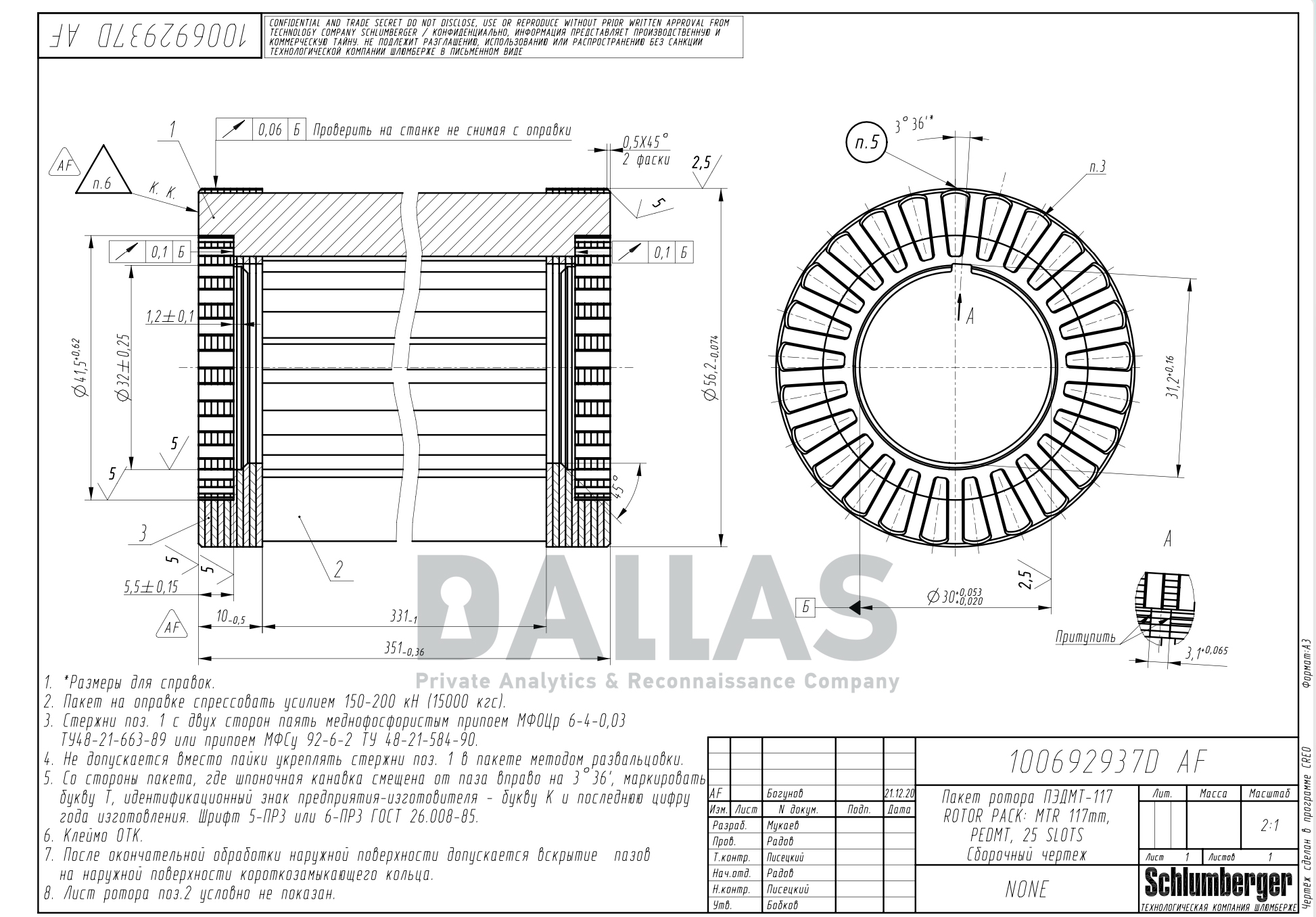
Examples of drawings and technical specifications with logos and details of Schlumberger and the Tyumen Pumps Schlumberger plant.
Questions without answers
We submitted a formal inquiry to SLB regarding its operations in Russia. As of publication, the company has not provided a response.
Below are the questions we sought to ask:
- What is the legal and operational status of the Russian limited liability company “Technological Company Schlumberger” within the SLB corporate structure?
- Does SLB retain any capacity to supervise, control, or influence the activities of this Russian subsidiary?
- Who holds the intellectual property rights to the engineering documentation related to the PEDMT-117 electric motor—the Russian entity or SLB? And does the Russian company have the legal authority to transfer or share this intellectual property with third parties?
- Are foreign-made components or technologies being used by the Russian company in the manufacturing of oil production equipment?
In the absence of a response, it is reasonable to infer that SLB is aware of the activities of its Russian counterpart and has chosen not to address the issue publicly. This silence calls into question the company’s previously stated commitment to international sanctions.
Technologies used in oil extraction remain a critical component of Russia’s energy sector, the revenues from which continue to support its military operations. As such, sanctions enforcement should extend beyond the so-called “shadow fleet” or secondary restrictions on buyers. There must also be greater scrutiny of how oilfield technologies continue to enter and circulate within the Russian market.
On its official website, SLB affirms that it “strongly condemns Russia’s actions against Ukraine” and emphasizes that its priorities lie in ensuring the safety of employees, technologies, and assets across the region. However, despite these statements, operations in Russia appear to be ongoing through local affiliates and intermediaries.
Today, as American and European partners debate further steps to pressure Russia, US leader Donald Trump says that sanctions will not have the desired effect if Europe continues to buy oil and gas from Russia. It is impossible to disagree with this statement. It is also impossible to refute the fact that a company headquartered in Texas continues to support the Russian oil production technology market. Without Western maintenance, Russian equipment will quickly turn into scrap metal.
Without Western technological support and servicing, much of Russia’s oilfield infrastructure would face rapid degradation. If SLB’s condemnation of the Kremlin’s actions is genuine, a critical step would be to ensure that its technologies are no longer accessible to entities operating in Russia. That is the only way.