




For Kremlin’s war machine, oil revenues are the lifeblood. While Western capitals slap price caps and vessel blacklists on Russia’s oil tanker armada, a far less visible network of crewing firms ensures that ships sail on schedule, transponders blink off at sea, and crude slip through price-cap loopholes.
By manning vessels willing to reflag under dubious registries, hiring masters not asking questions about obscure routes, and funneling payrolls through sanctioned banks, these companies underpin the shadow fleet, enabling Russia to sustain wartime energy exports. To strangle this subterfuge, EU and US policymakers must target people, not just hulls – synchronizing enforcement, secondary sanctions, flag-state pressure, port-state controls, visa denials, and insurance de-risking.
Following our recent investigation into shadow fleet captains, Dallas now turns the spotlight on the Russian crewing ecosystem. Western governments already possess – or are rapidly developing – a powerful set of tools to disrupt these actors and their clients. This article maps such pain points and explains how governments can apply sustained pressure without compromising legitimate maritime trading.
Sovcomflot’s Unvanquished Crew
Russian shipping giant Sovcomflot (SCF) is not just any shipping company – it is a state-owned enterprise, making it an extension of the Russian government. SCF plays a pivotal role in delivering Russian crude oil and liquefied natural gas to global markets.
Since 2022, the company and its senior leadership have been hit with sweeping sanctions by the United States, European Union, United Kingdom, Canada, Australia, and New Zealand. These measures, introduced in response to Russia’s invasion of Ukraine, have targeted both SCF’s commercial operations and key executives. By sanctioning SCF, Western countries aimed to limit Russia’s ability to profit from global energy sales, especially under efforts to circumvent oil price caps and restrictions.
Such sustained pressure should have crippled the company’s operations. And yet, according to an internal fleet management update circulated to SCF’s shadow fleet captains, the restrictions have had only a limited effect – particularly on crewing. That internal assessment, shared in February 2025 after a new round of Ukrainian sanctions, struck a notably upbeat tone. This came despite a sweeping package of penalties imposed just weeks earlier, on January 10, 2025, as part of the outgoing Biden administration’s final push to tighten the screws on Moscow.
The Helplessness of Sanctions
Tellingly, the email from SCF’s crewing department boasted that the company’s leadership had been under Ukrainian sanctions for more than two years – yet continued to fly internationally without issue. In effect, it was a quiet admission: reputational penalties and blacklists alone have not disrupted business as usual.
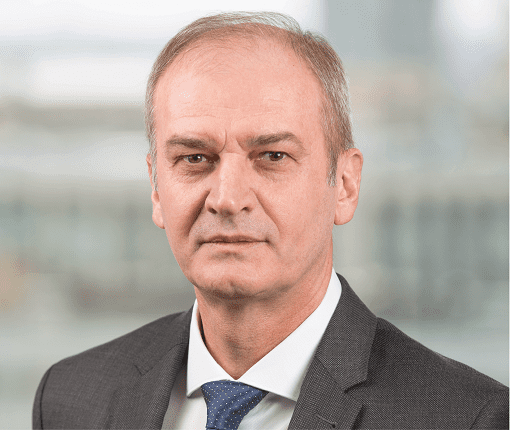
Chief Executive Officer of Public Joint Stock Company Sovcomflot Igor Tonkovidov
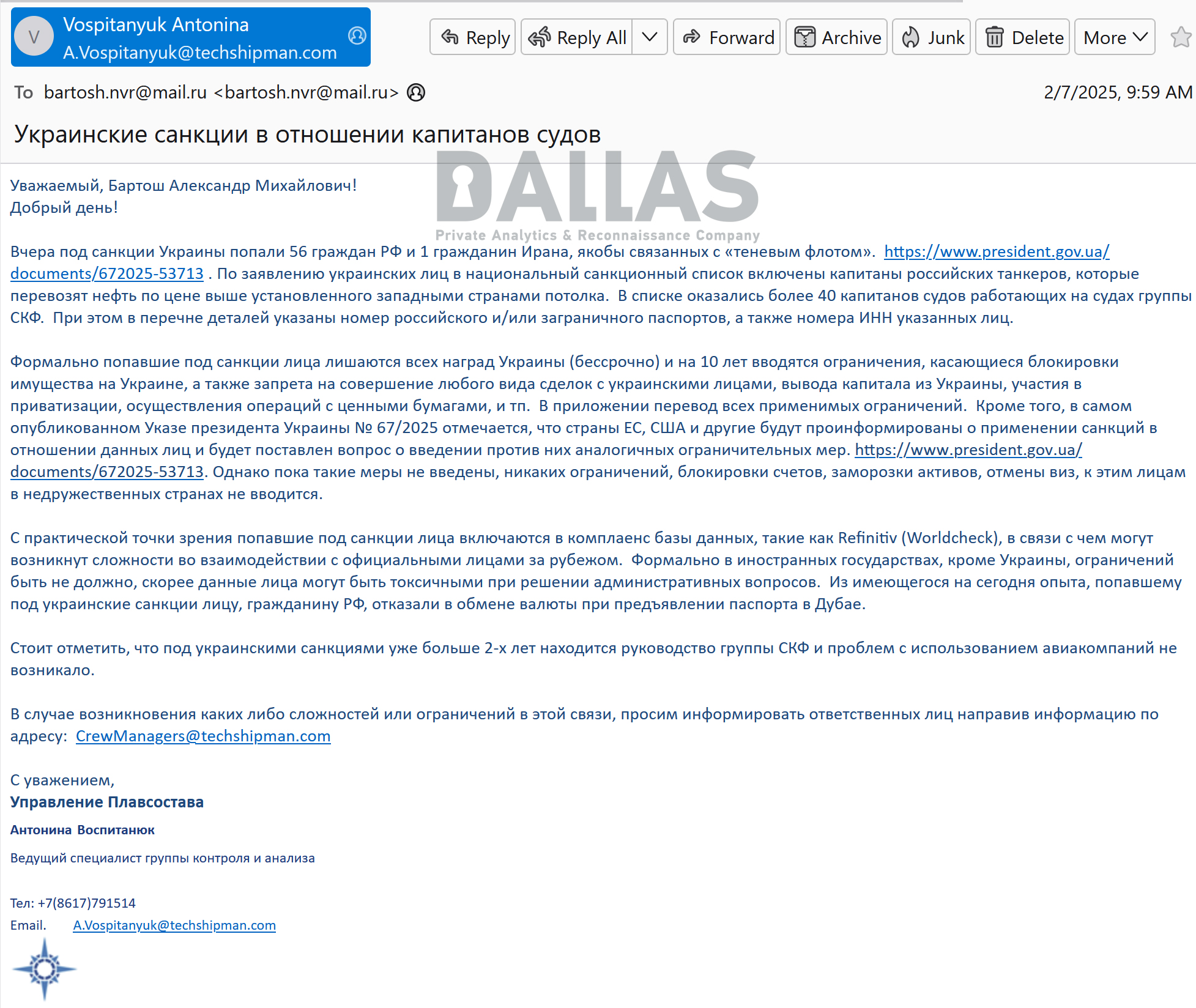
SCF’s email correspondents with oil tanker captain’s
Below is an English translation of the email sent to one of the captains – Alexander Bartosh – dated February 7, 2025. We’ve highlighted several key points:
From: Vospitanyuk Antonina
Email: [email protected]
To: [email protected]
Subject: Ukrainian Sanctions Against Ship Captains
Yesterday, Ukraine imposed sanctions on 56 citizens of the Russian Federation and 1 citizen of Iran, allegedly connected to the “shadow fleet.” https://www.president.gov.ua/documents/672025-53713
According to statements made by Ukrainian officials, the national sanctions list includes captains of Russian tankers transporting oil at prices above the cap established by Western countries. The list contains more than 40 ship captains working on vessels belonging to the SCF Group. The details provided in the list include Russian and/or foreign passport numbers, as well as the tax identification numbers (TINs) of the named individuals.
Formally, individuals under sanctions are permanently stripped of all Ukrainian awards and, for a period of 10 years, are subject to restrictions such as the freezing of property in Ukraine, a ban on conducting any kind of transactions with Ukrainian persons, restrictions on the withdrawal of capital from Ukraine, participation in privatization, carrying out transactions involving securities, and other similar activities. Attached is a translation of all applicable restrictions.
Furthermore, the published Presidential Decree of Ukraine No. 67/2025 states that the EU, USA, and other countries will be informed about the application of sanctions against these individuals, and the issue of introducing similar restrictive measures against them will be raised.
https://www.president.gov.ua/documents/672025-53713
However, until such measures are introduced, there are no restrictions, account freezes, asset freezes, or visa cancellations in unfriendly countries toward these individuals.
From a practical standpoint, sanctioned individuals are included in compliance databases such as Refinitiv (World-Check), which may result in difficulties when dealing with officials abroad. Formally, in countries other than Ukraine, there should be no restrictions, but these individuals may be viewed as toxic when handling administrative matters. From existing experience, one Russian citizen who came under Ukrainian sanctions was denied a currency exchange when presenting a passport in Dubai.
It is worth noting that the leadership of the SCF group has been under Ukrainian sanctions for over two years already, and there have been no issues with the use of airline services.
In case of any difficulties or restrictions arising in this context, we kindly ask you to inform the responsible parties by sending information to: [email protected]
Sincerely, Fleet Management
Antonina Vospitanyuk Lead Specialist, Control and Analysis Group
Phone: +7(8617)791514
Email: [email protected]
It’s worth noting that the email was sent from the domain techshipman.com, which differs from Sovcomflot’s official domain scf-group.com. While seemingly used for internal logistics and shipping workflows, Techshipman appears to operate as a communications channel formally disconnected from SCF – despite clear functional overlap.
Tellingly, its listed phone number is just one digit off from SCF’s official crewing office in Novorossiysk, Krasnodar Krai: +7 (8617) 79-1514 versus the official +7 (8617) 79-1513. The near-identical contact details underscore the casual sloppiness with which these operations obscure their ties to the Russian state. According to SCF’s own website, the Novorossiysk office handles crewing for large-capacity crude oil tankers, product carriers, and dry bulk vessels.
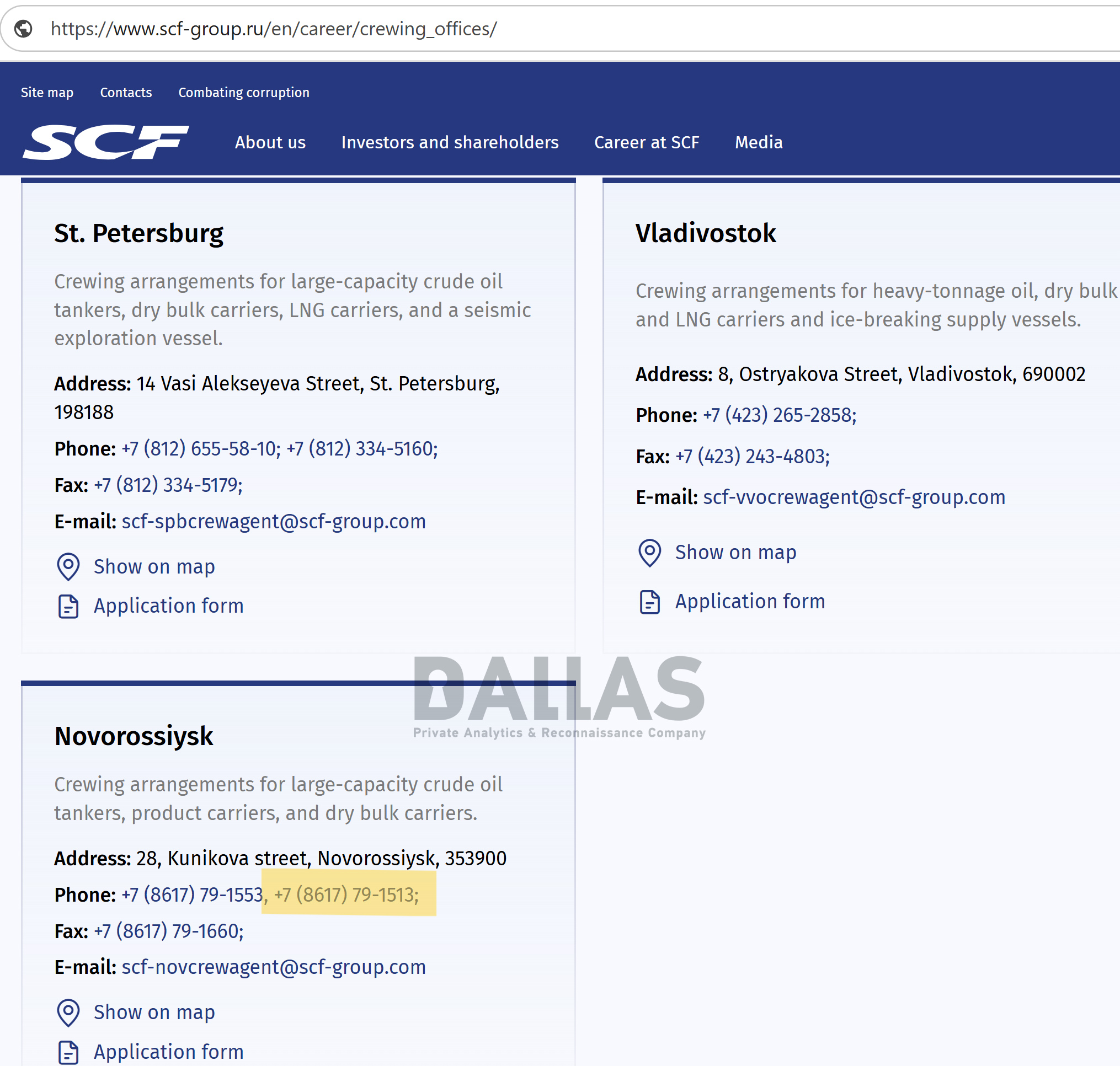
SCF’s official contact details
On top of that, in 2023, both phone numbers were listed as contacts for crew managers at SUN Ship Management’s Novorossiysk Subdivision – a Sovcomflot subsidiary.
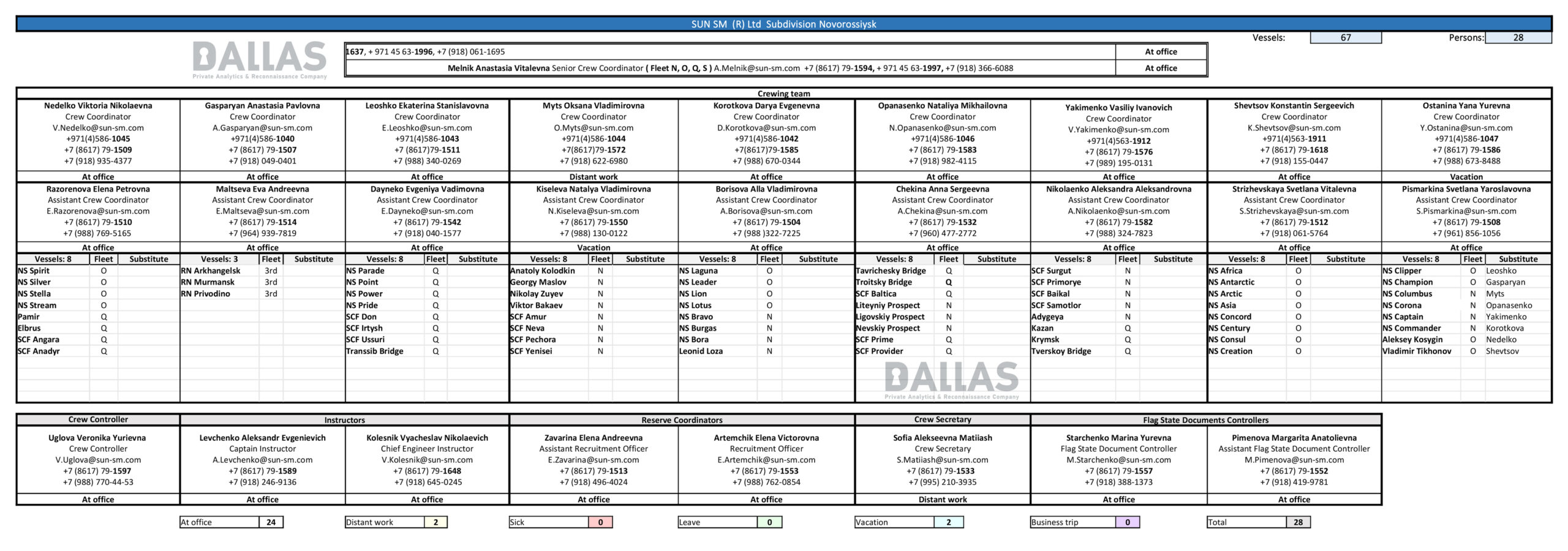
Novorossiysk Subdivision of SUN Ship Management
Compliance Databases as a Force Multiplier
What lessons emerge from Sovcomflot’s example? Most urgently, the process of imposing restrictive measures on shadow fleet crews should be faster and more coordinated. Commercial compliance and screening platforms must replicate official sanctions lists within hours – not days – and begin tagging personnel with reputational risk markers such as “shadow fleet master,” drawing on sources including regulatory filings, NGO databases, and investigative journalism.
The implications of such tagging would be far-reaching. A master’s appearance in global risk databases like World-Check – used by banks, insurers, and border agents worldwide – should make it difficult, if not impossible, to open foreign currency accounts, obtain Protection and Indemnity (P&I) insurance, or pass Schengen border checks. This deliberate “toxification” of shadow fleet personnel may not require universal government sanctions to generate significant disruption. When reputational risk becomes operational risk, the costs for enablers of sanctioned oil trade rise sharply.
Western governments should urgently move to align and cross-reference sanctions databases with available data on crews and crewing companies. At present, many shadow fleet captains and senior officers continue to enjoy high salaries, generous bonuses, and a comfortable, sometimes extravagant lifestyle – especially when compared to the modest existence of ordinary Russians outside Moscow’s elite bubble.
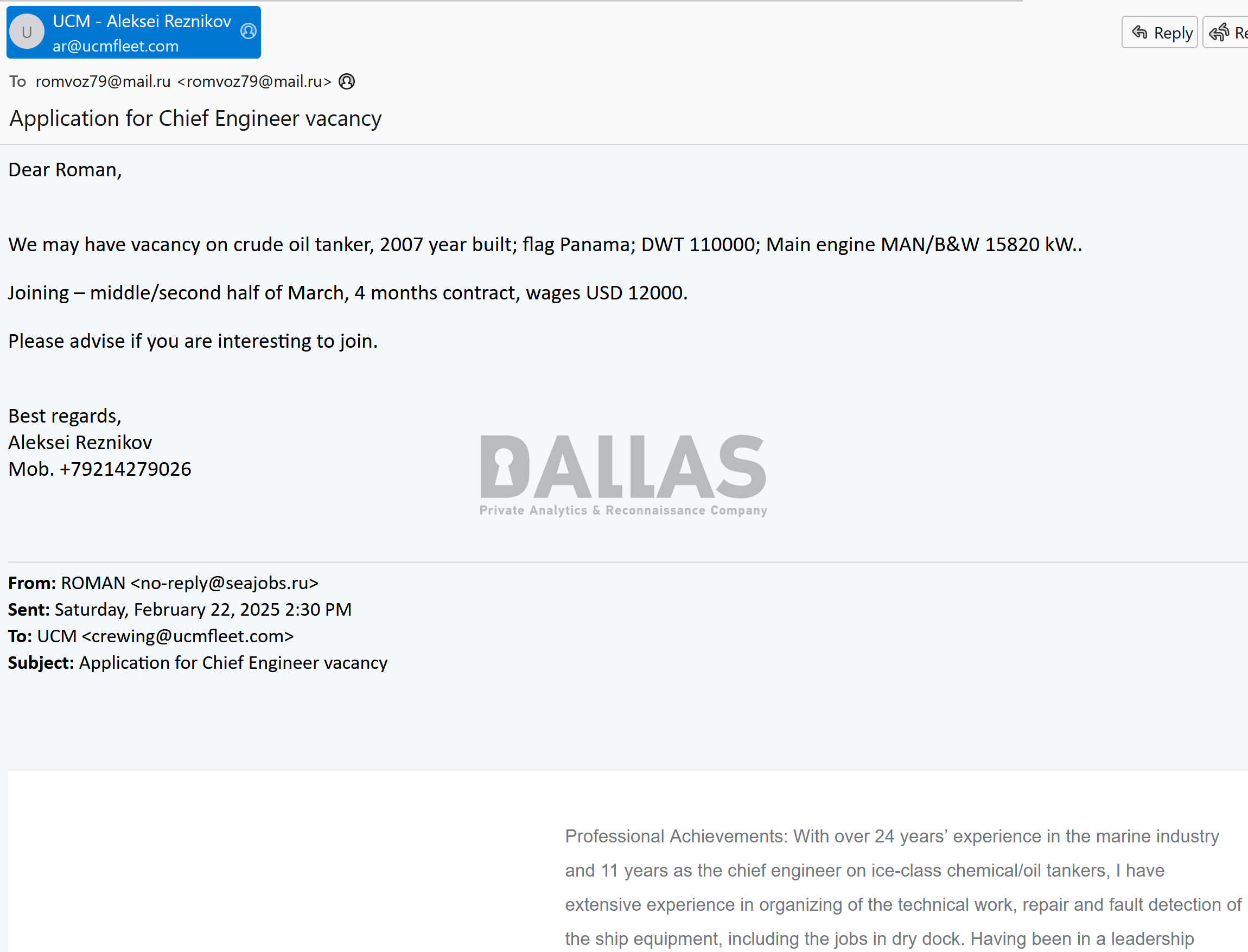
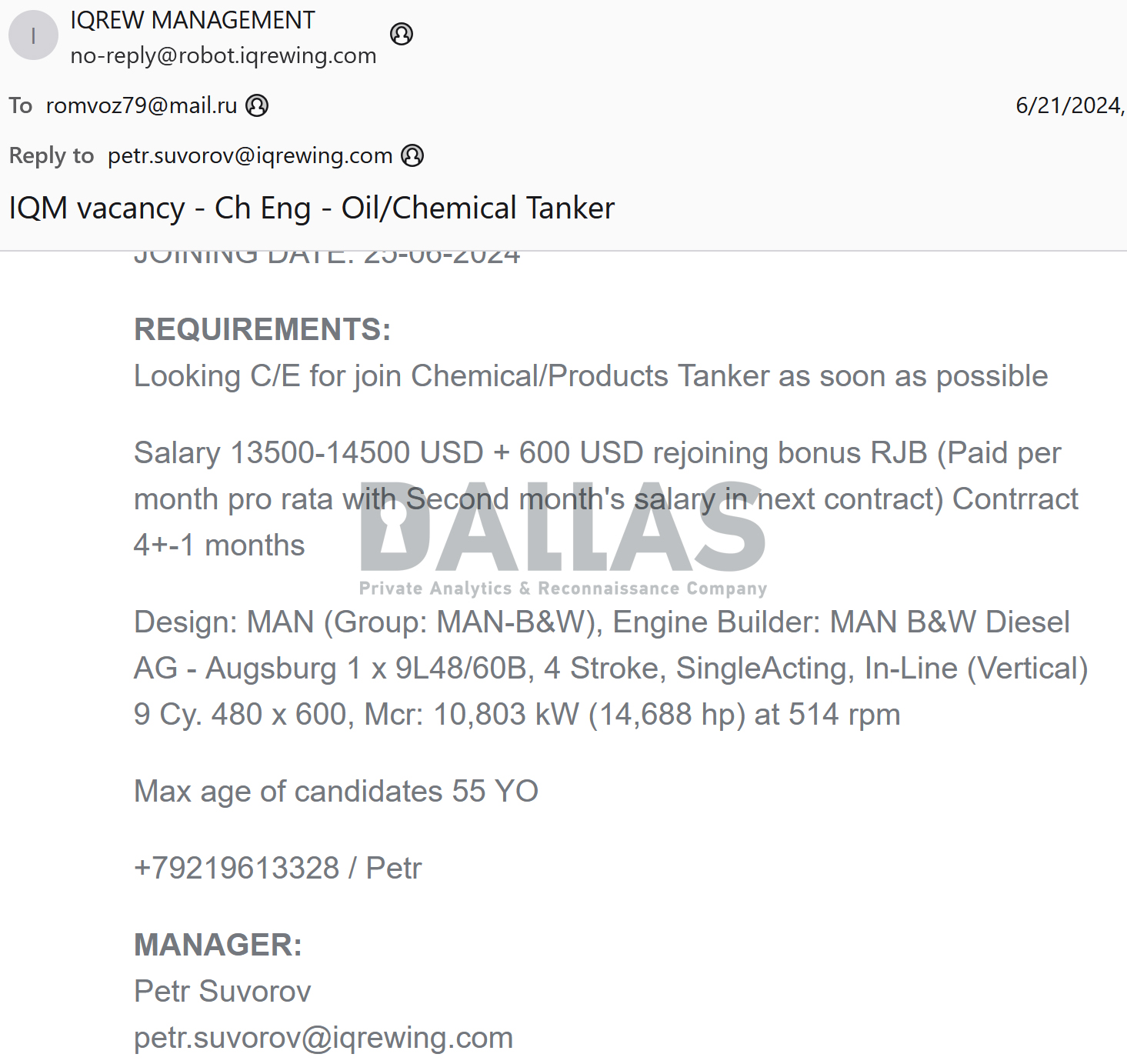
Examples of salary proposals for Chief Engineer vacancies.
Everyone Knows the Game
Captains are fully aware of what crewing companies seek and how to position themselves accordingly. Take Alexander Bartosh, for example – he emphasizes his experience in ship-to-ship (STS) operations, a core tactic employed by the shadow fleet to circumvent international sanctions on Russian crude. These maneuvers help conceal the origin, destination, and ownership of cargoes, enabling illicit trade despite embargoes and price caps.
To obscure cargo provenance, crude or refined oil is often transferred mid-sea, frequently in international waters or jurisdictions with lax enforcement. After an STS transfer, the receiving vessel typically declares a different origin – such as the UAE, Malaysia, or Turkey – making the cargo’s true trail difficult to trace.
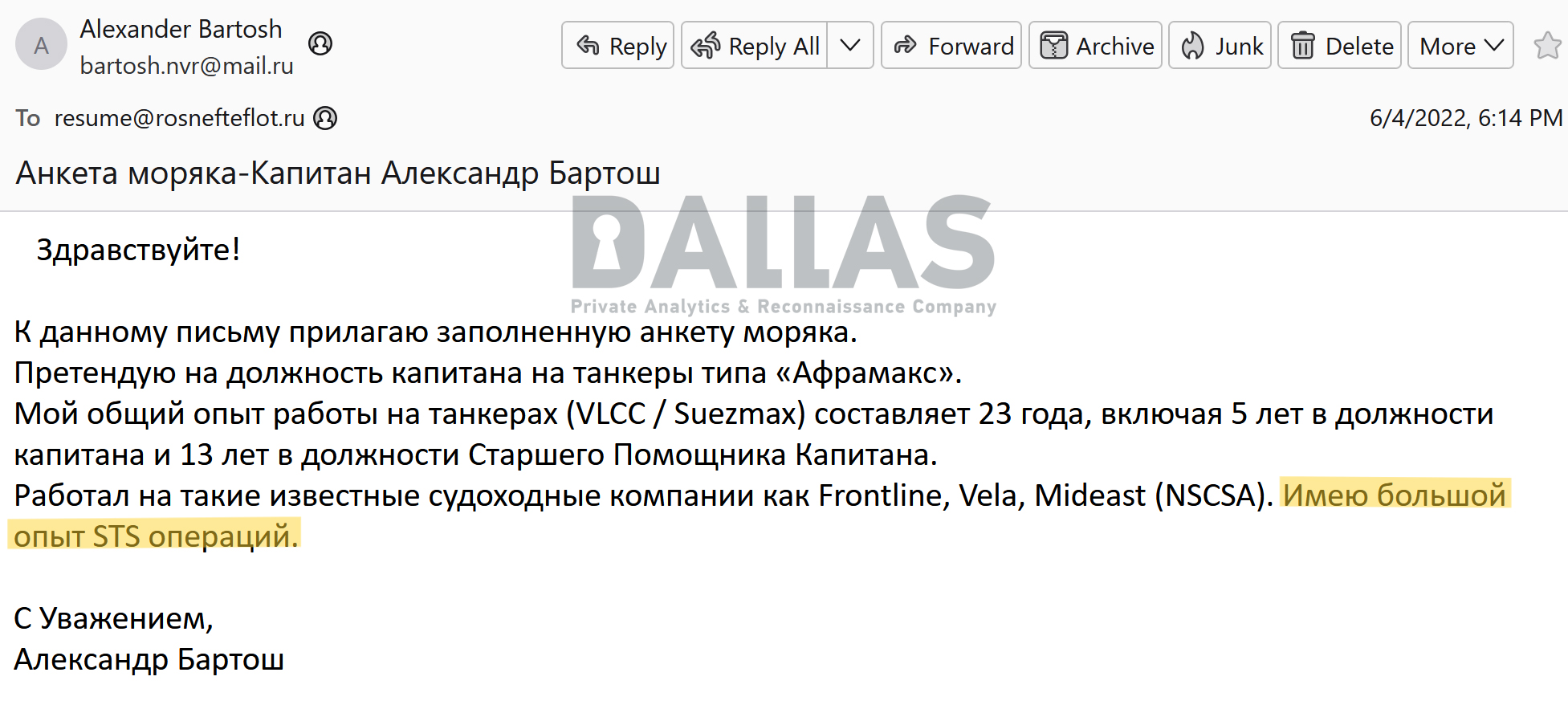
Captain Bartosh highlights his extensive STS operations experience to Rosnefteflot crewing company
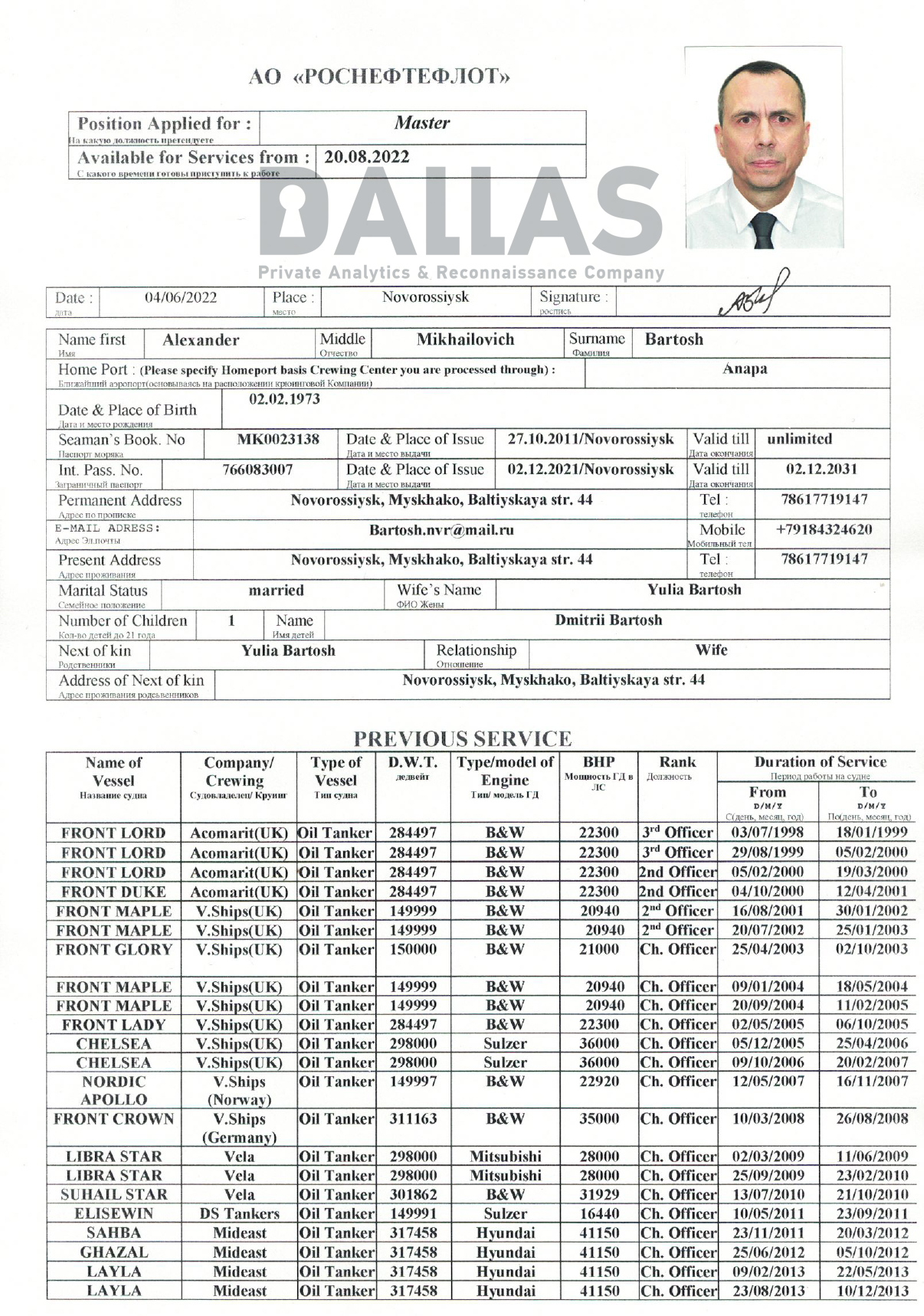
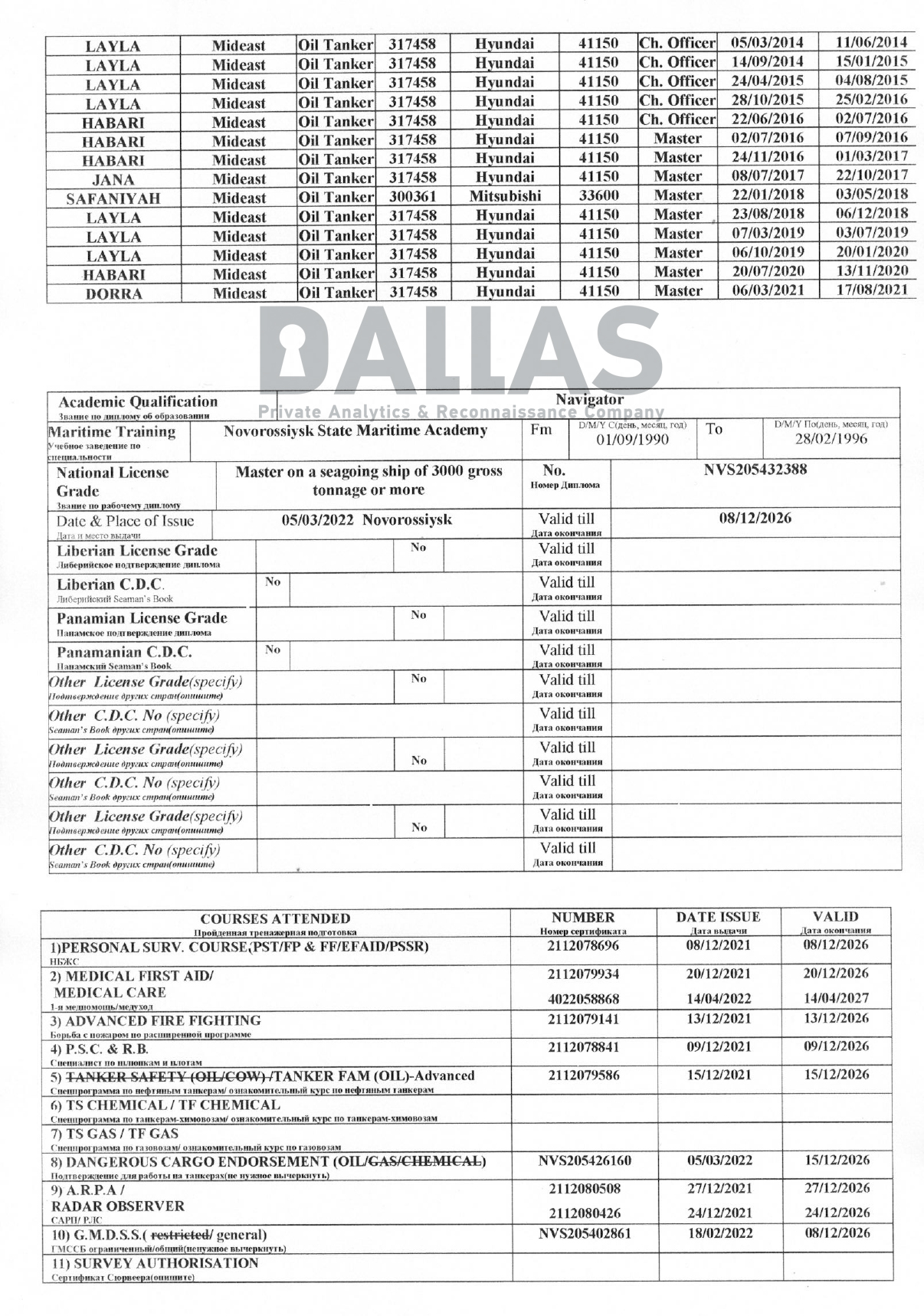
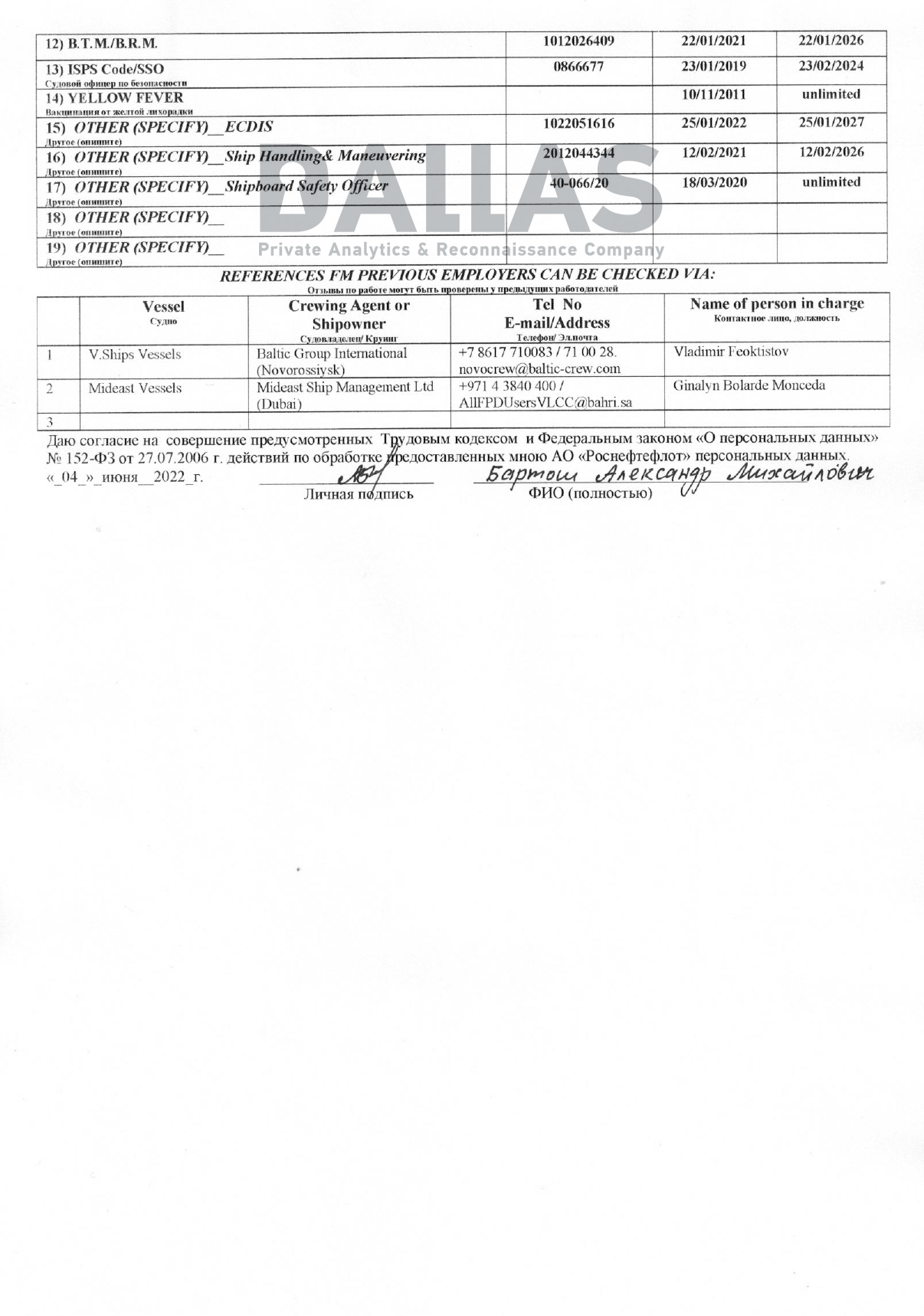
Bartosh’s Crew Application Documents
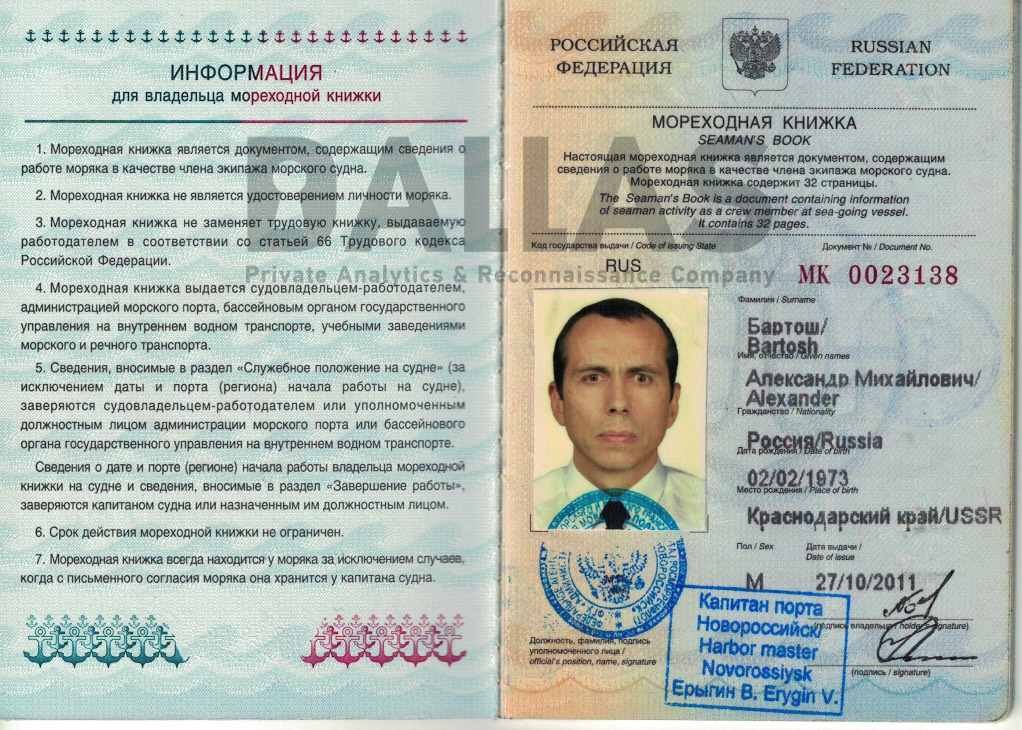
Seaman’s crew book of Bartosh
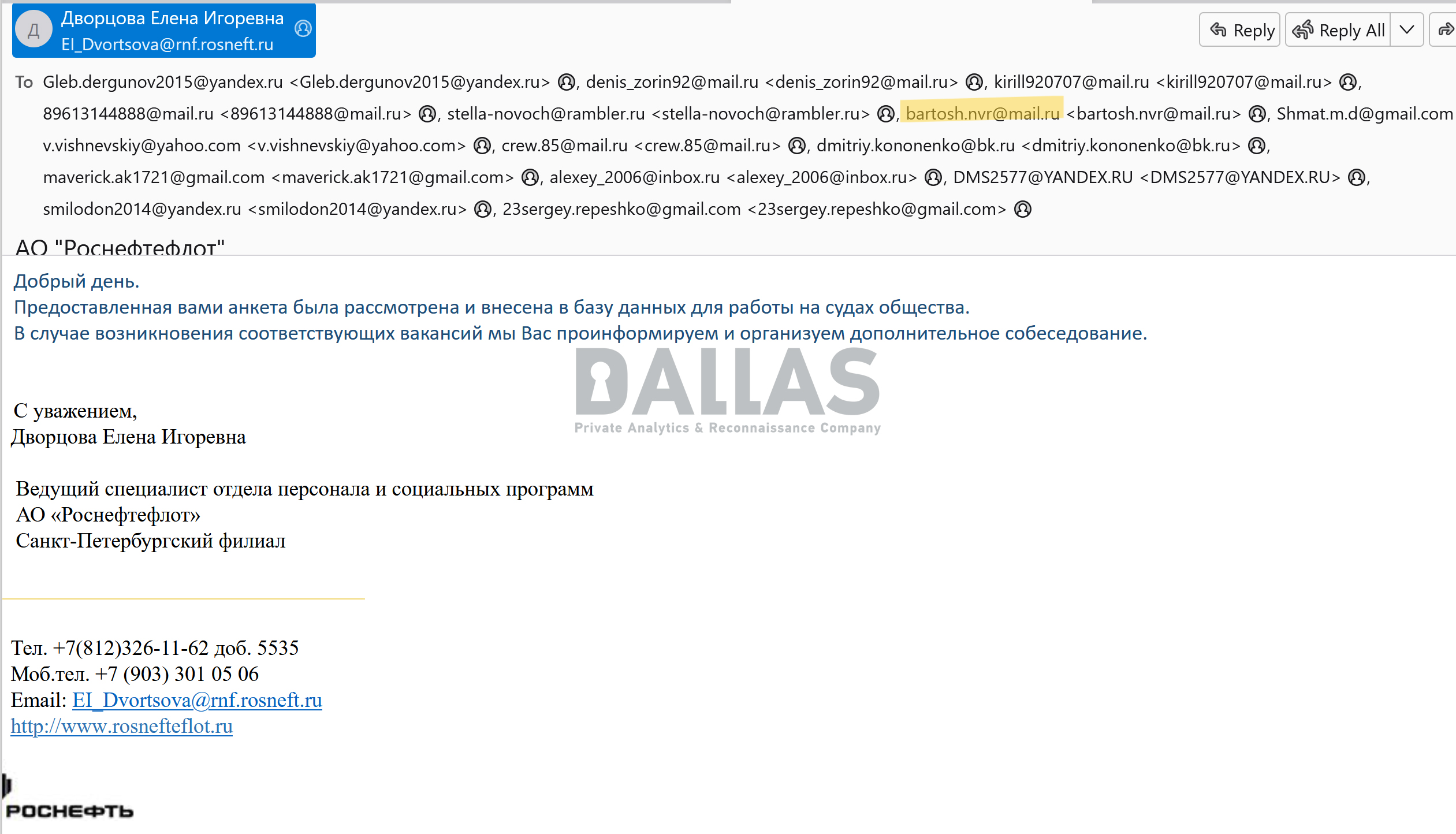
Rosnefteflot’s reply accepting his and other candidate’s applications
According to S&P Global, the shadow fleet constitutes roughly 10-17% of the world’s active tanker fleet but is responsible for transporting between 60% and nearly all of Russia’s seaborne oil exports. It’s clear that both crewing firms and captains are aware of the illicit nature of the shadow fleet’s operations. Yet, much like other facets of life under Russia’s repressive system, there is a deliberate choice to avoid asking uncomfortable questions.
For instance, when a crew coordinator requests that our captain, Alexander Bartosh, provide the necessary paperwork to reflag a vessel under Barbados, he doesn’t inquire why – he simply complies and submits the documents.
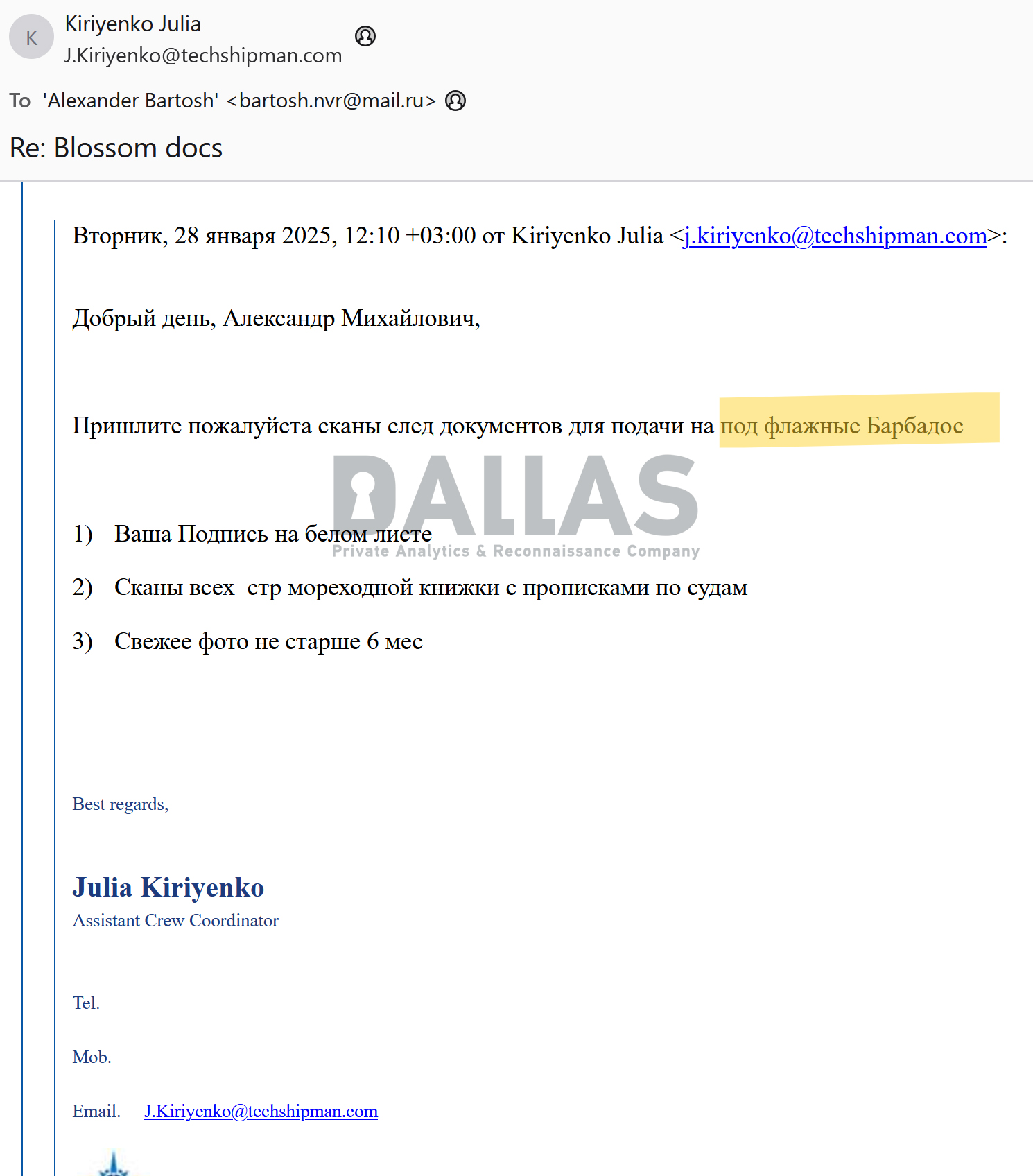
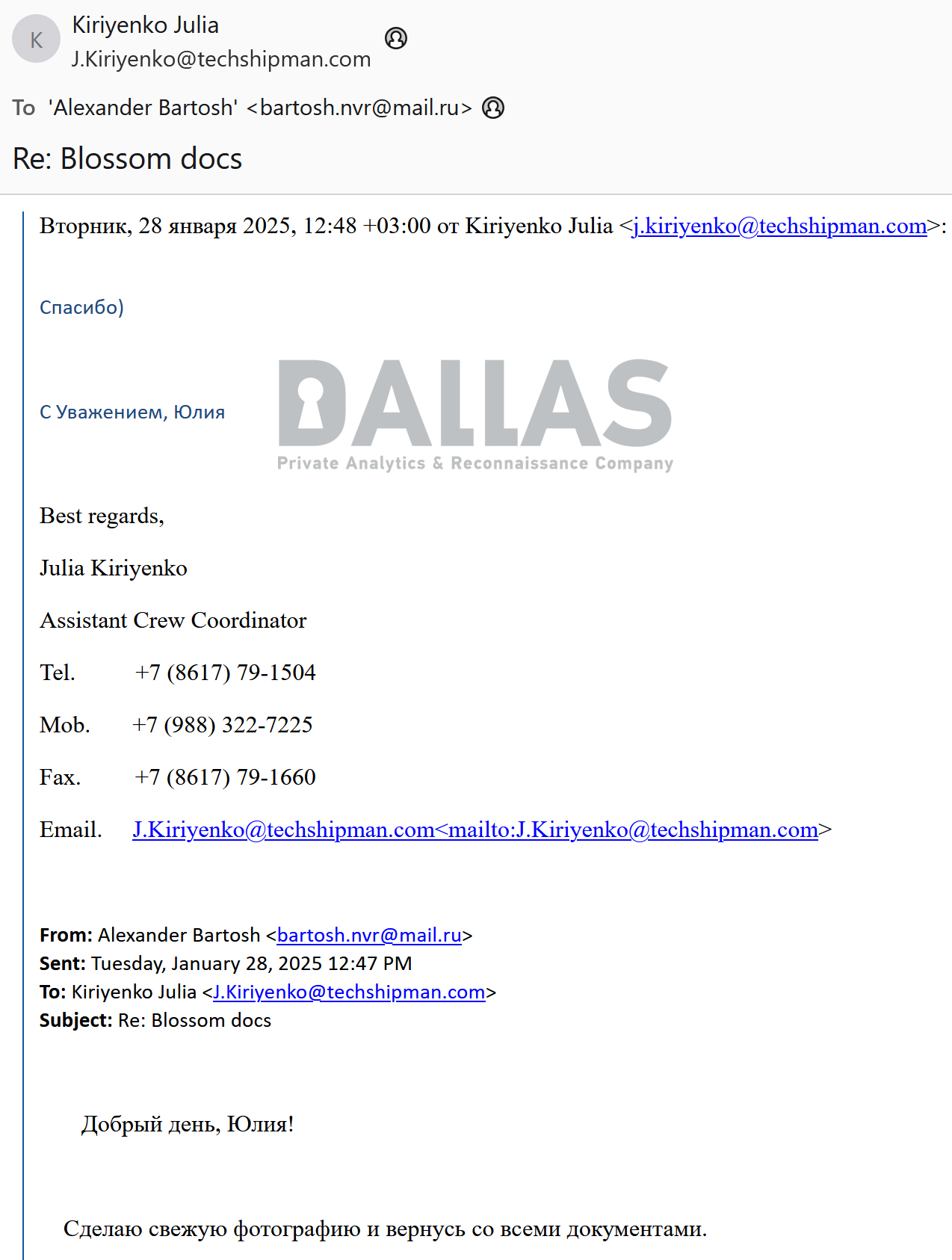
SCF’s crew coordinator asks and received necessary documents for a Barbados flag change.
For context, industry analysts reported that by mid-2024, four sanctioned tankers had registered under Malawi’s flag – despite the country having no official maritime registry. By June 2025, nearly 300 vessels were fraudulently using Malawi’s Maritime Mobile Service Identity (MMSI) prefix to mask their true registration and ownership. Similarly, Eswatini, another landlocked nation, was found to be the flagged state for at least 26 vessels, leading the UAE to ban these ships from its ports in September 2024. These so-called “shell flags,” along with the crews certifying them, reveal the extensive reach and complicity of the Russian crewing network.
Documentation and Guarantee Letter Requirements
Guarantee letters are intended to verify the legitimacy of travel purposes and confirm adequate local support for visitors. In the context of shadow fleet operations, companies should rigorously assess whether Russian seafarers are involved in illicit shadow fleet activities before issuing such letters. However, many providers simply approve and supply these guarantee letters almost automatically as part of their licensed services, effectively creating a formalized pathway for visa applications. For instance, in July 2024, Sovcomflot received a guarantee letter from the Sphinx Shipping Agency for a crew transfer to the shadow fleet tanker BLOSSOM (SCF Baikal) (IMO 9422457, List ID RUS2234). By October of the same year, the vessel was officially sanctioned by the United Kingdom.
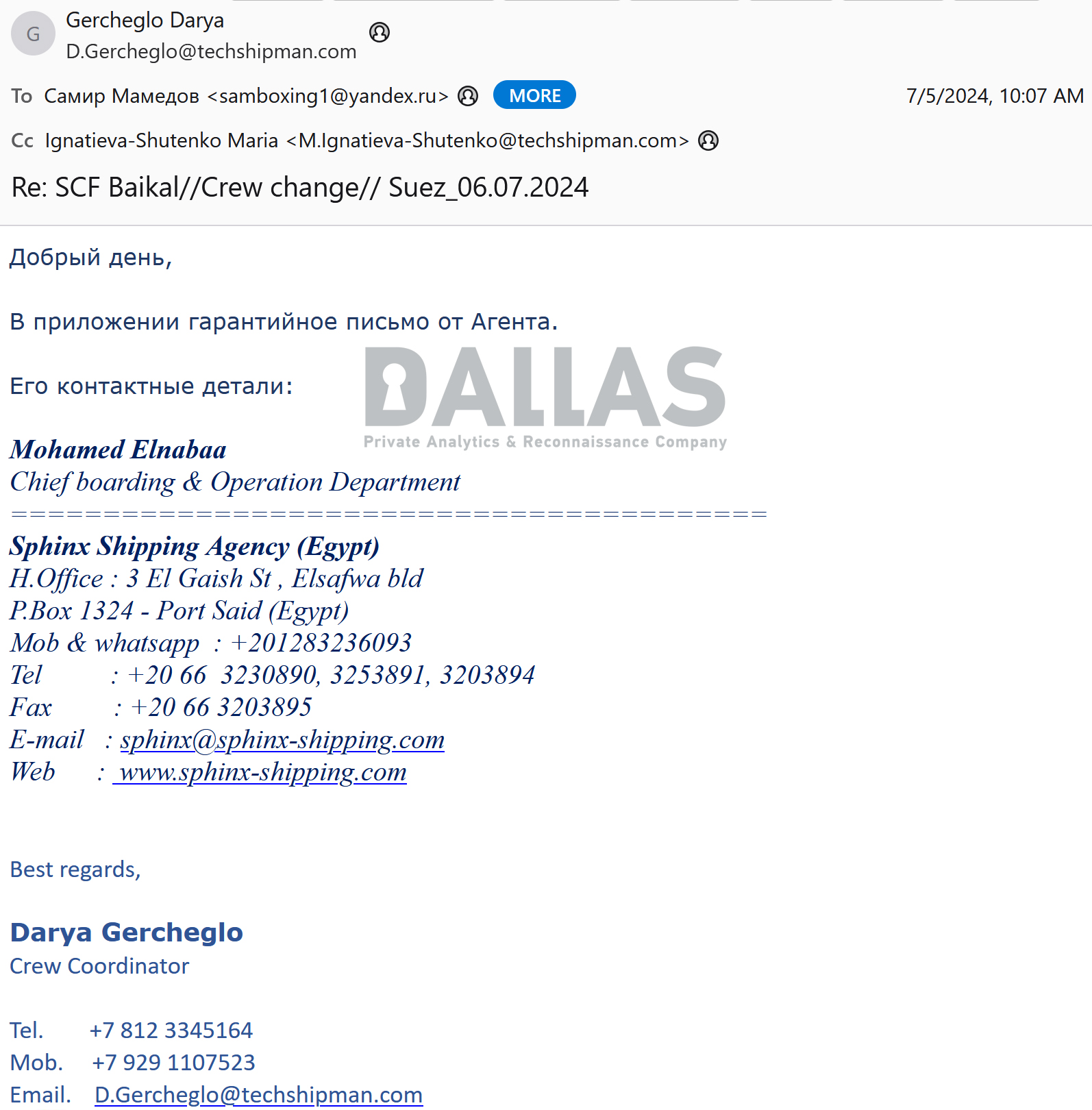
SCF Crew Coordinator informs the crew about the guarantee letter
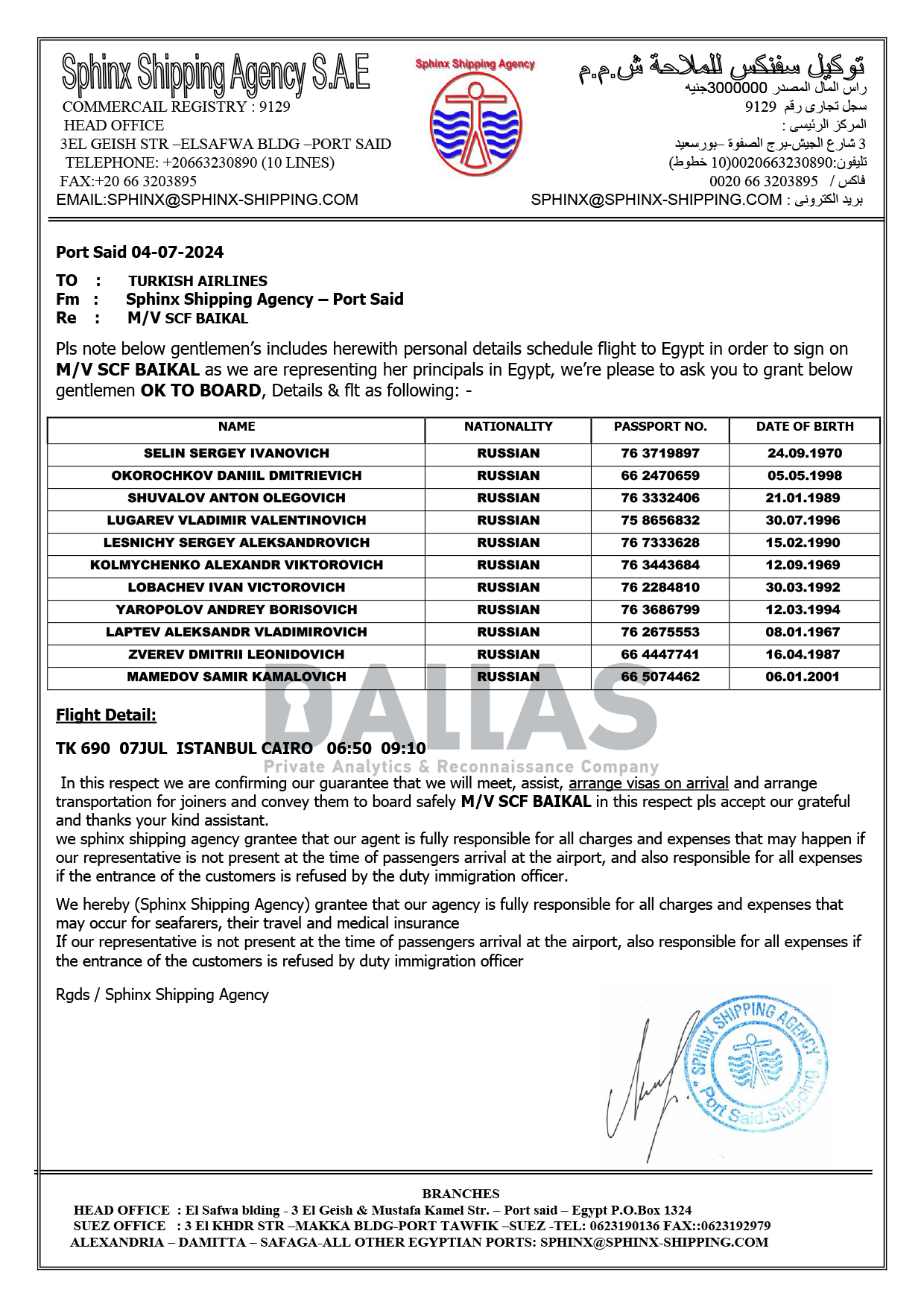
Sphinx Shipping Agency’s letter
A Blueprint for Synchronized Pressure
Mere vessel blacklists are necessary but insufficient. The real choke point lies in the human networks: consulates, classification societies, Protection and Indemnity Clubs, and correspondent banks. A synchronized, multi-pronged assault can cripple shadow-fleet manning:
- Secondary Sanctions on Manning Agents
Designate Sofvomflot, Rosnefteflot and others as Specially Designated Nationals (SDNs). Threaten non-US banks with penalties for processing their payrolls. - Flag-State Diplomacy
Pair financial incentives and diplomatic pressure to convince Panama, Gabon, Liberia, Cambodia, Cook Islands – and even Eswatini and Malawi – to de-register vessels with sanctioned crews or insurers. - Port-State Control Intelligence-Sharing
Integrate ship-to-ship (STS) anomaly detection and sanctions-list matches into Paris and Tokyo Memorandums of Understanding on Port State Control risk profiles, triggering automatic inspections and detentions. - Visa Blacklisting
Empower consular posts to refuse all “Seafarer C” or transit visas for applicants linked to targeted crewing companies, stranding officers aboard and inflating crewing costs. For example, U.S. Customs and Border Protection officers have discretionary authority to deny shore leave to foreign crew members, even those holding valid transit (C-1/D) visas. Estonia, Latvia, Lithuania, Poland, and Finland have collectively imposed strict land entry bans on most Russian nationals, including merchant seafarers. Other EU member states should follow suit. - Insurance De-Risking
Instruct International Group of Protection and Indemnity Clubs (IG P&I) insurers to void cover if masters appear on SDN, EU or Ukrainian lists – forcing rogue tankers into uncertified markets where ports will refuse entry. - Revalidation of Certificates of Competency
The European Union may urge flag administrations to decline recognition of certificates of competency issued by Russian authorities at their next renewal. This can be due to concerns about potential fraud or limited access to training simulators during wartime conditions because of Ukraine’s invasion. Poland and the Netherlands have already begun subjecting Russian-issued documents to heightened scrutiny.
When implemented together, these measures amplify operational friction – resulting in longer transit times, stranded crews, insurance gaps, and port denials – that sharply increase costs and risks for shadow fleet operators.
Manning Agents to Watch
Based on Dallas’ insider sources and data from captain databases, the following companies remain active facilitators of crewing for shadow-fleet tankers:
- Sovcomflot (Софкомфлот): An SCF Group subsidiary focused on oil-and-gas tanker crewing. https://scf-group.ru/en/about/profile/
- SUN Ship Management: A subsidiary of Sovcomflot, formerly known as SCF Management Services (Dubai) http://sun-sm.com/
- BalticGroupInternational (BGI): A V-Group subsidiary recruiting for crude, LNG and product tankers; active in 12 Russian ports. https://bgicrew.com/ru/careers/
- Bernhard Schulte Shipmanagement: A global operator with Odesa office in Ukraine; reportedly provides officers to Russia-linked tankers. https://bs-shipmanagement.com/contact-us/
- Bahri Ship Management: Saudi operator crewing oil tankers on behalf of Russian charterers. https://bahri.sa/en/bahri-units/bahri-ship-management/
- Rosnefteflot (Роснефтефлот): Controlled by Rosatom, responsible for hiring captains for sanctioned vessels. https://rosnefteflot.ru/o-kompanii/vakansii/
- United Crew Management: A purely Russian company with no formal Western ties. https://ucmfleet.com/
- IQrew: Another Russian firm lacking visible Western connections. https://iqrewing.com/
- MPiT-Ship Management: Domestic Russian company offering comprehensive crew logistics under opaque ownership. https://mpatltd.com/services/
Sphinx Shipping Agency: Egypt-based with an office in Port Said; known for issuing guarantee letters to SCF shadow-fleet captains. http://sphinx-shipping.com/ (website currently offline).
Starve the Human Engine
Russia’s shadow fleet sails only because humans – crewed by willing agents – run the show. Sanctions targeting vessels alone leave this human machinery untouched: passports issued, visas granted, payrolls disbursed, and insurance certificates rubber-stamped. By pressuring this human infrastructure, Western authorities can impose compounding operational friction – stranded crews, delayed voyages, barred ports, frozen accounts – that ultimately undermines profitability and dries up the Kremlin’s war-funding oil revenue stream.PS: Dallas will be informing relevant authorities about these findings. We are also offering exclusive access to our first captain-specific database linked to these operations. Reach out to us at dallas-analytics.com/get-access to request access.