


Despite sanctions, Western-made components continue to be found in Russian weapons. In particular, electronics from the United States, Taiwan, and Europe. Dallas has investigated the supply chains delivering these components to Russia and identified a number of Russian and Chinese companies that help Russia’s military-industrial complex and oil and gas sector obtain Western electronics.
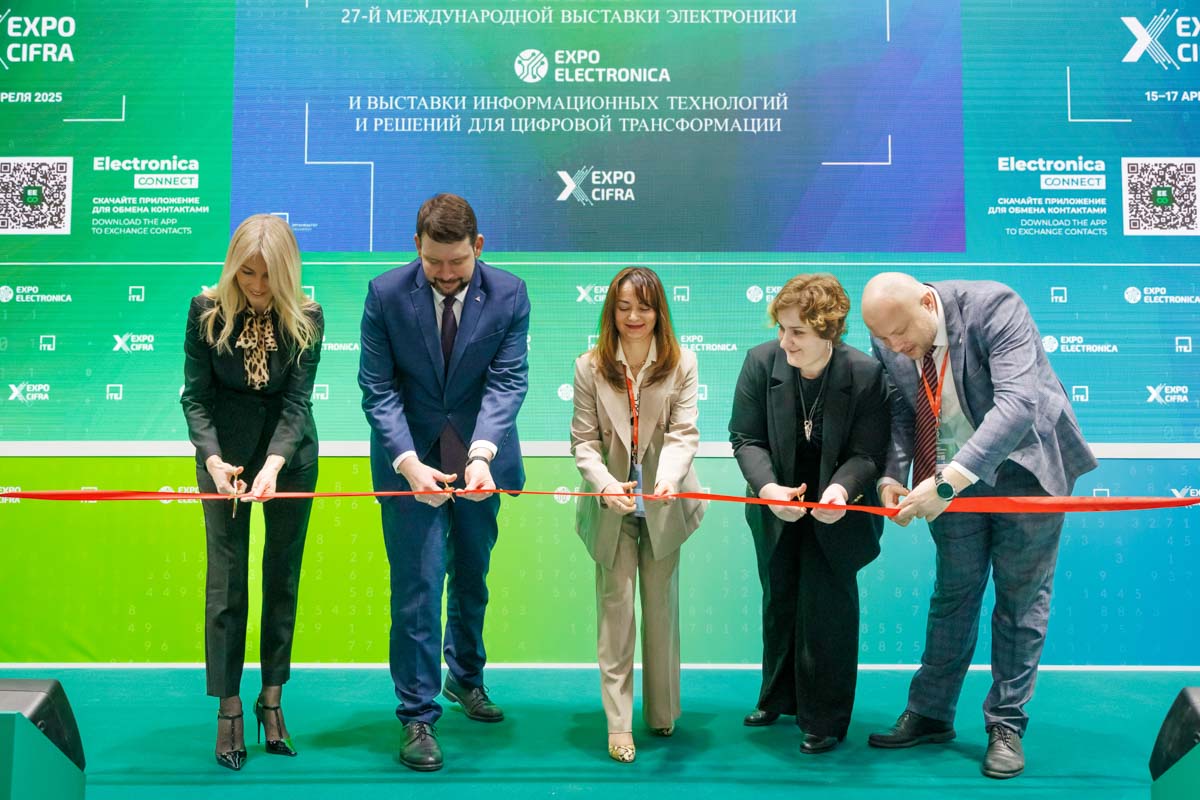
From April 14 to 16, 2026, the annual electronics exhibition ExpoElectronica took place in Moscow. According to the organizers, it is the largest international electronics exhibition in Russia in terms of the number of participants and visitors, bringing together developers, manufacturers, and distributors of electronic products on a single platform. In practice, it is designed to establish connections between manufacturers/distributors and end users amid Russia’s continued dependence on foreign electronic components. This is precisely why Dallas analysts could not overlook the gathering of hundreds of companies under one roof that, in one way or another, violate sanctions.
As of early April, we obtained the names of 719 companies that had exhibition space at the event. The geography of participants is unsurprising: 337 companies from Russia and 7 from Belarus. The overwhelming majority of participants are from China. In total, 376 companies from the PRC registered, including 9 listed as participants from the Hong Kong Special Administrative Region.
Following our analysis, we can confidently state that sanctions violators were indeed present at the exhibition. Below are specific examples of such Russian and Chinese companies.
Russia
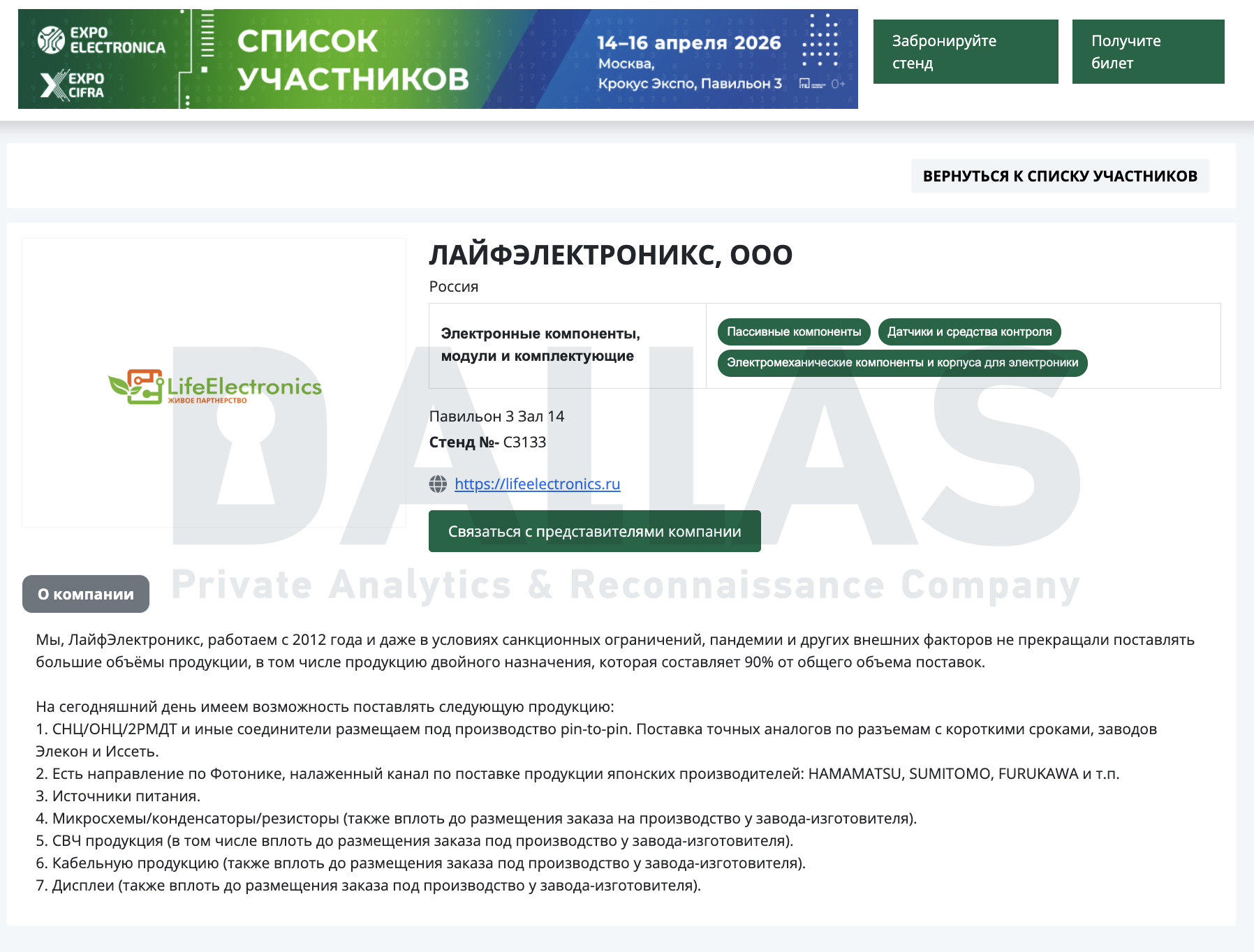
LLC “LIFELECTRONICS” is a Russian company and one of the exhibition participants. It has been operating in this market segment since 2012. According to data obtained by Dallas, since the start of Russia’s full-scale aggression against Ukraine and the imposition of sanctions, Lifelectronics began sending cooperation proposals to Russian defense companies. The correspondence cited below took place between Lifelectronics and the Pskov Long-Distance Communications Equipment Plant, which has been under U.S., EU, Swiss, Canadian, and Japanese sanctions since 2022.
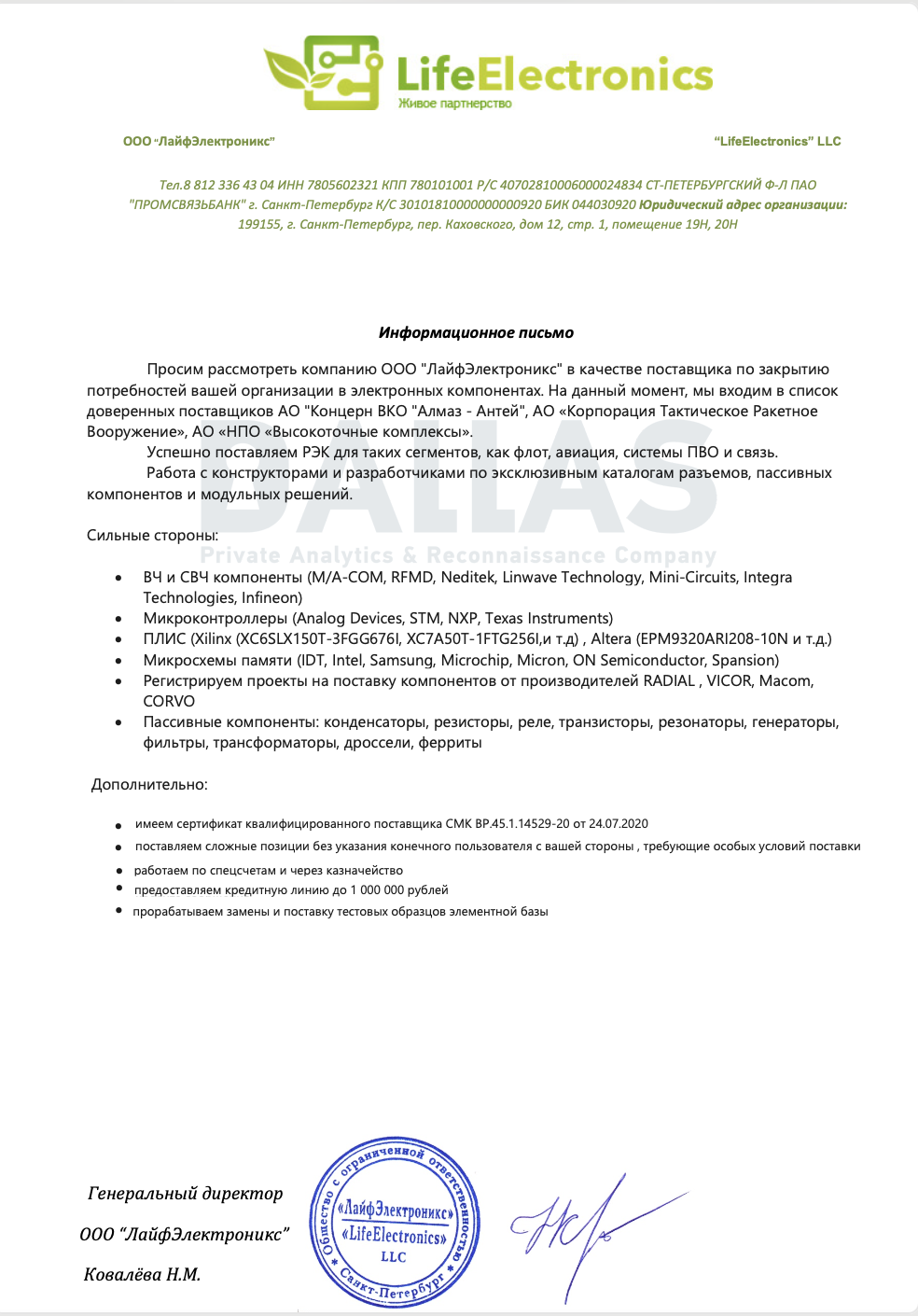
The letter explicitly states that the company closely cooperates with sanctioned Russian defense enterprises:
“We ask you to consider LLC ‘Lifelectronics’ as a supplier to meet your organization’s needs for electronic components. We are currently included in the list of trusted suppliers of JSC ‘Almaz-Antey Air and Space Defense Corporation’, JSC ‘Tactical Missiles Corporation’, and JSC ‘High-Precision Systems’.
We successfully supply radio-electronic components for sectors such as the navy, aviation, air defense systems, and communications.”
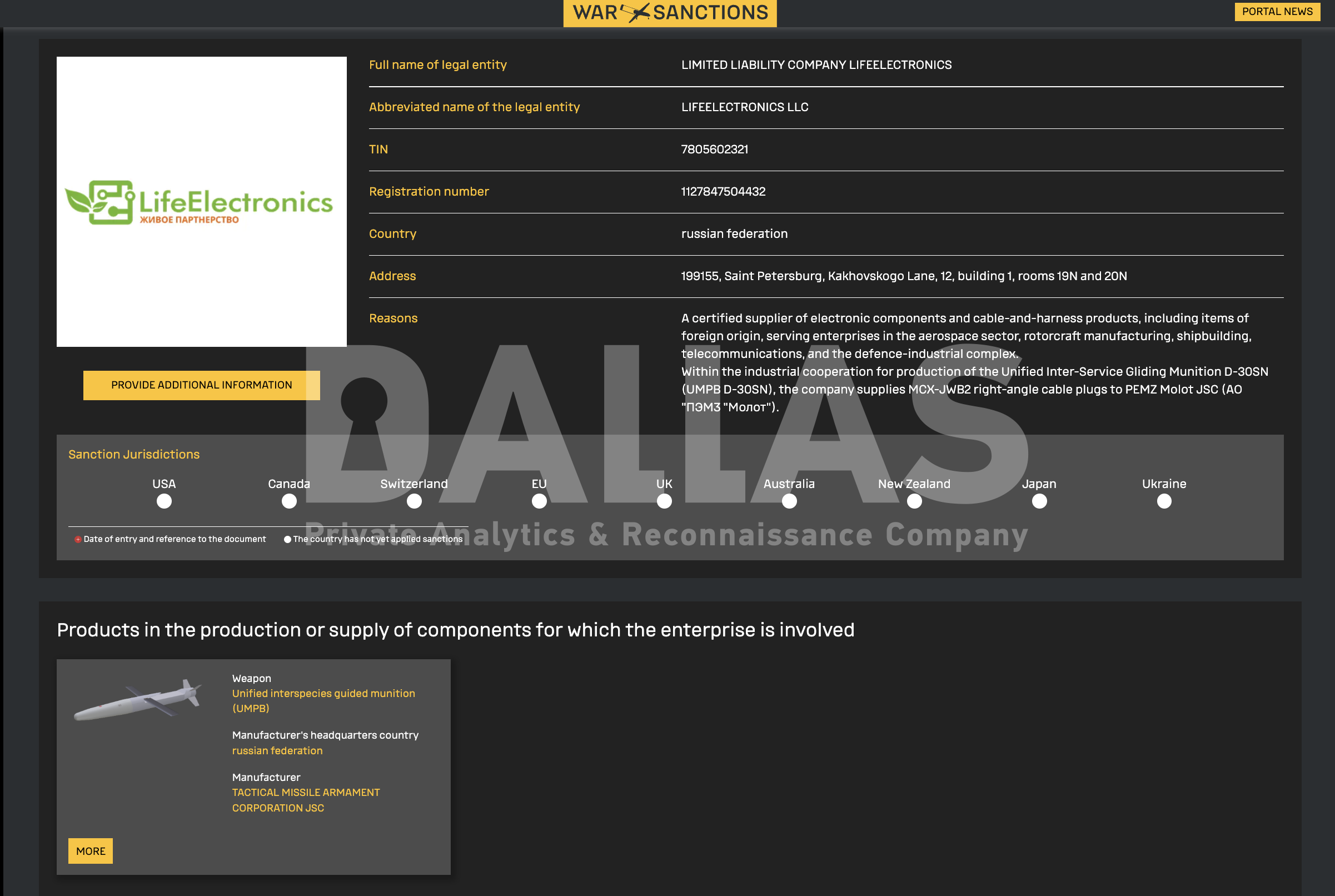
In addition to openly acknowledging cooperation with Russian missile manufacturers, Lifelectronics explicitly offers the supply of Western components in its correspondence.According to the War & Sanctions portal, Lifelectronics is involved, at a minimum, in the production of the Universal Inter-Service Gliding Munition (UMPB) and is still not subject to any sanctions.
At the same time, the aforementioned Pskov plant relies on services from dozens of Russian intermediary importers. Dallas has obtained documents confirming that in 2023 the plant ordered and received Altera microchips (part of Intel Corporation) from the company Radiotekhkomplekt (RTKT).
The purchase request submitted to RTKT was approved by the 957th Military Representative Office of the Russian Ministry of Defense and explicitly states that the ordered products are “required for fulfilling the state defense order.”
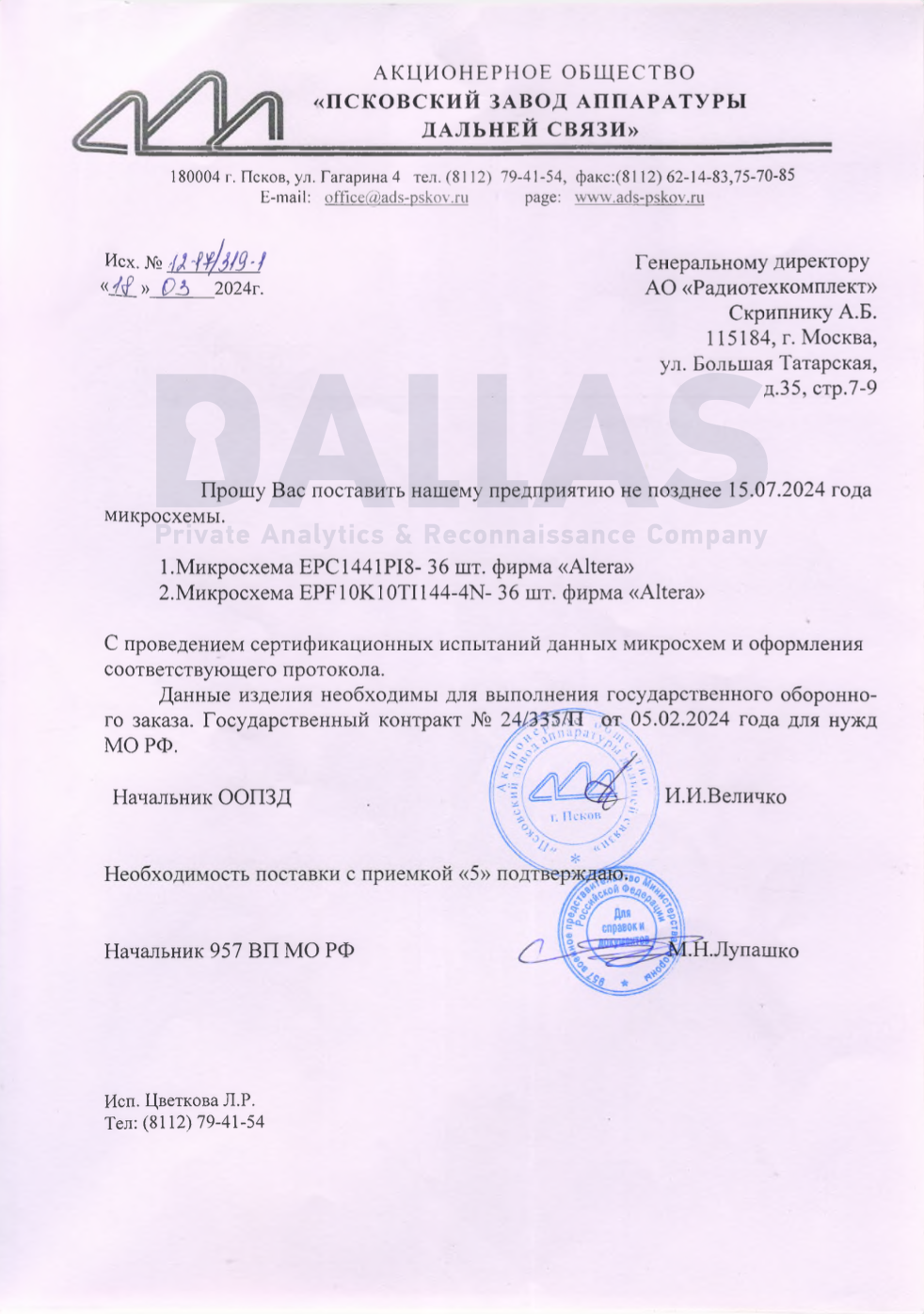
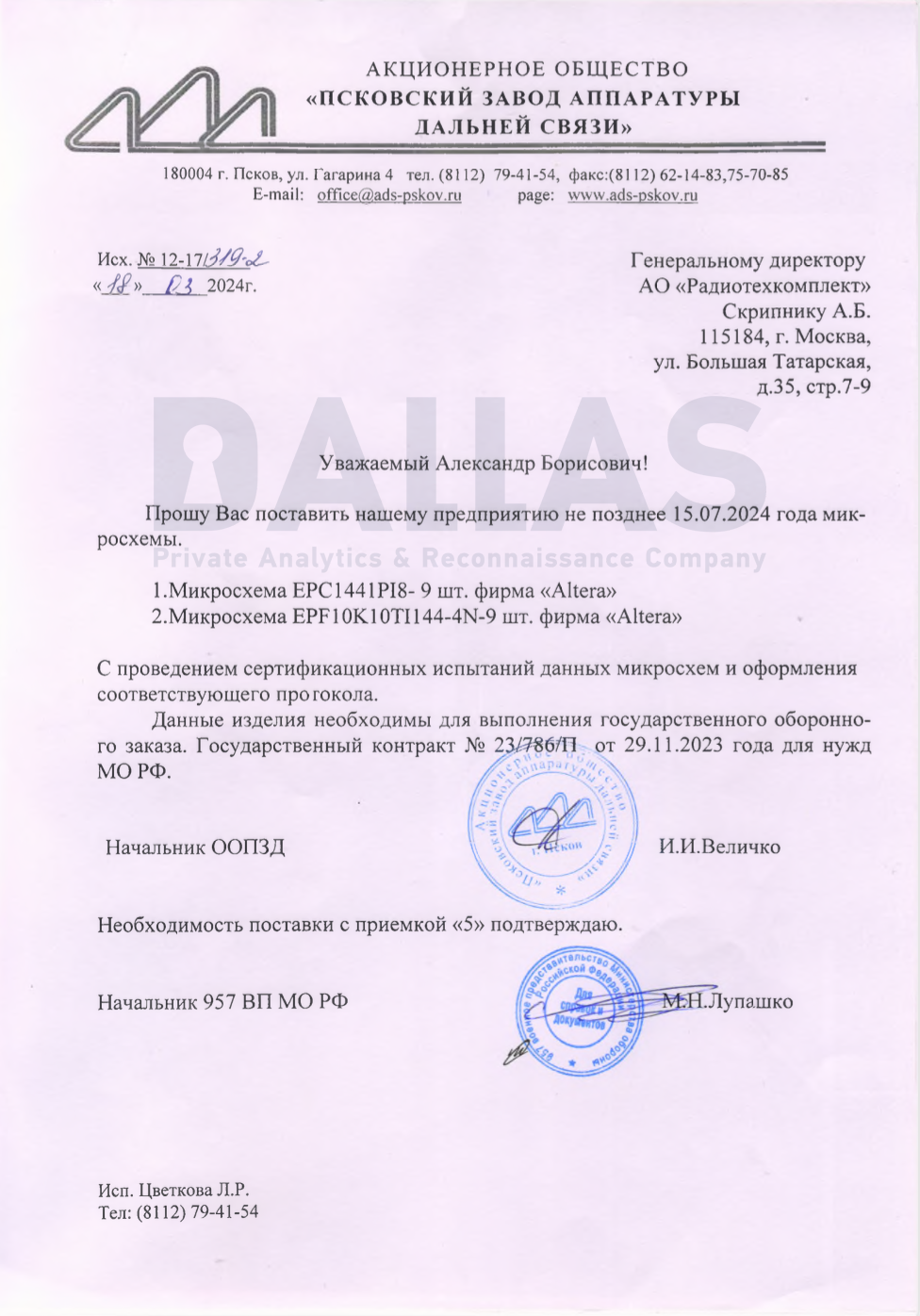
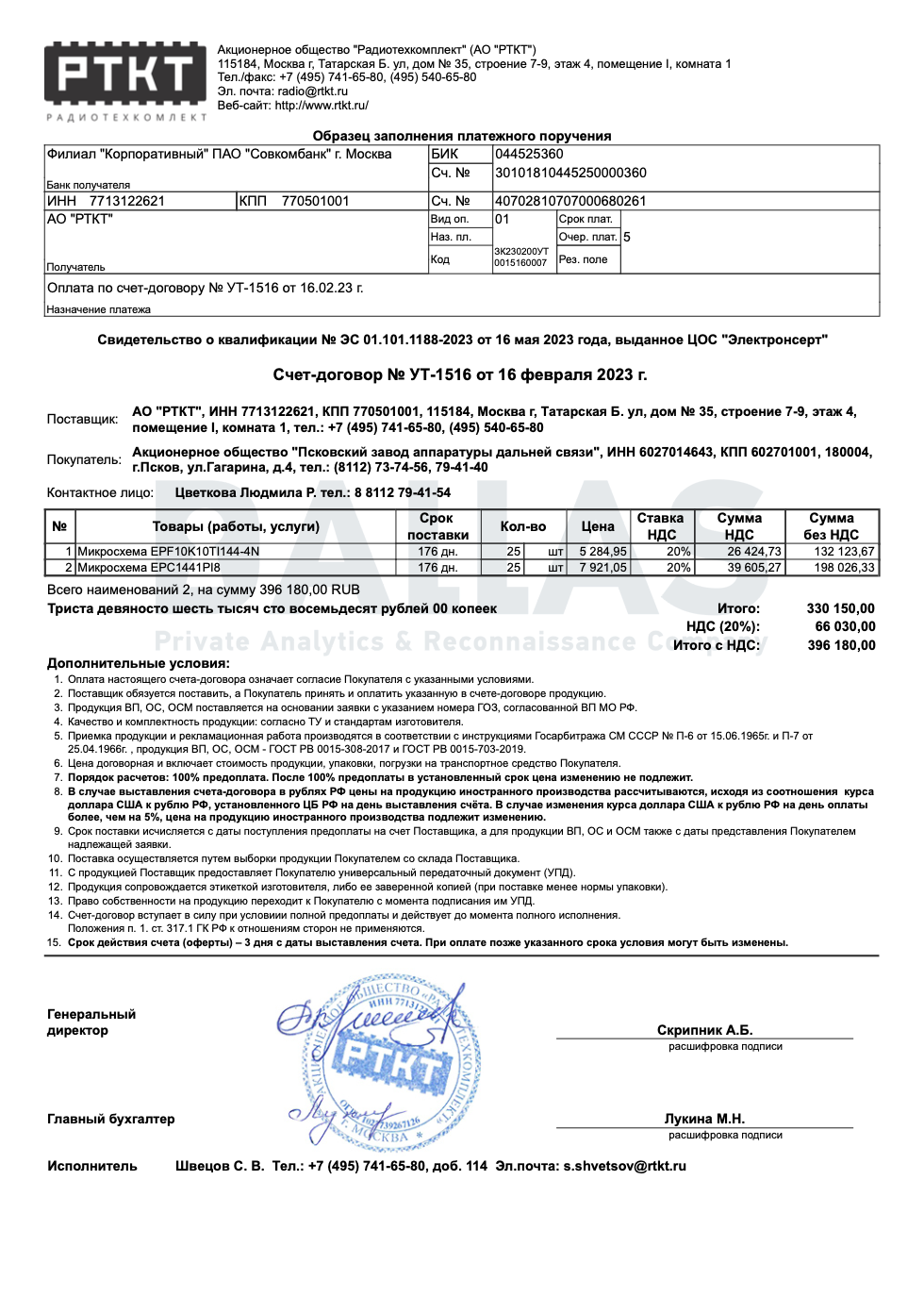
Documents confirming the order and receipt of Western-made microchips, as well as photographs of the goods received at the factory.
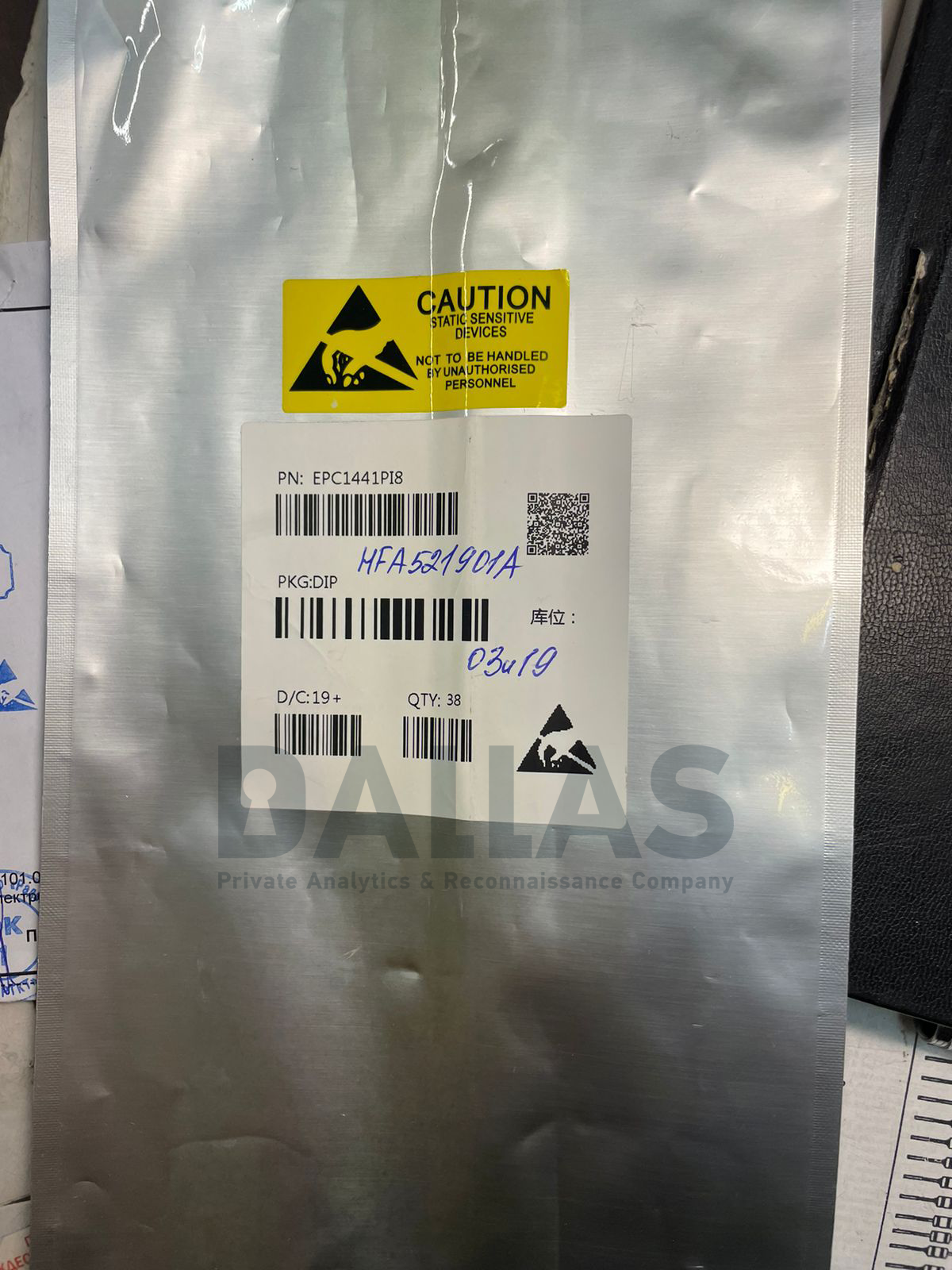
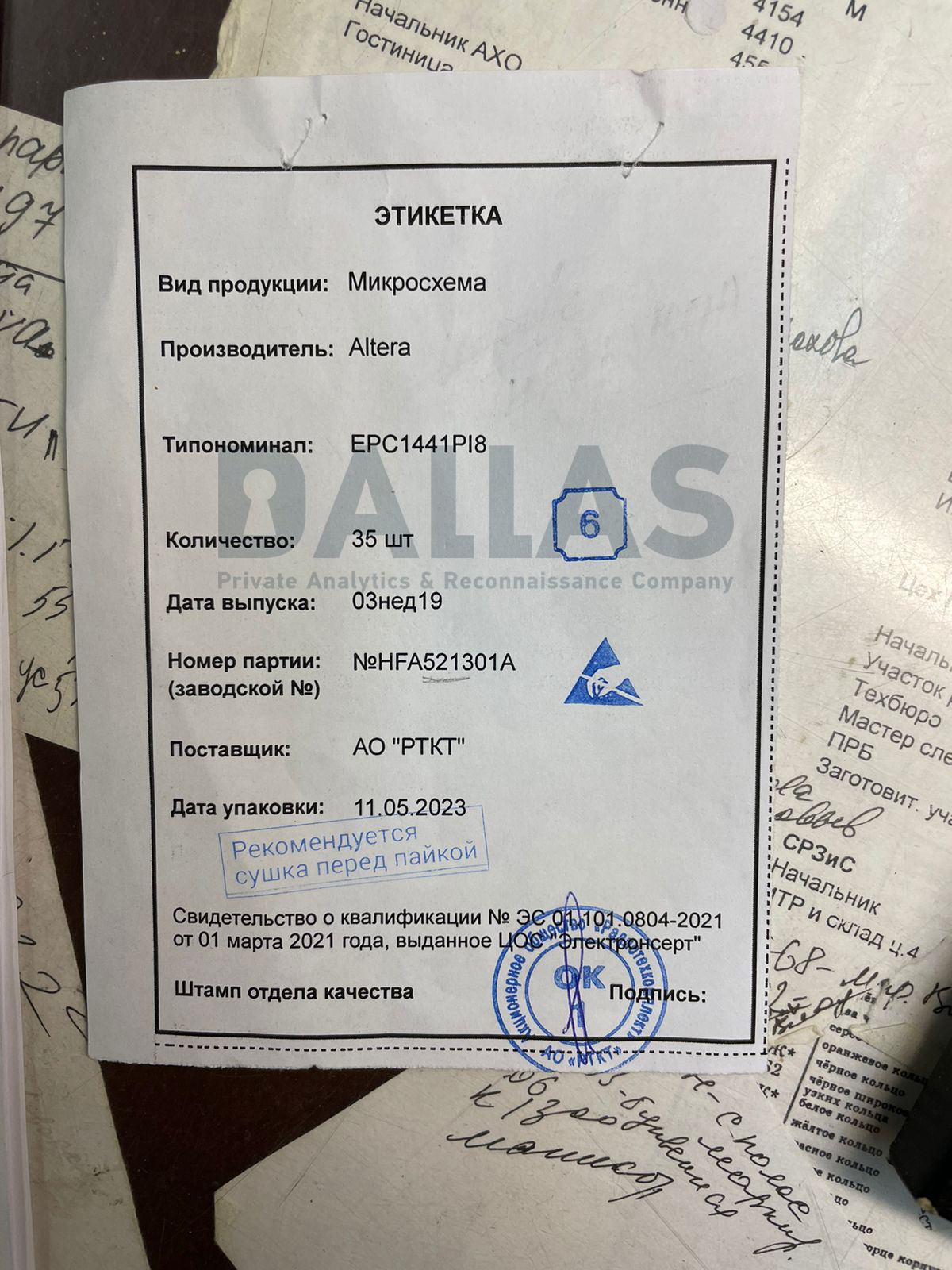
Unlike Lifelectronics, Radiotekhkomplekt is under sanctions imposed by Ukraine, the United Kingdom, and Switzerland. However, this has proven insufficient. Sanctioning Russian importers alone does not disrupt the supply chains delivering Western components to Russian defense enterprises. It is essential to impose sanctions on the companies that trade with these importers – in particular, companies based in China.
China
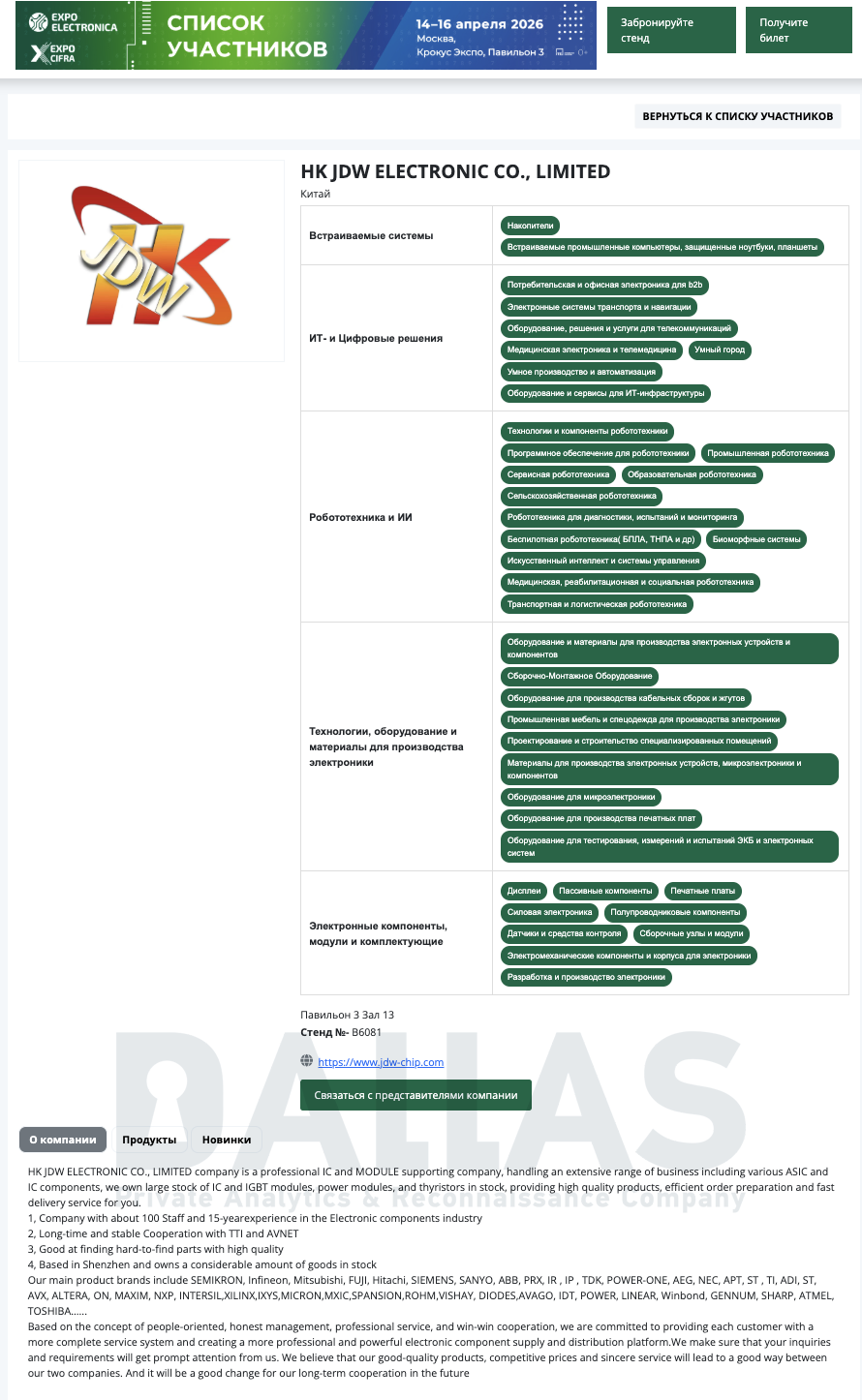
A telling example of how Chinese companies are involved in supplying Western electronics is HK JDW ELECTRONIC CO., LIMITED, one of the many registered participants of ExpoElectronica. Particularly striking is the company’s profile page on the exhibition website, where it openly states that it supplies Western components.
Dallas examined the company’s activities and found documentary evidence of shipments of Western components to Russia. Specifically, we obtained a price list from HK JDW ELECTRONIC CO., LIMITED for components manufactured by Siemens and Honeywell.
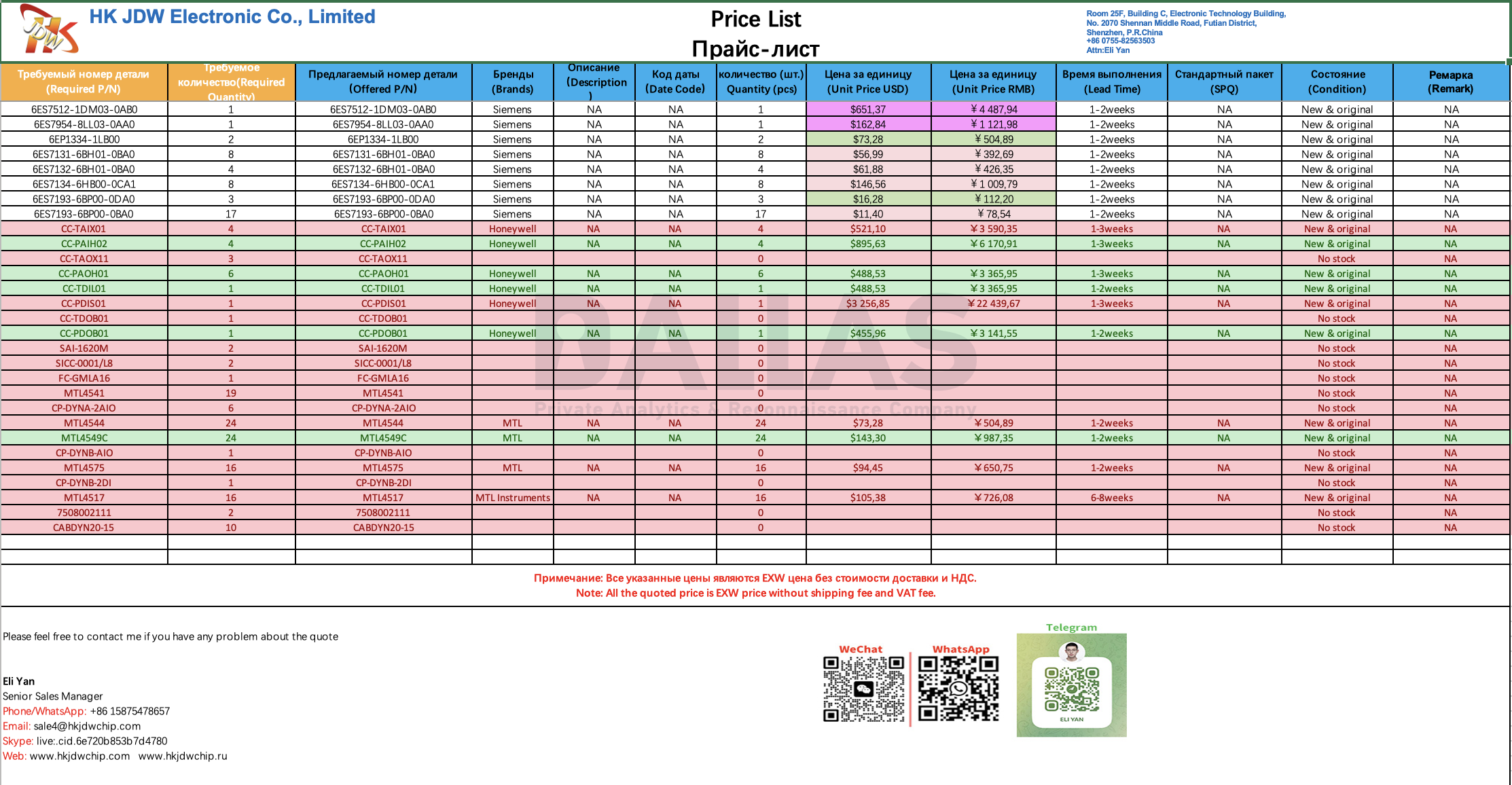
This price list was sent by the Chinese company in response to a request from a Russian intermediary, LLC “Priborelektrokomplekt,” acting on behalf of its client, the Russian company “ASU Engineering.” The latter provides maintenance and configuration services for various automated control systems used by major sanctioned Russian oil and gas corporations, including Lukoil, Rosneft, and Gazprom.
We further examined the activities of this intermediary, Priborelektrokomplekt, and found in its internal documentation that it regularly works with at least four additional Chinese suppliers:
- Hong Kong Hongchang Technology Co., LTD
- Jiejiecheng Technology Co., Ltd
- Faraday Technology (HK) Co., Limited
- Sunshine Electronic HK Co., Limited
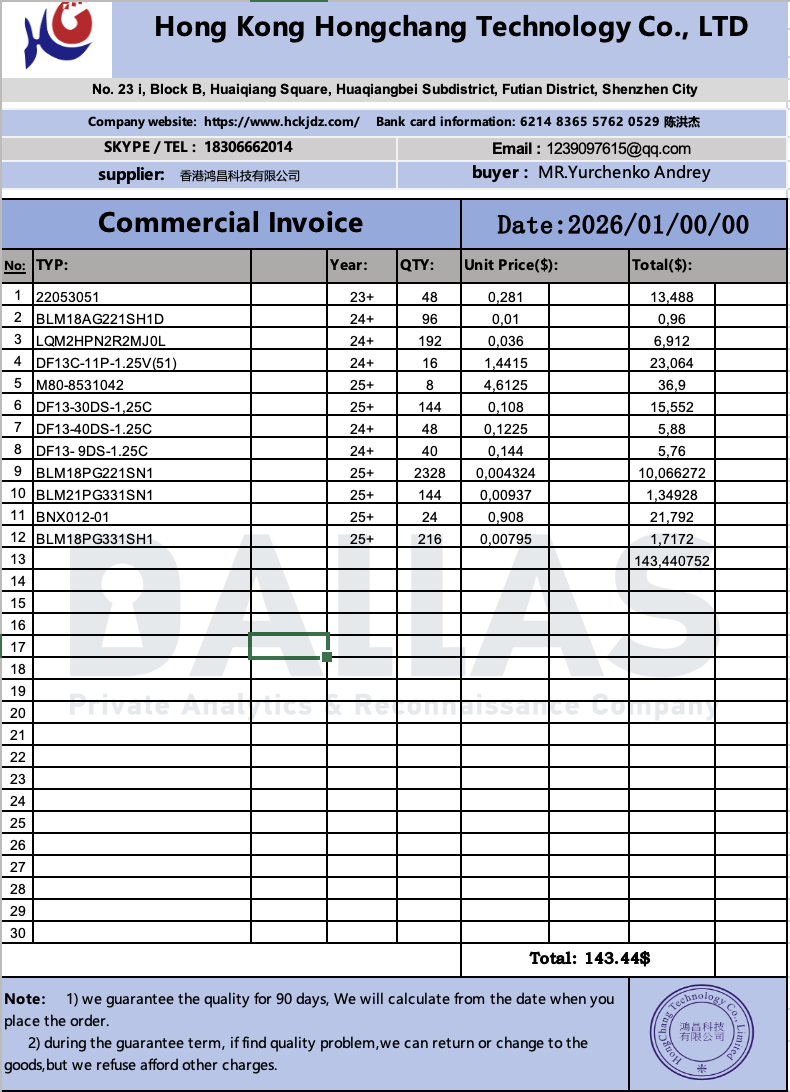
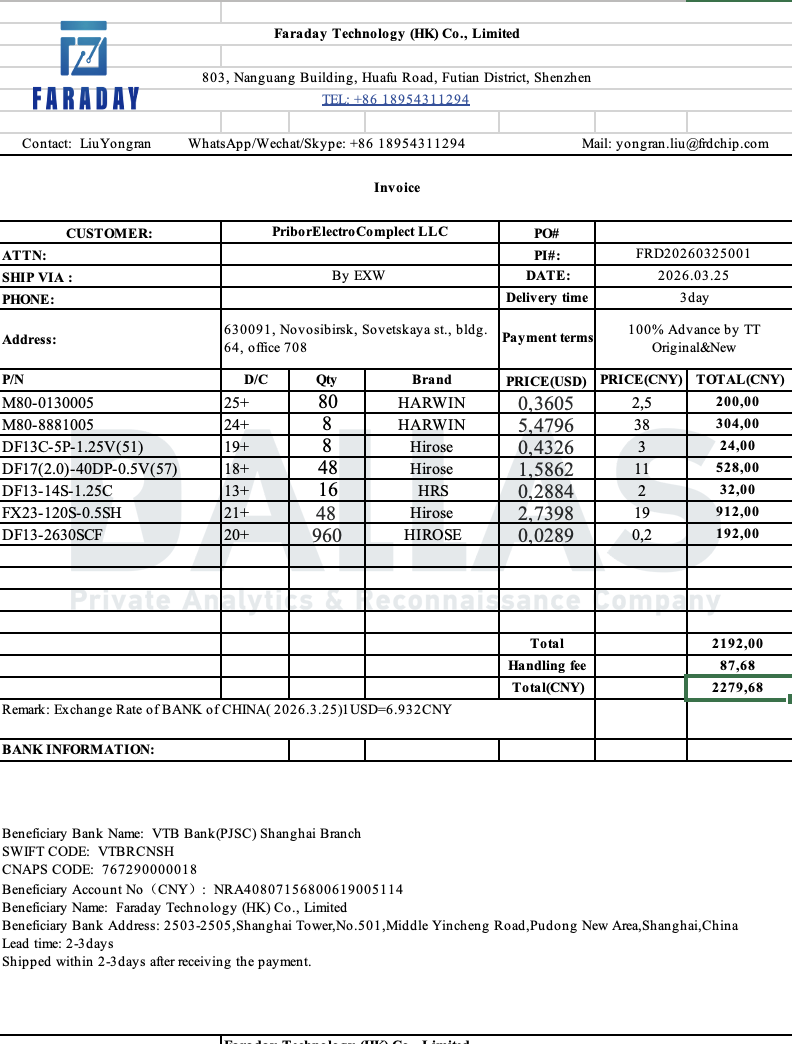
Examples of price quotes and invoices from Chinese suppliers
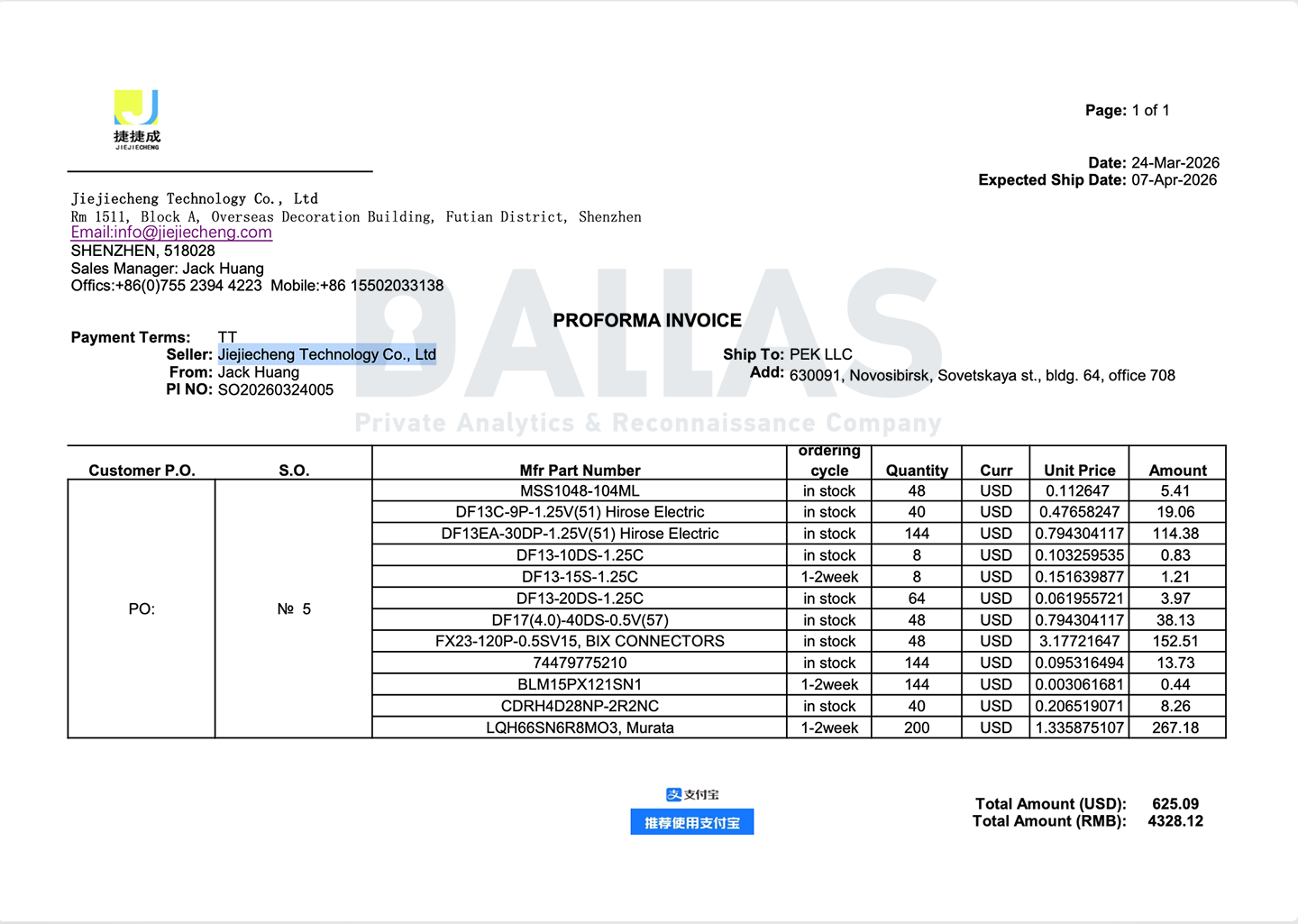
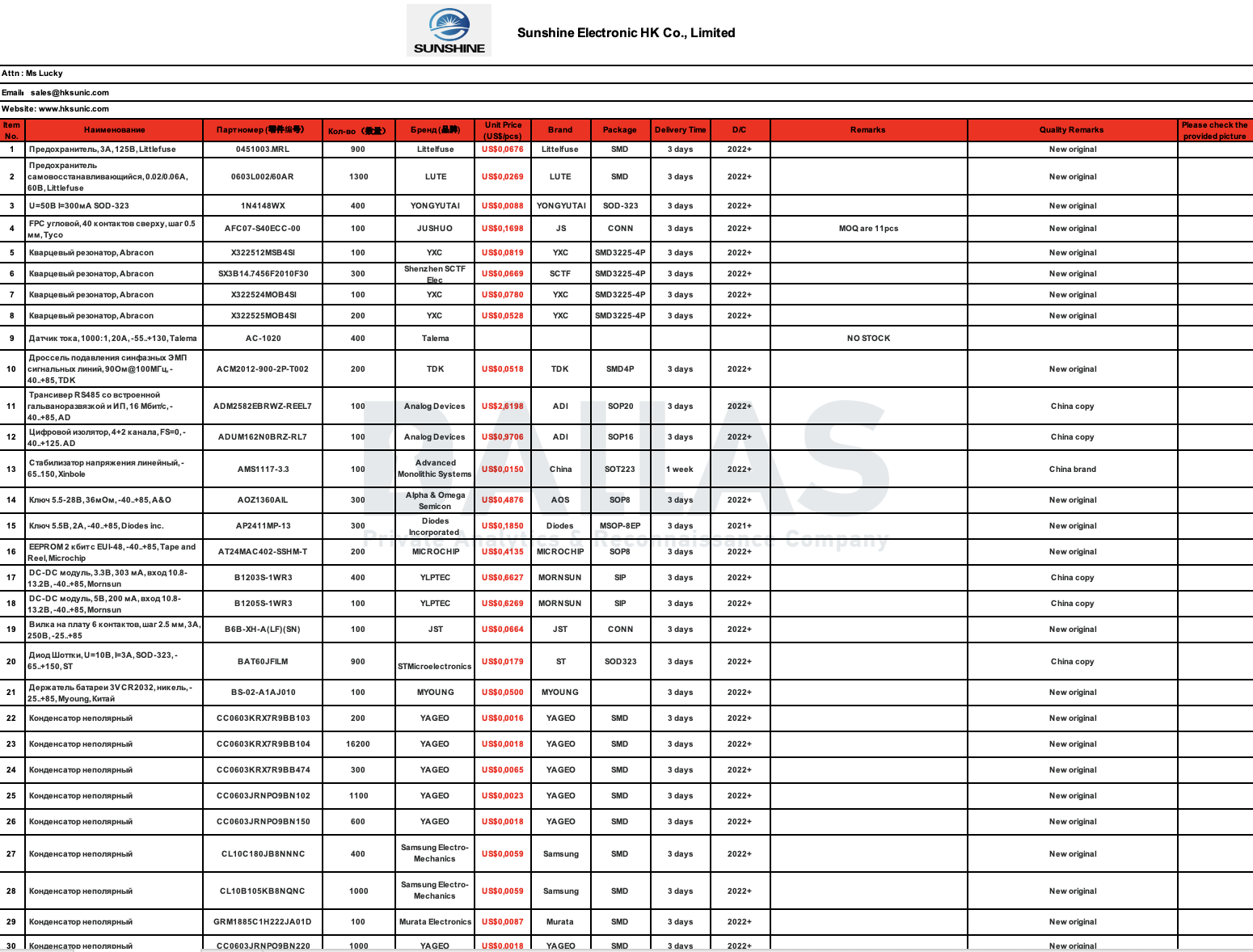
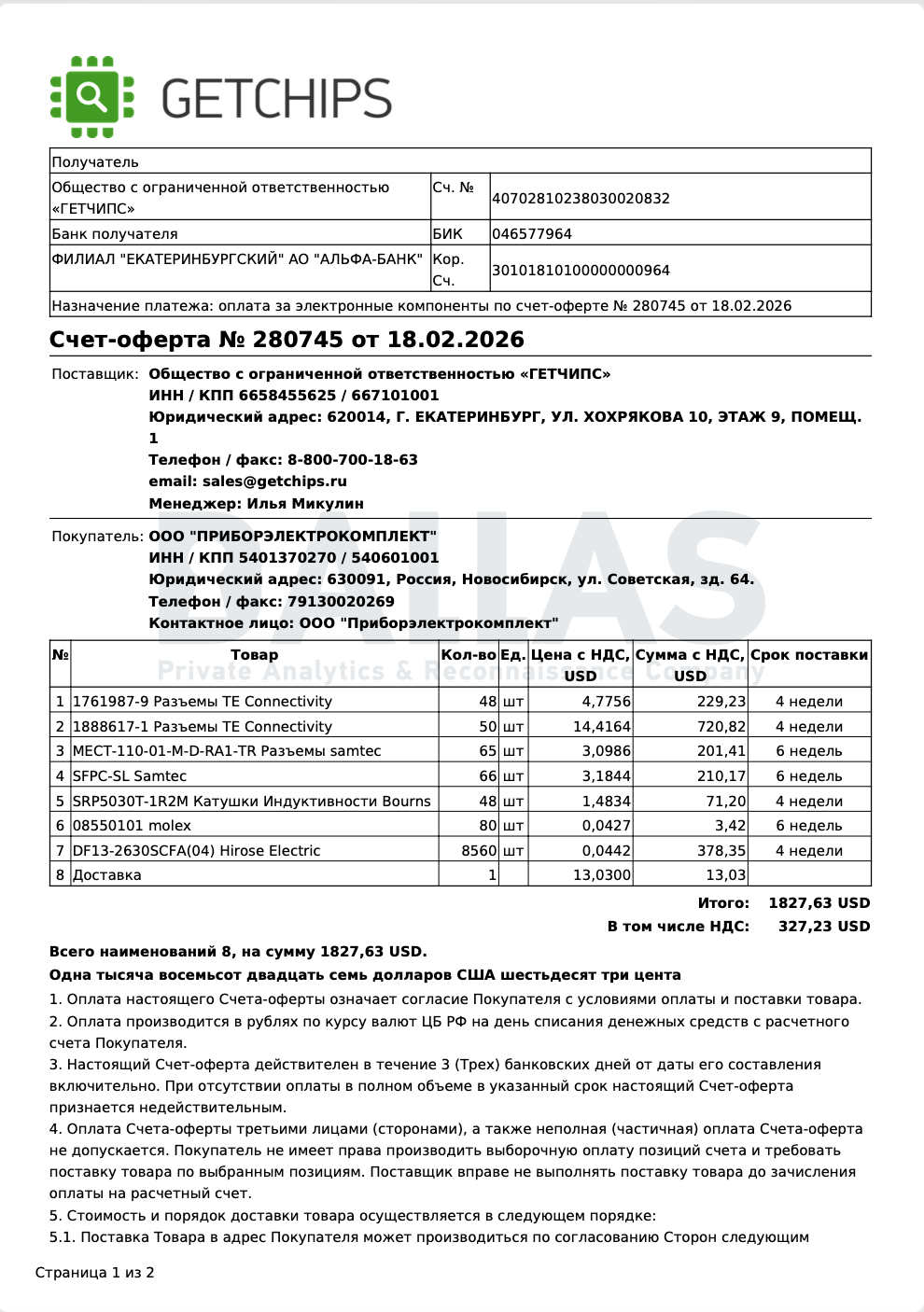
In addition to Chinese suppliers, Russian electronics importers also purchase components from similar intermediary companies. For example, internal documents from Priborelektrokomplekt include invoices for electronic components issued by another Russian sanctions violator, GetChips.
There is little doubt that even relatively small companies like Priborelektrokomplekt service the Russian defense sector and thereby violate sanctions. For instance, the company supplied electronic components to the Oktava plant, which produces communication equipment for the Russian military, is part of the state-owned Rostec corporation, and has been under U.S. sanctions since 2023.
Conclusion
Regulating the microelectronics market and supply flows is an extremely complex task. Over four years of full-scale war against Ukraine, hundreds of small companies have emerged in Russia that order and import low-cost dual-use components. Sooner or later, these components end up in Russian weapons. This is why it is crucial to impose sanctions on those who enable Russian companies to obtain such goods. Chief among them are Chinese companies that act as hubs, aggregating components from around the world and reselling them to Russia.
Dallas calls on the expert community to pay close attention to the participants of the Russian ExpoElectronica exhibition, as it effectively constitutes a ready-made database of sanctions violators, facilitators of shadow schemes, and actors in parallel import networks.
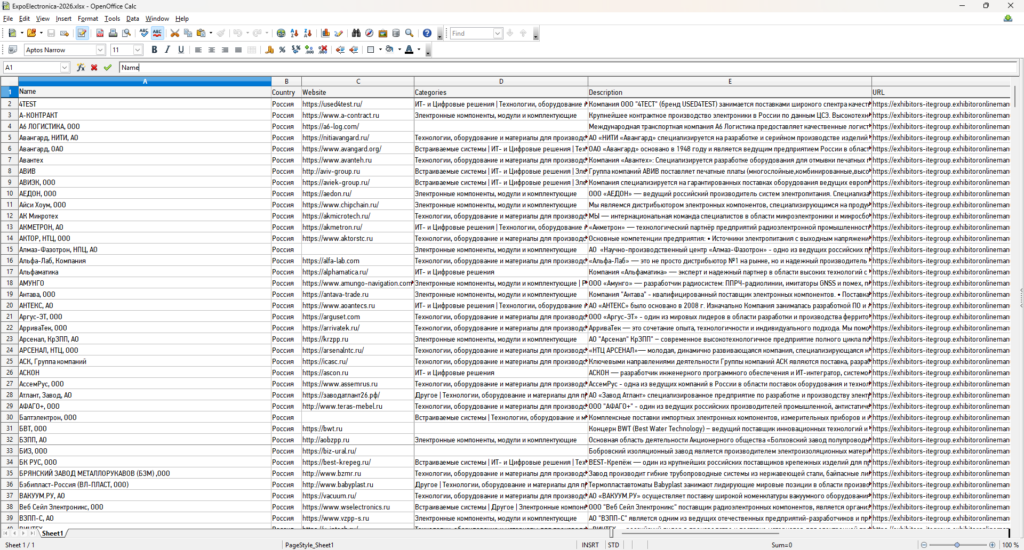
The full list of participants is attached to this publication.
If you have information about sanctions violations by companies other than those mentioned, please let us know via the feedback form.