



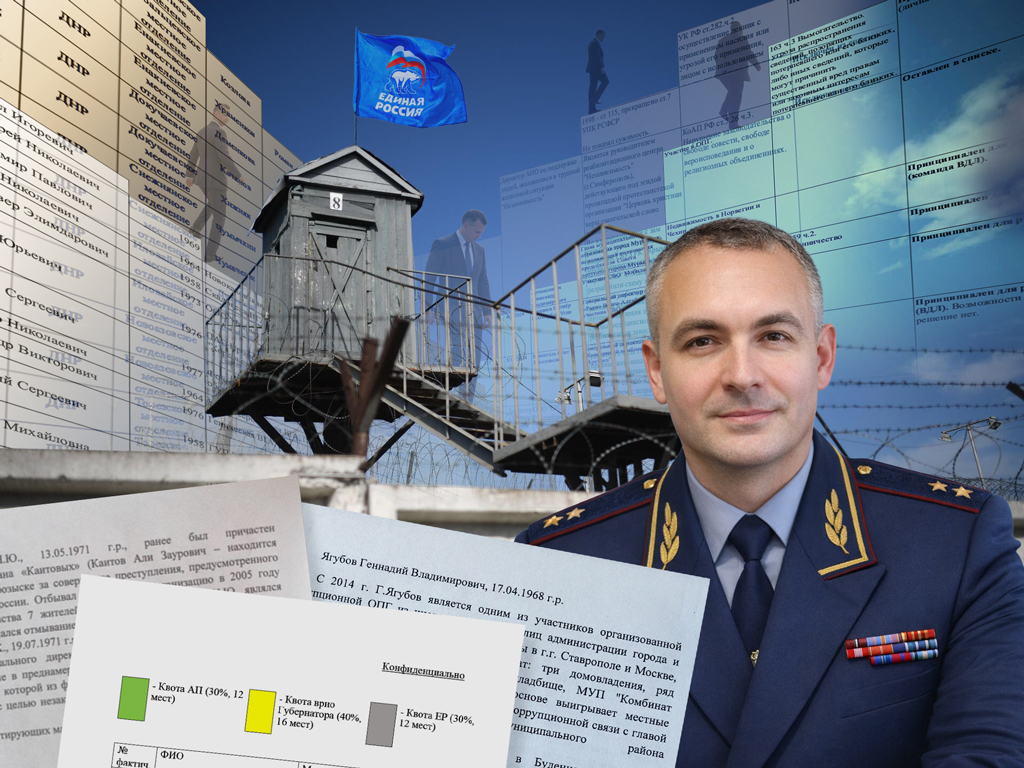
In September 2026, Russia plans to hold its sham federal parliamentary elections where, for the first time, residents of the “new territories” – the temporarily occupied parts of the so-called DPR, LPR, as well as parts of the Zaporizhia and Kherson regions – will participate to send deputies directly to Moscow. But if the previous regional elections were a dress rehearsal, what kind of candidates are being groomed for these positions today?
A joint investigation by Dallas, 256 Cyber Assault Division, and Ukrainian Militant reveals the dirty secrets of the pro-Kremlin United Russia party, an apparatus engineered to secure yet another unquestioned supermajority. Our analysis of the secret candidate blueprints from prior internal primaries exposes a system where Putin’s party knowingly vets candidates with records for fraud, criminal behaviour and much more. While we have highlighted only a fraction of these compromising files, we welcome investigative journalists to help shine a light on the rest of this dark and dysfunctional roster.
Obtained via the Dallas secure submission channel, this database has undergone a rigorous forensic audit. By verifying metadata and original digital signatures, we have confirmed that these documents remain in their native state, entirely unaltered by external interference.
“Every functionary must be studied to the bone, his strengths and weaknesses known… Hence the decisive importance of the records and distribution department [the cadres department] in the apparatus,”
declared dictator Joseph Stalin in the Central Committee report of 1923
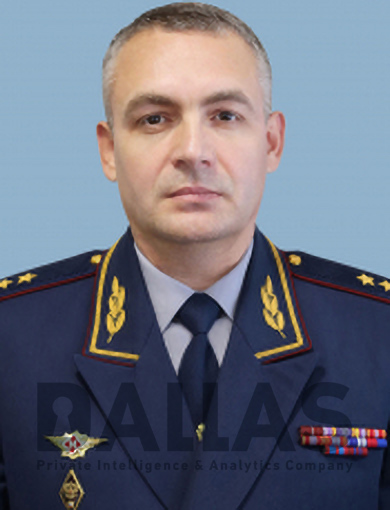
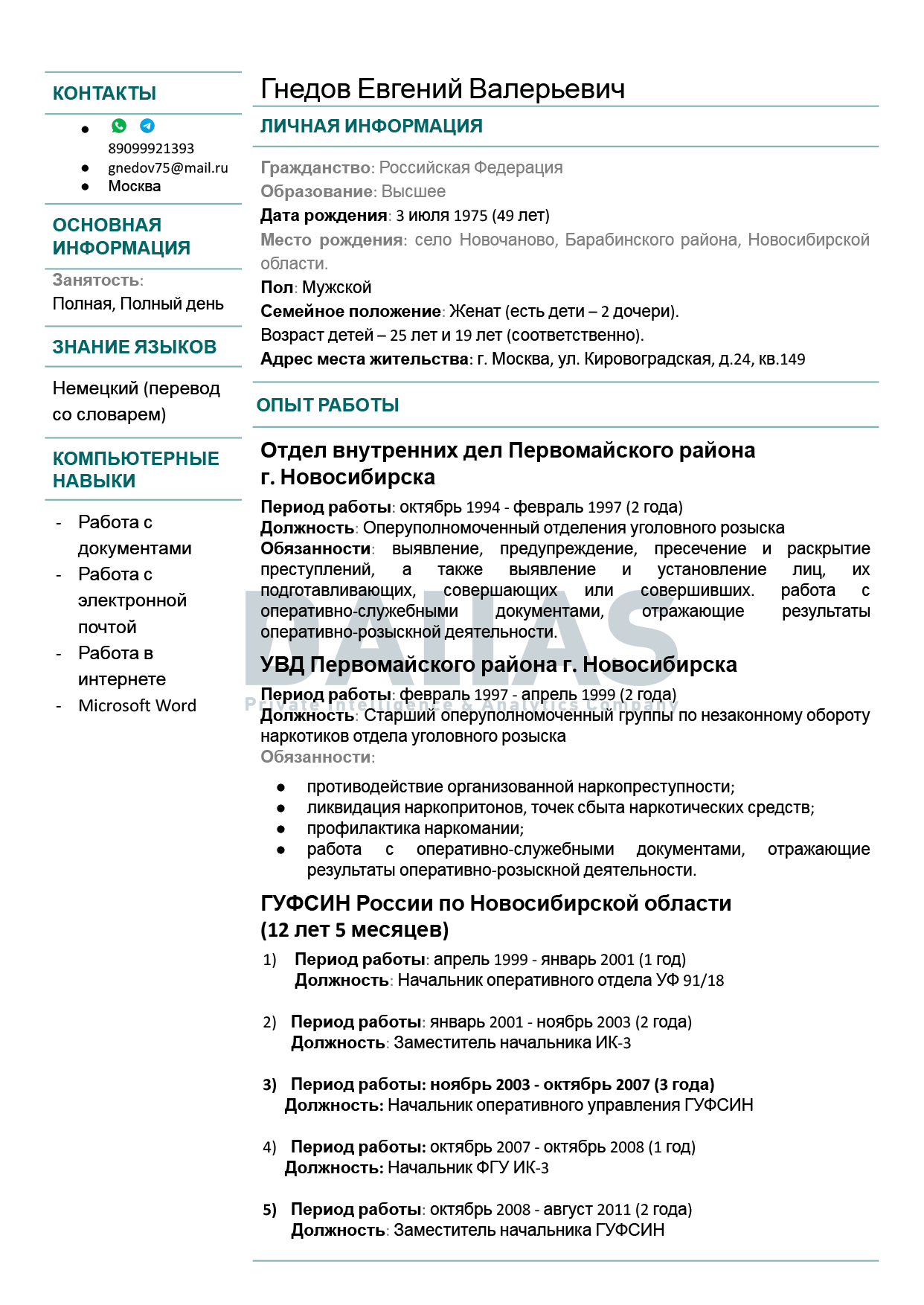
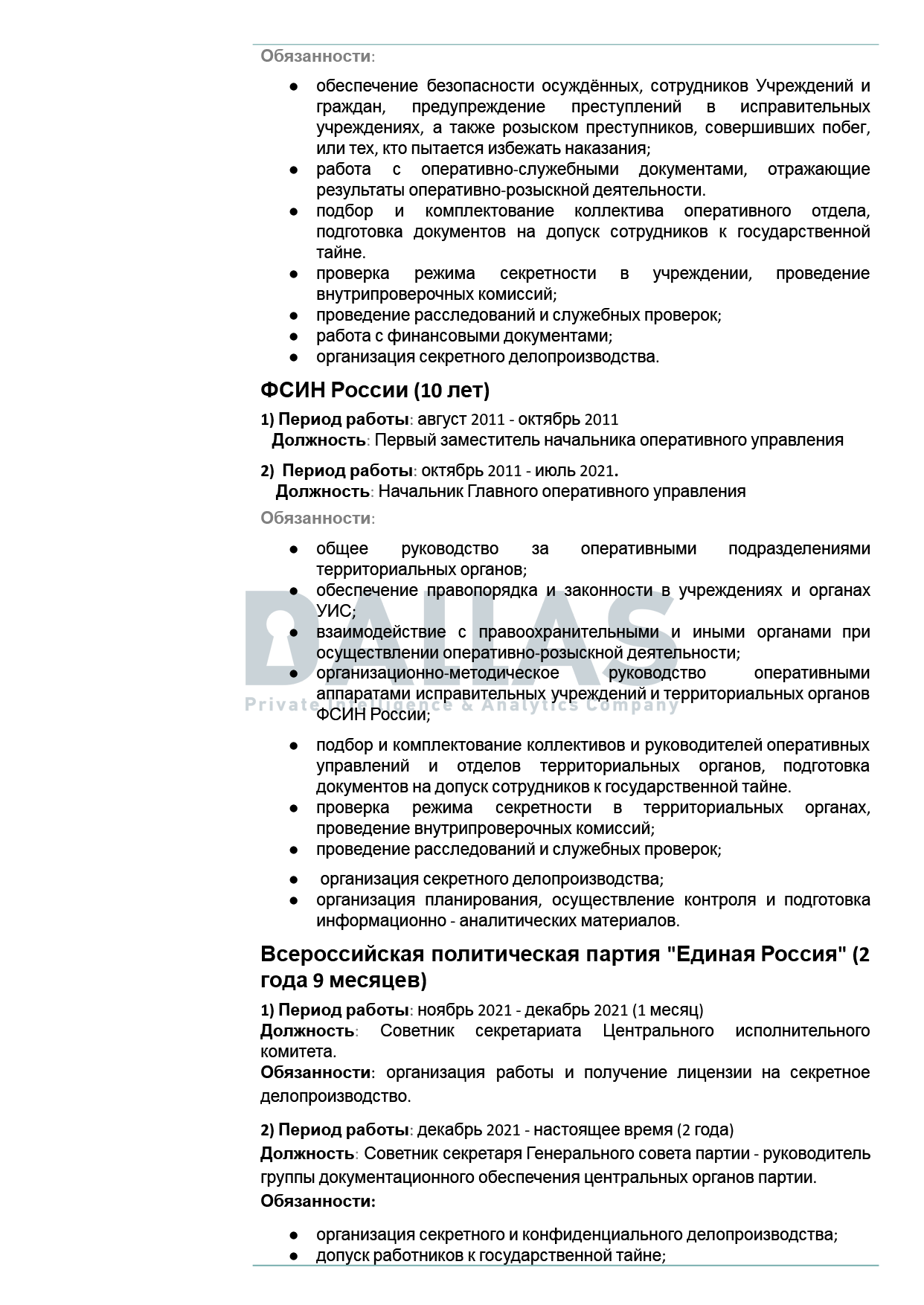
This quote is almost a job description for the main character of our investigation – now retired Lieutenant General of the Federal Penitentiary Service of Russia (FSIN in Russian) Evgeniy Gnedov. Born in 1975, Gnedov began his career in 1994 as a street-level detective in rural Novosibirsk. By 1999, he was starting to climb the ranks of the regional penitentiary system, where his official duties included “ensuring the safety of convicts and staff” and “preventing crimes in correctional facilities”.
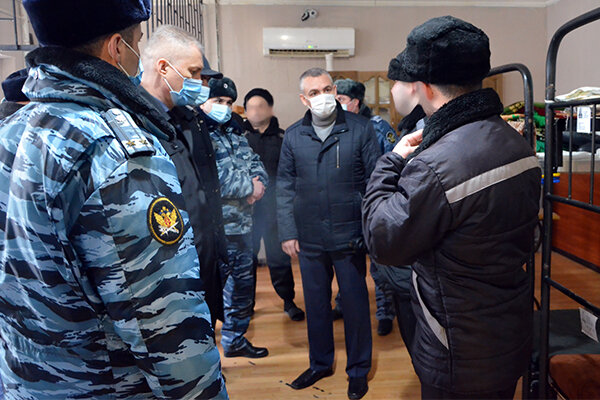
Evgeniy Gnedov (in the centre) during a visit to a penal colony during Covid
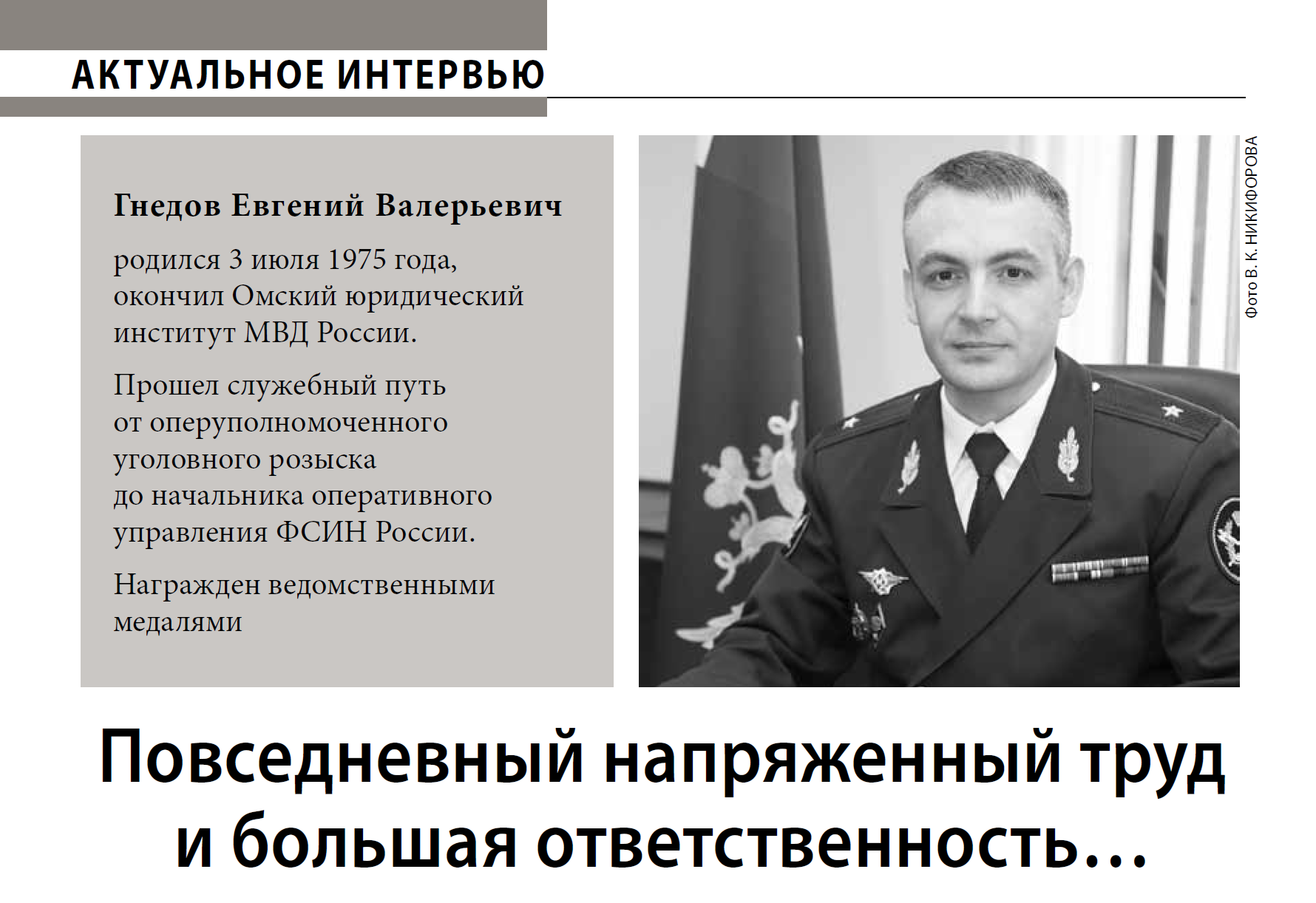
Interview with the FSIN newspaper
To those familiar with the contemporary Russian penitentiary system, these official titles are a dark irony. Human rights organisations like Gulagu.net and OVD-Info have extensively documented that “ensuring safety” often translates to the management of “torture conveyors.” In such facilities, prisoners have virtually no rights, squeezed between corrupt officials and “capos” (enforcer inmates) who run the prisons as joint ventures. “Press-huts” are another frequent feature – specific cells designed to “break” individuals through systematic beatings and sexual violence until they become compliant slaves or sign false confessions. In this system, the “safety” Gnedov was tasked with maintaining was actually the preservation of a brutal hierarchy where the administration extracts profit from prison labour while crushing dissent through physical terror.
In 2011, Gnedov reached the summit of this brutal system, becoming the Head of the Main Operational Directorate in Moscow. His primary responsibilities included the “general management of operational units” and “ensuring law and order” across the entire federal prison system. However, Gnedov’s tenure ended in 2021 not with a celebration, but with a carefully managed exit. His departure coincided with a leadership shake-up tied to the bloody 2020 riot at Penal Colony No. 15 (IK-15) in Angarsk – a nominal concession to public outrage that allowed him to retire quietly on full service tenure.
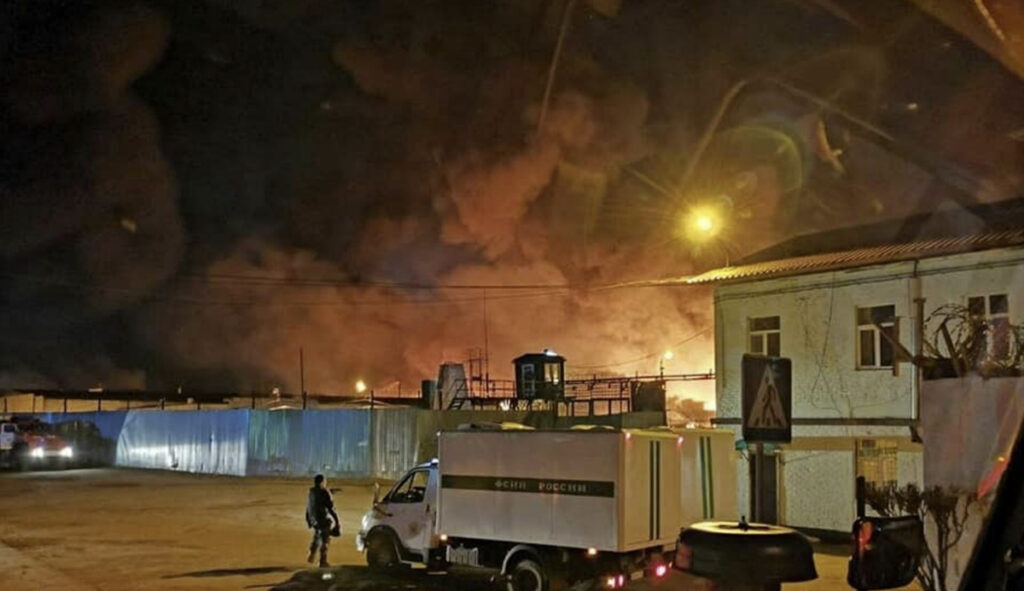
Fire inside the premises of Penal Colony No. 15. Photo: RFE/RL
Investigations and media reports at the time exposed a staggering depth of corruption. For over five years, government and security officials and their commercial accomplices allegedly controlled the Irkutsk region and its prison administration. This syndicate organised the massive illegal logging of hundreds of thousands of cubic meters of valuable timber, which was then smuggled into China. When inmates began to protest against systemic torture, the prison staff utilised the ensuing riot as a cover to set fire to the colony and destroy the administrative documents that tracked their forestry schemes.
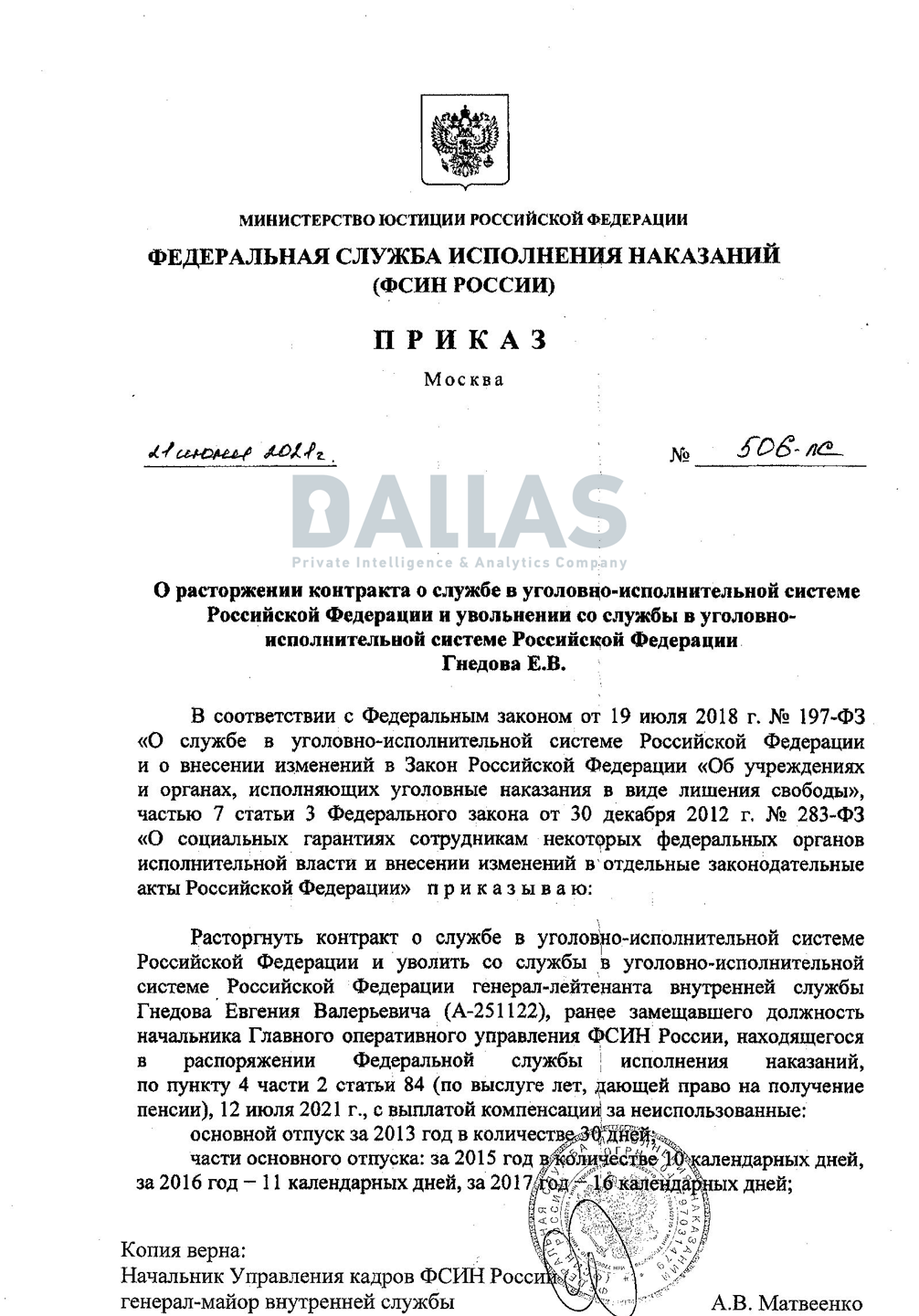
Gnedov’s FSIN dismissal order on length-of-service grounds
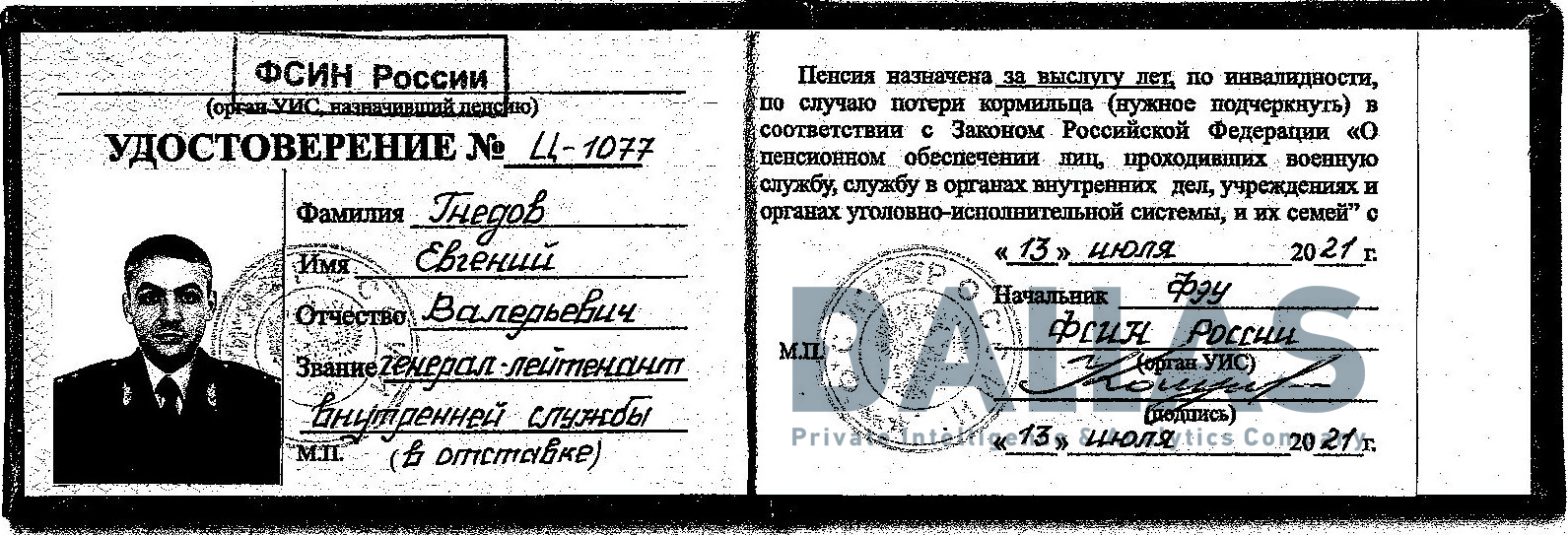
Gnedov’s retired Lieutenant General of the FSIN identification card
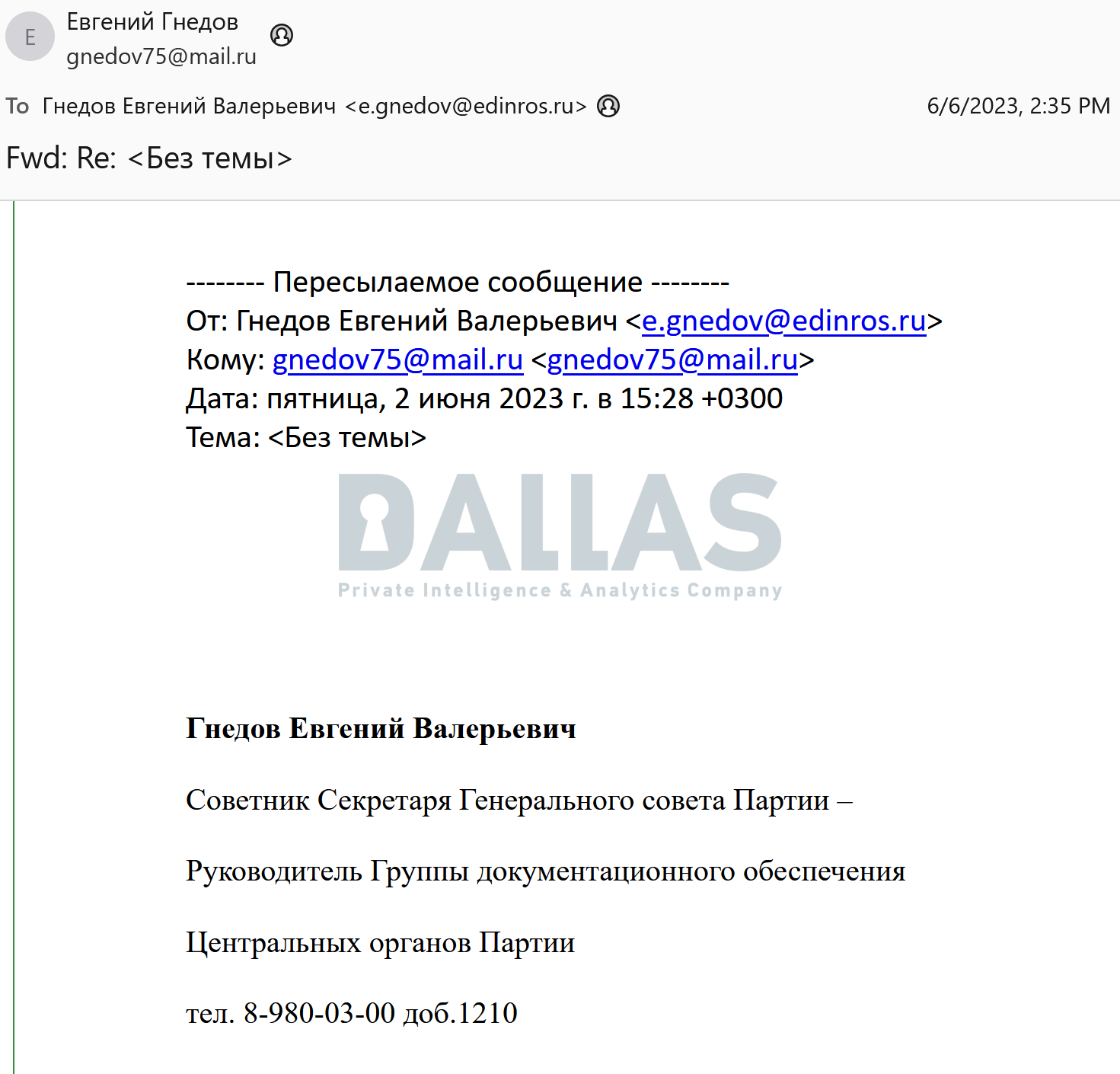
Gnedov’s party role as referenced in official working correspondence
From Prison Corridors to Party Headquarters
Despite the scale of these crimes taking place under their noses, Gnedov and other senior FSIN officials did not end up behind bars. Instead, they were quietly shown the door to satisfy public outrage. In the ecosystem of the Russian kleptocracy, this was not a disgrace but a transition. By late 2021, Gnedov was installed as a key advisor within the United Russia party’s Secretariat (official title – Advisor to the Secretary of the Party’s General Council and Head of the Document Management Group for the Central Party Organs), trading prison corridors for the centre of political power.
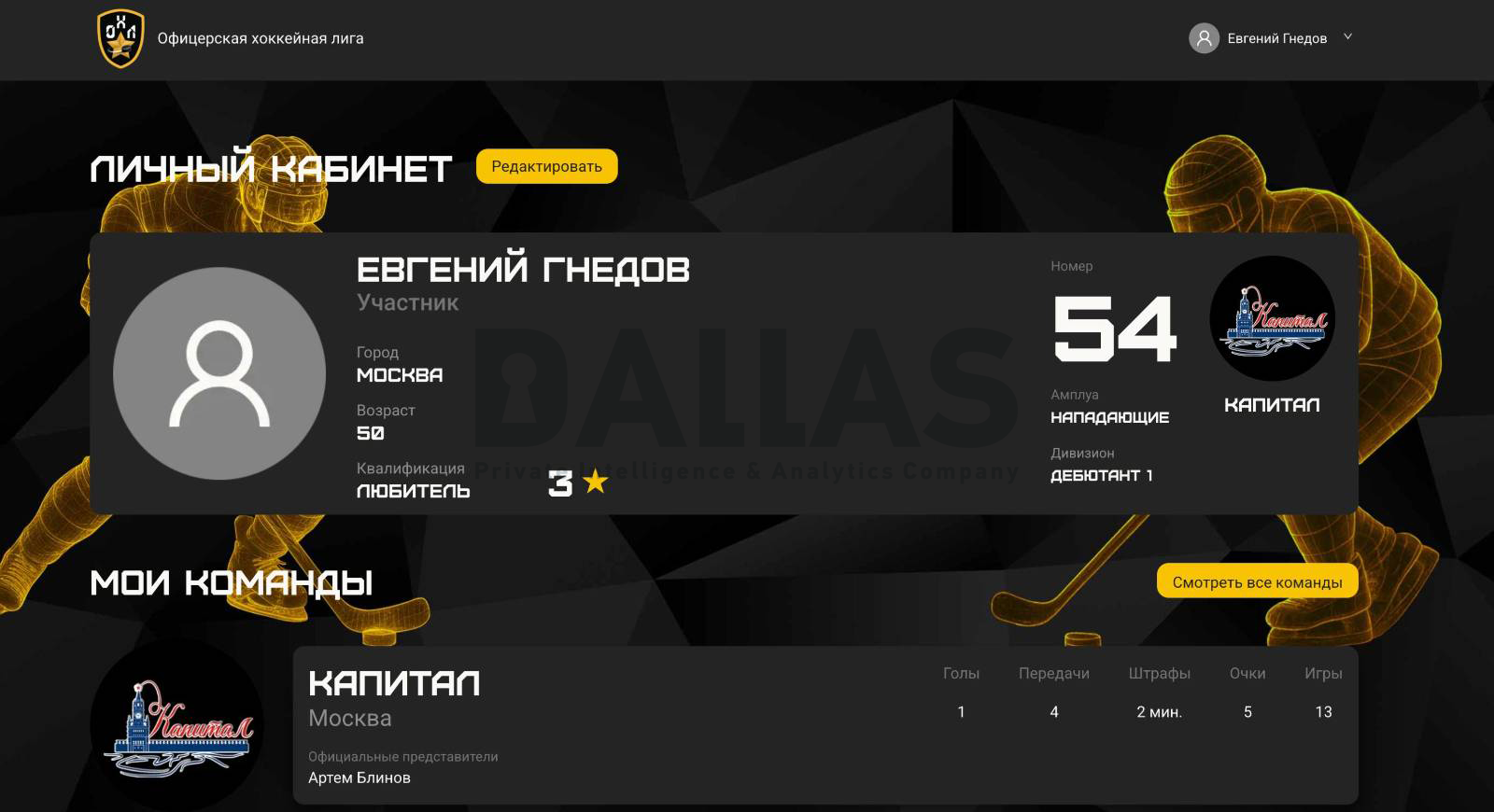
Gnedov’s hockey player profile on the Amateur Hockey League website
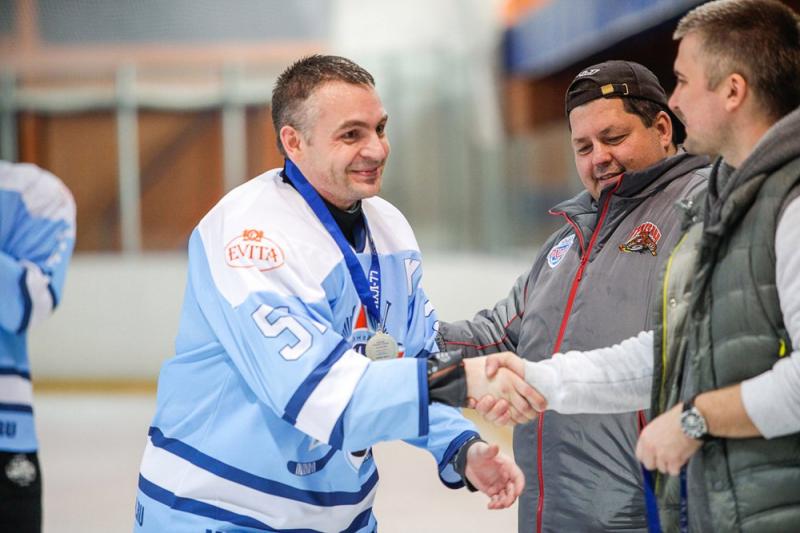
Gnedov after a hockey game
Exactly how Gnedov avoided a cell and transitioned to a party job remains a mystery. According to our sources, the patronage was arranged personally by party Chairman Dmitry Medvedev. It was likely further facilitated by lingering FSIN-era political ties or the high-profile connections made through the Amateur Hockey League ‘brotherhood.’ In Russia’s elite circles, the ice rink often serves as a vital informal backchannel, allowing security brass and party power players to trade favours away from public scrutiny.
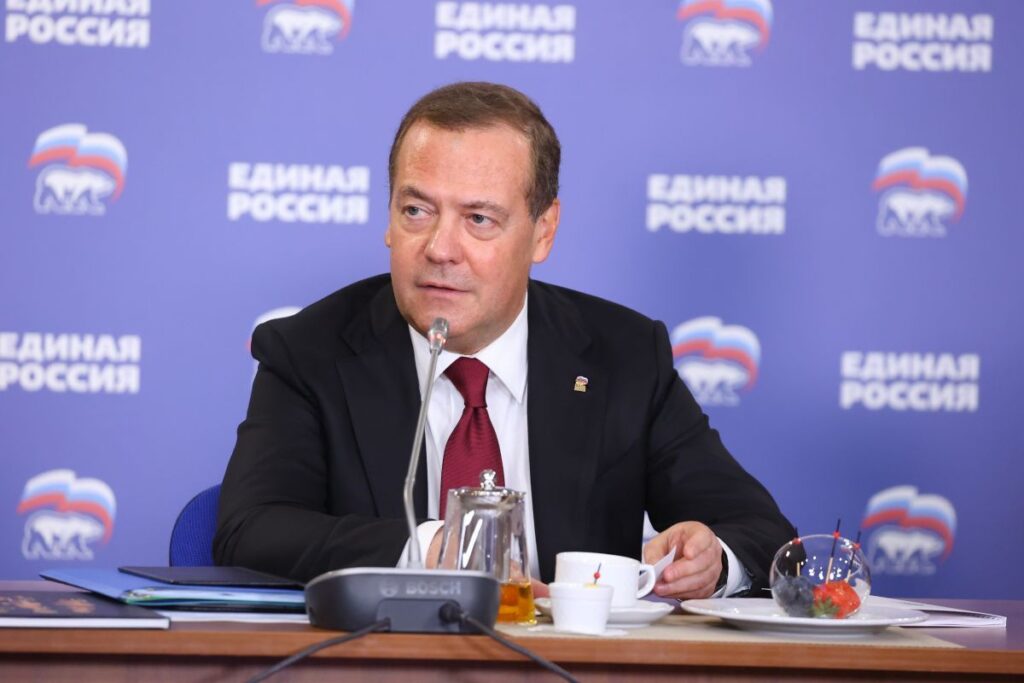
“And our main political force – United Russia – must not simply reign; it must show intelligence, tact and strength, and it must put forward the right people,”
Dmitry Medvedev stressed while serving as president
United Russia is not a party in the Western sense; it is a state department for domestic politics that controls nearly all governorships and regional legislatures. While technically a political party, it functions as a state-party hybrid – a “transmission belt” that converts Kremlin directives into law, manages regional elites, and provides a veneer of democratic legitimacy through highly controlled electoral processes. Akin to the Communist Party in Soviet times, United Russia serves as the primary filter for the Russian bureaucracy and a mandatory career stage for ambitious officials.
So where does Lieutenant General Gnedov fit in when he joined the party’s Secretariat in November 2021? He oversees matters related to party security, intelligence gathering, interaction with the “siloviki” (security services), including in the “new regions”, where United Russia is currently very active. Crucially, Gnedov holds unprecedented access to raw law enforcement operational intelligence and surveillance data about current United Russia party members as well as potential candidates – files far more sensitive than formal criminal records.
Flagged, Approved, Elected
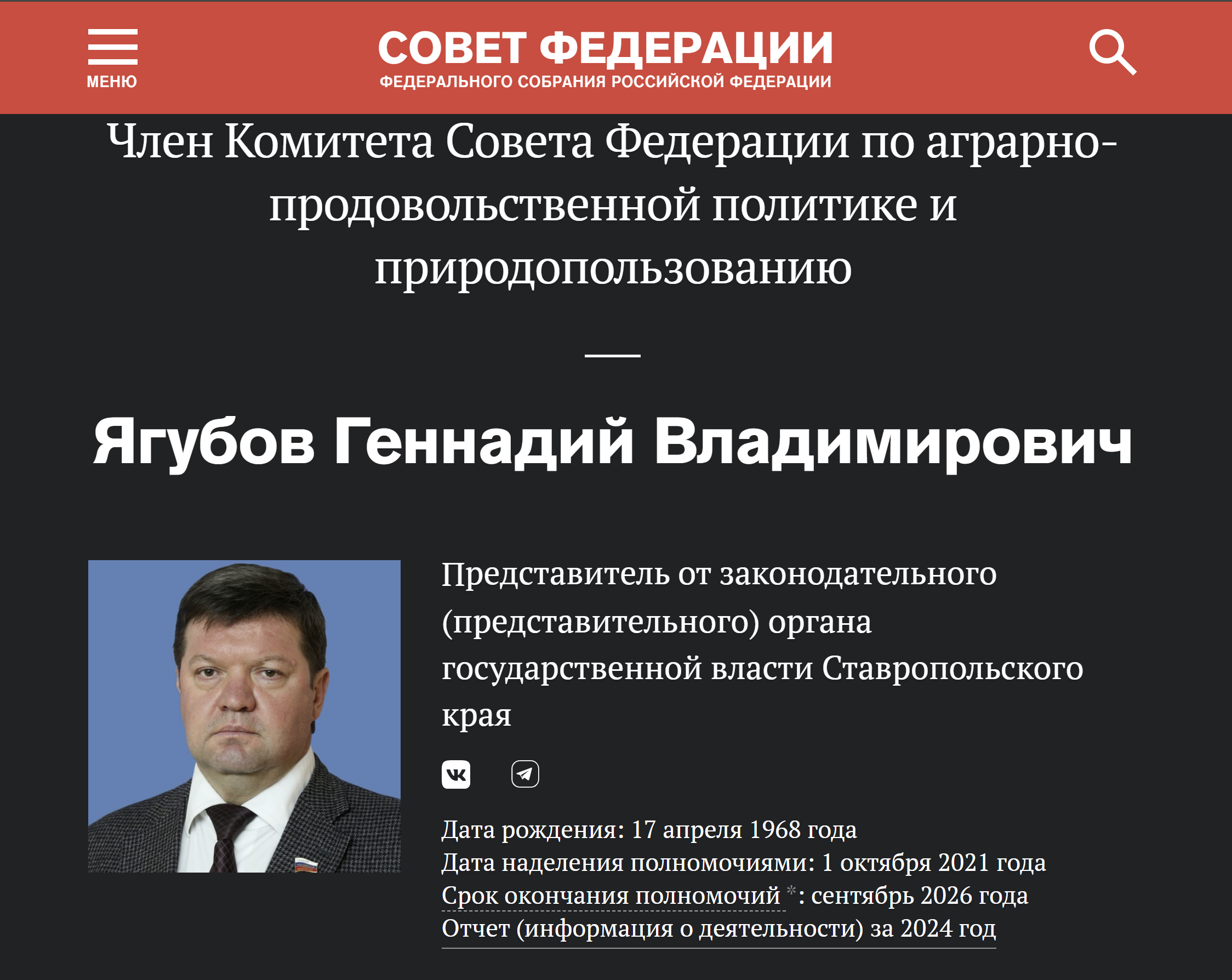
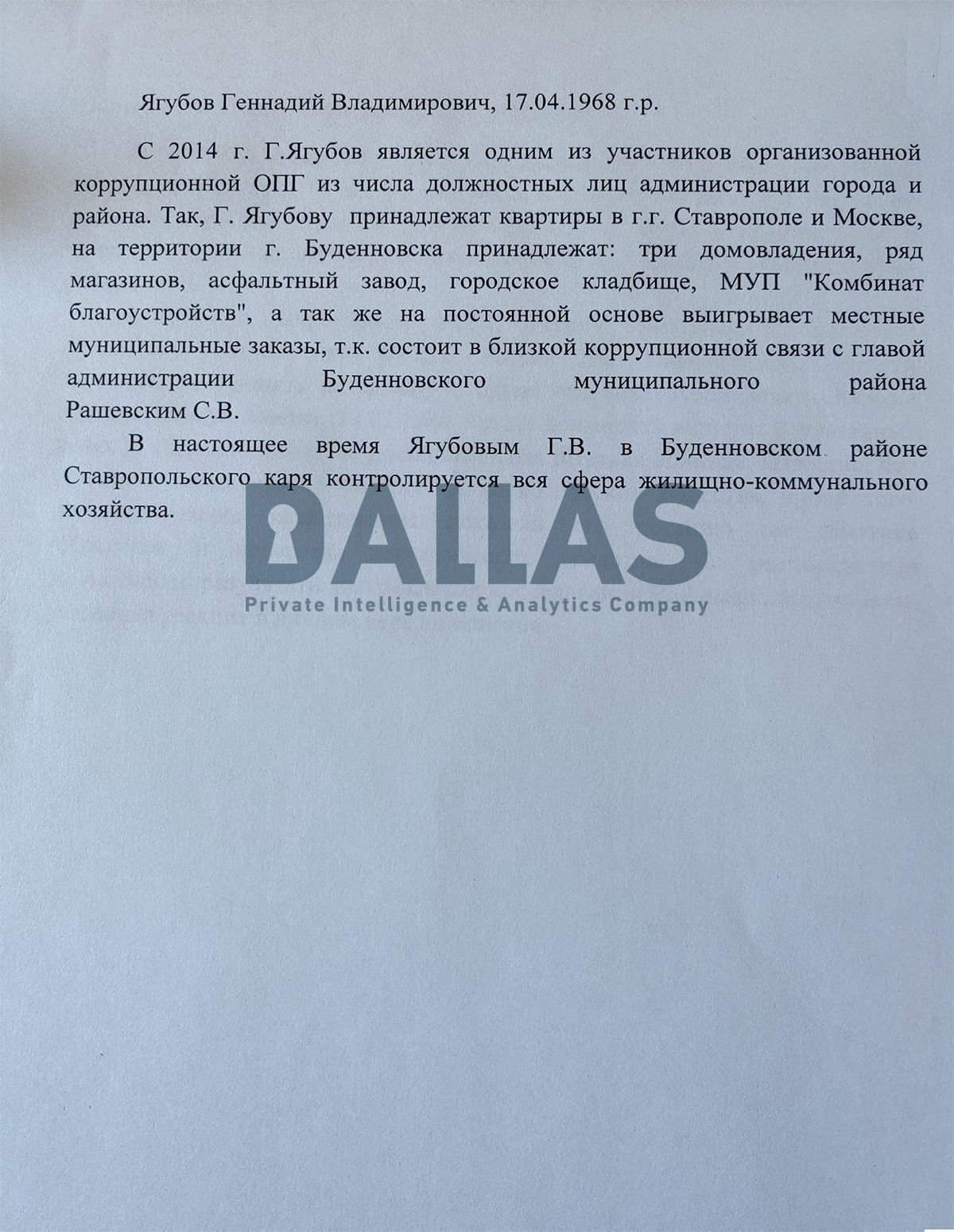
Party profile of Yagubov.
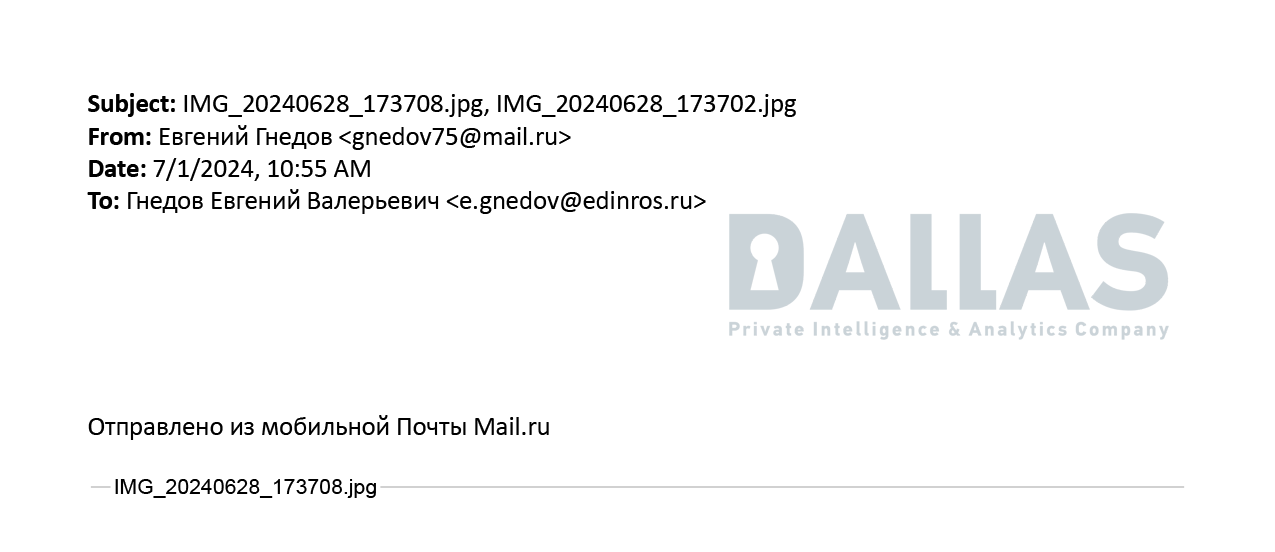
To view the EML file, download it and open it with an email program such as Outlook.
For example, one of such confidential assessments detail a wide-scale corruption of a current Russian Senator Gennady Vladimirovich Yagubov (date of birth: April 17, 1968). Gnedov forwarded the file from his private email [email protected] to a work email [email protected] in July 2024.
Voters would be unsettled to discover that, according to a United Russia secret file, since 2014 Gennady Yagubov has been identified as a key member of an organized corruption ring involving Stavropol city and district officials.
The internal dossier details a vast portfolio of assets allegedly tied to Yagubov who consistently secures local municipal tenders. Within Stavropol’s Budyonnovsk district, his holdings include three residential estates, a network of retail shops, an asphalt plant, the city cemetery, and the Municipal Unitary Enterprise “Kombinat Blagoustroistva”. Currently, Yagubov exerts total control over the housing and communal services sector throughout the Budyonnovsky district of Stavropol Krai.
Once again – these are not the assumptions of a media investigation, that can be labeled as foreign agent smear campaign. These are United Russia’s own documents not for a public eye.
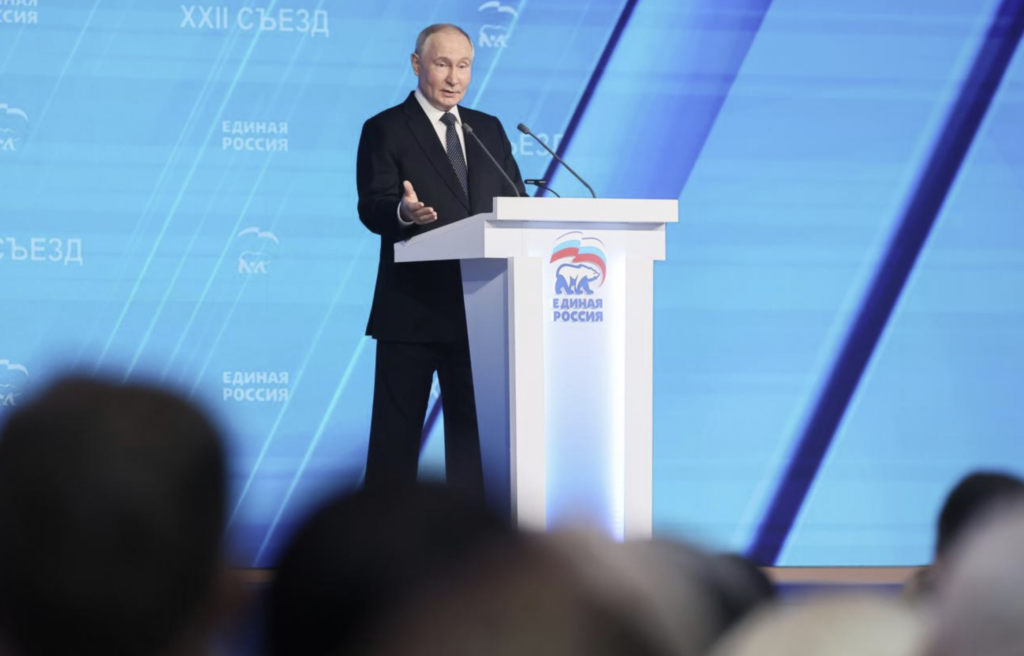
“People trust such candidates – veterans of the special military operation – and rely on their integrity, honesty, and professionalism,”
President Vladimir Putin said at the United Russia party congress in December 2024
And what about the so-called SVO veterans-turned politicians? Surely, Kremlin’s rubber-stamp party carefully picked the best of the best? Alas, it does not seem so.
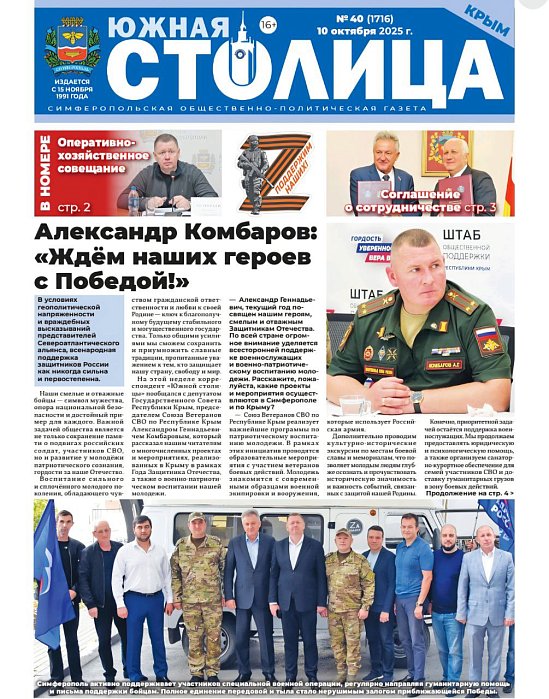
Kombarov’s interview on the front page of a Crimean newspaper
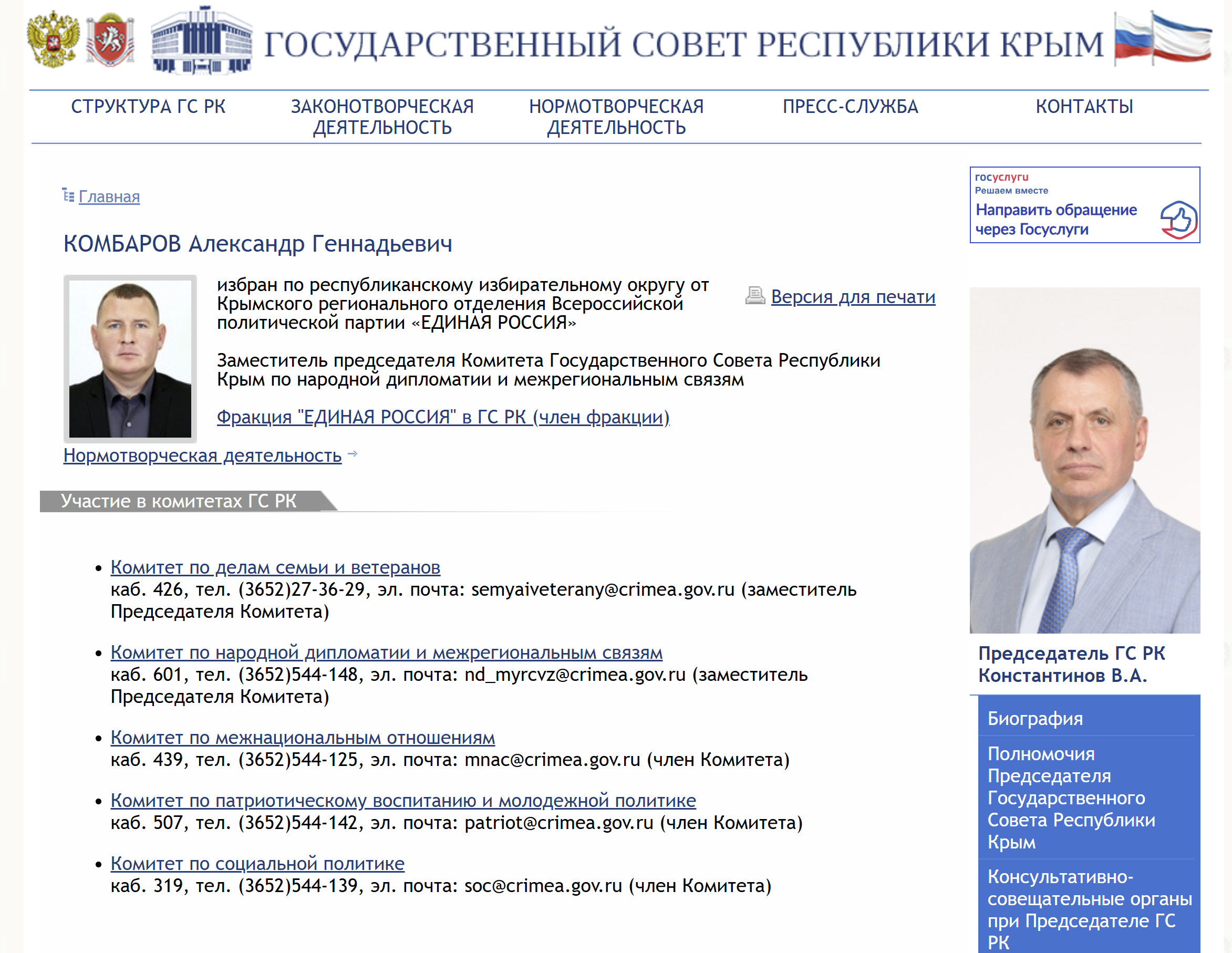
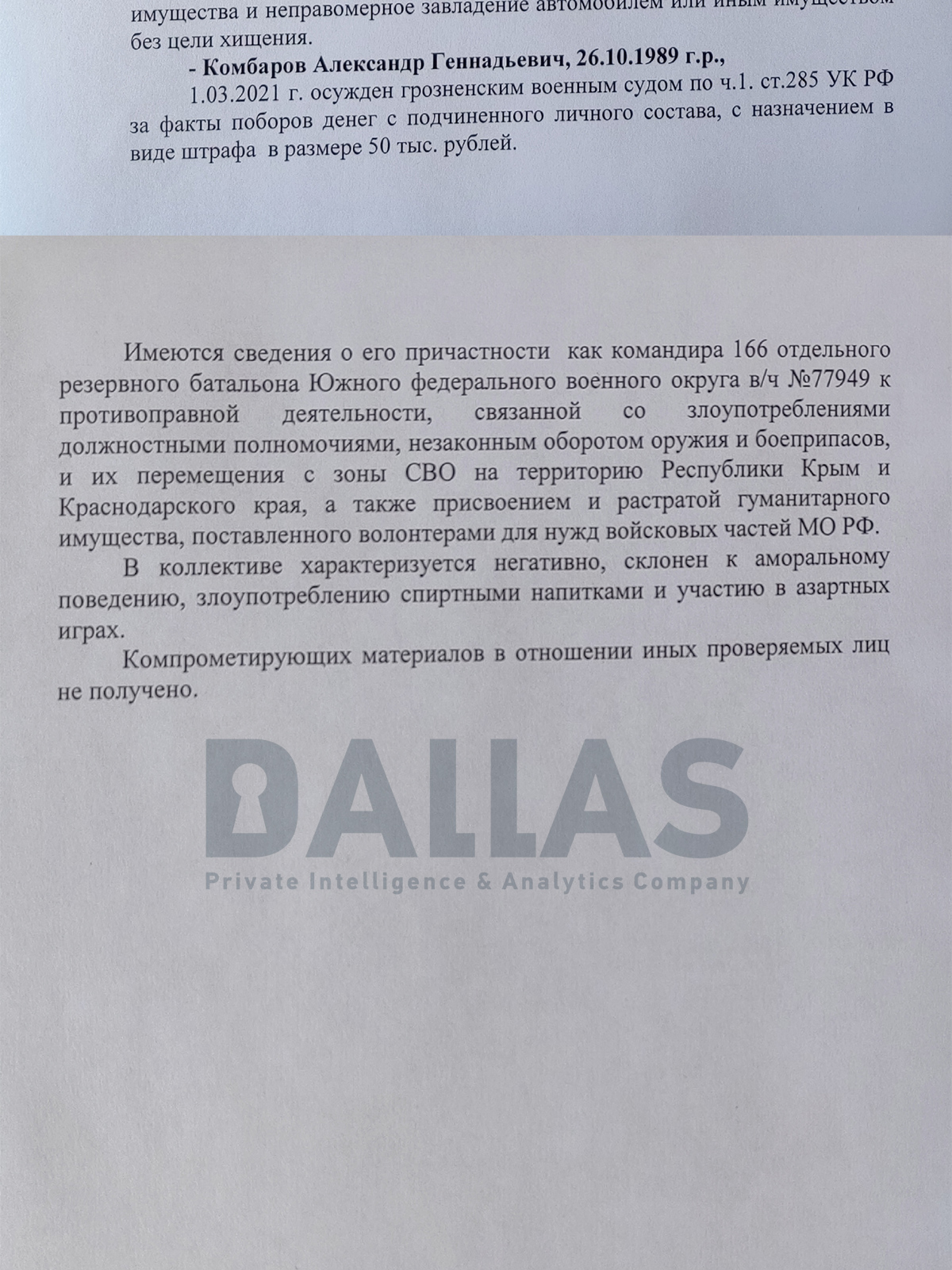
Party profile of Kombarov
Meet Aleksandr Gennadievich Kombarov (born October 26, 1989) – a former military officer from the Tambov region who currently serves as a Deputy of the State Council of the temporary occupied Crimea (2024-2029 term). Despite his public persona as a legislative leader and veteran advocate, internal vetting files a profile defined by predatory corruption and moral bankruptcy.
In 2021, the Grozny Military Court convicted Kombarov for extorting money from his own subordinate personnel. He was sentenced only to a fine of 50,000 rubles – a complete joke given that he used his rank to prey upon the very soldiers he was sworn to lead.
Furthermore, his own party’s internal assessment identifies Kombarov as abhorrently unfit for leadership, linking him to a series of high-stakes illicit activities while commanding the 166th Separate Reserve Battalion (Military Unit No. 77949):
– Weapon Smuggling: Alleged involvement in the illegal trafficking and movement of weapons and ammunition from the front into Crimea and the Krasnodar region.
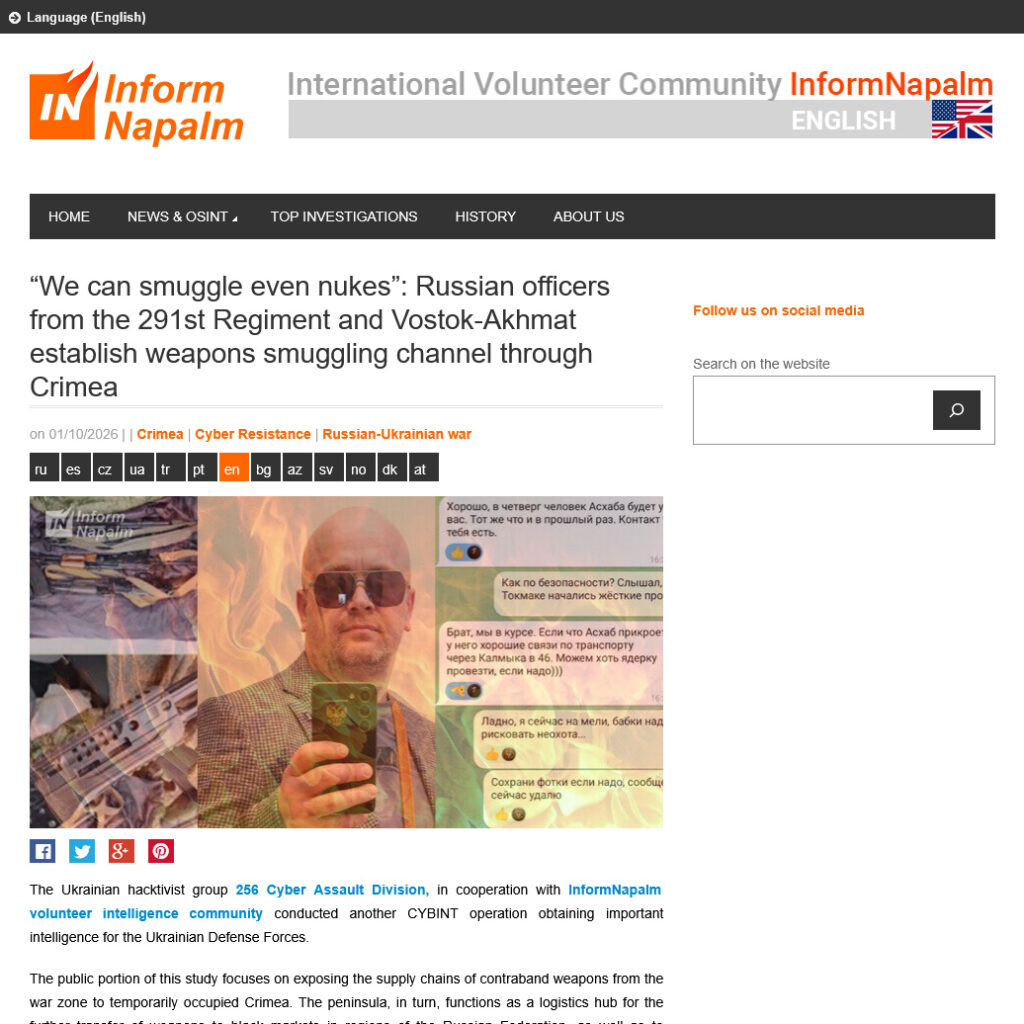
This shadow network has recently been exposed by the OSINT community in the landmark InformNapalm & 256 Cyber Assault Division investigation, “We can smuggle even nukes.”
– Humanitarian Plunder: The systematic misappropriation and embezzlement of humanitarian property and supplies donated by volunteers for frontline units.
The dossier concludes with a scathing character assessment from those who served under him, describing Kombarov as a man defined by amoral behavior, heavy alcohol abuse, and a compulsive addiction to gambling.
This damning internal profile perfectly illustrates the systemic rot within the forces waging war against Ukraine. It is abundantly clear that Kombarov’s habits did not vanish after his 2021 conviction. Yet, fully aware of his deeply compromised background, the United Russia party proudly continues to approve and shield him.
Let’s check a few other party members.
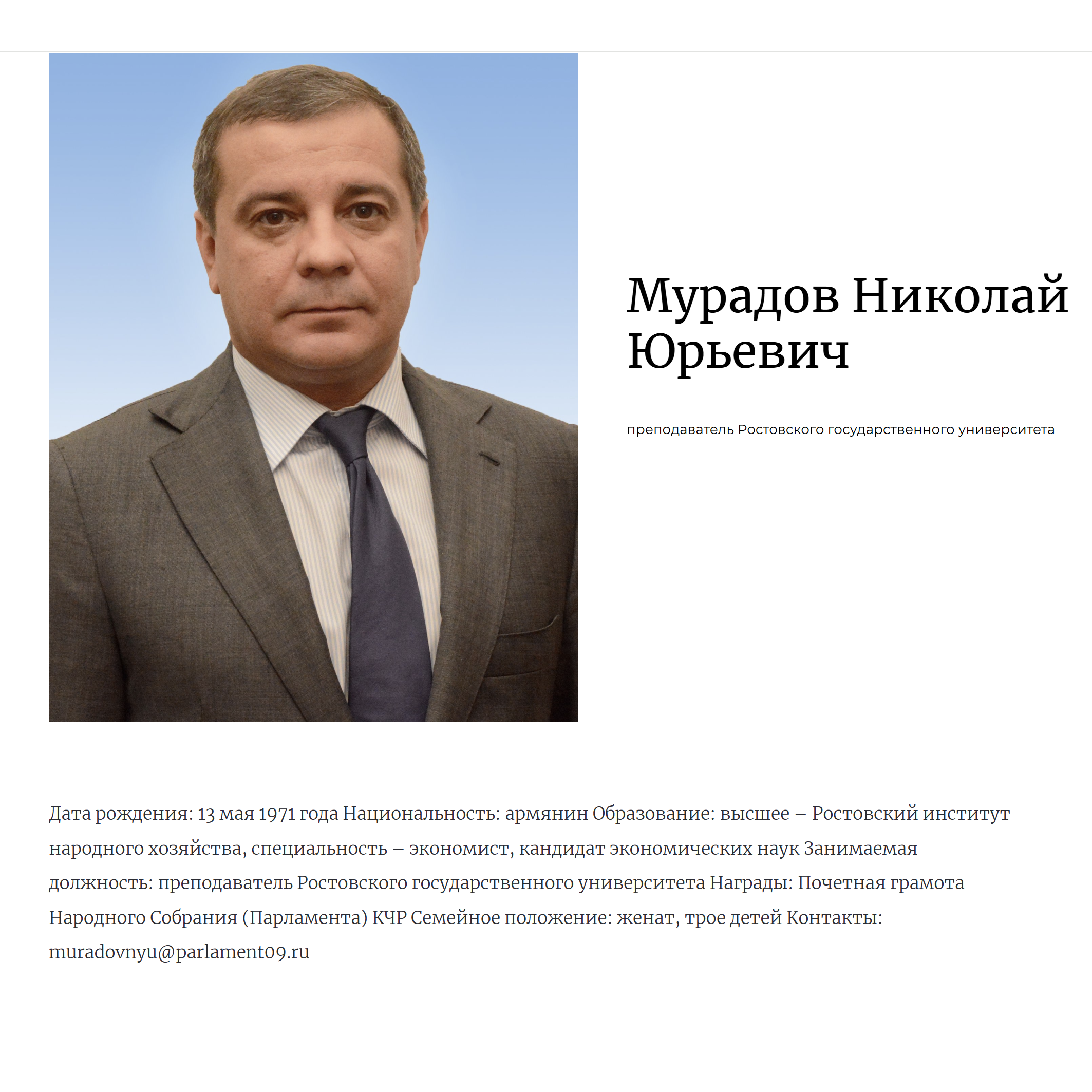
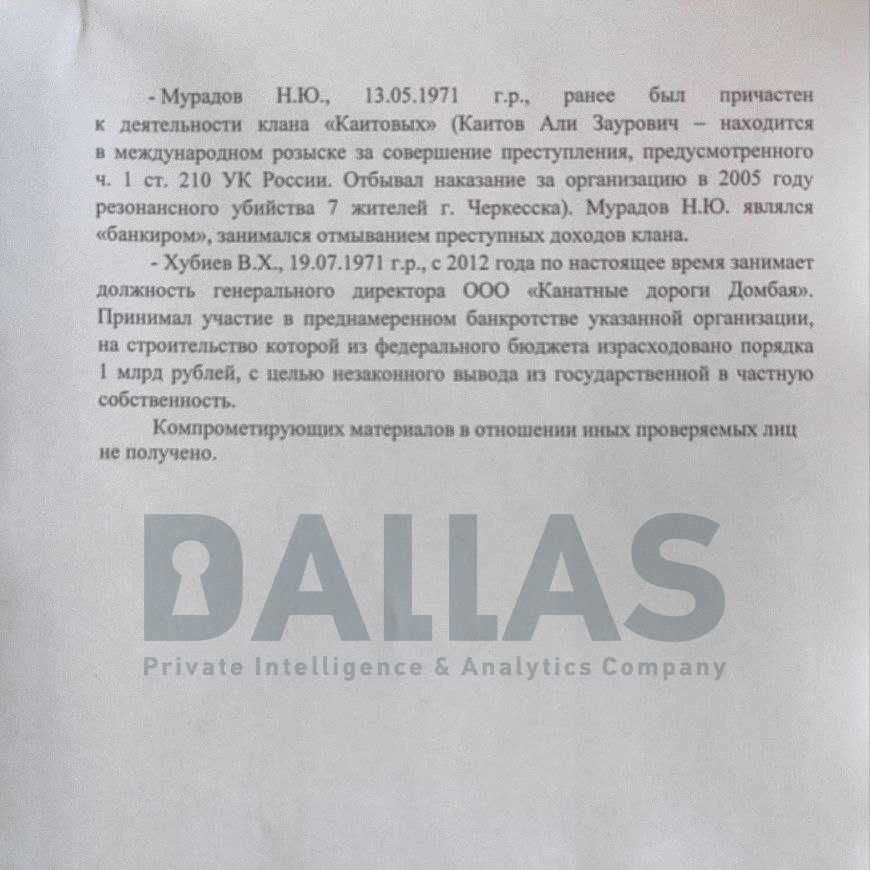
Party profile of Muradov
The pattern of problematic candidates continues in the Karachay-Cherkess Republic with Nikolay Yuryevich Muradov (date of birth: May 13, 1971), who entered the regional parliament via the United Russia party list in September 2024. However, an internal party dossier updated just four months prior to the election reveals a dark history: Muradov is deeply embedded in the notorious “Kaitov” criminal clan.
According to intelligence compiled by Gnedov, the clan’s figurehead, Ali Kaitov, is currently on an international wanted list and previously served a lengthy sentence for orchestrating the high-profile 2005 massacre of seven Cherkessk residents. Within this criminal enterprise, Muradov reportedly acted as the “clan’s banker,” specializing in the systematic laundering of illicit proceeds.
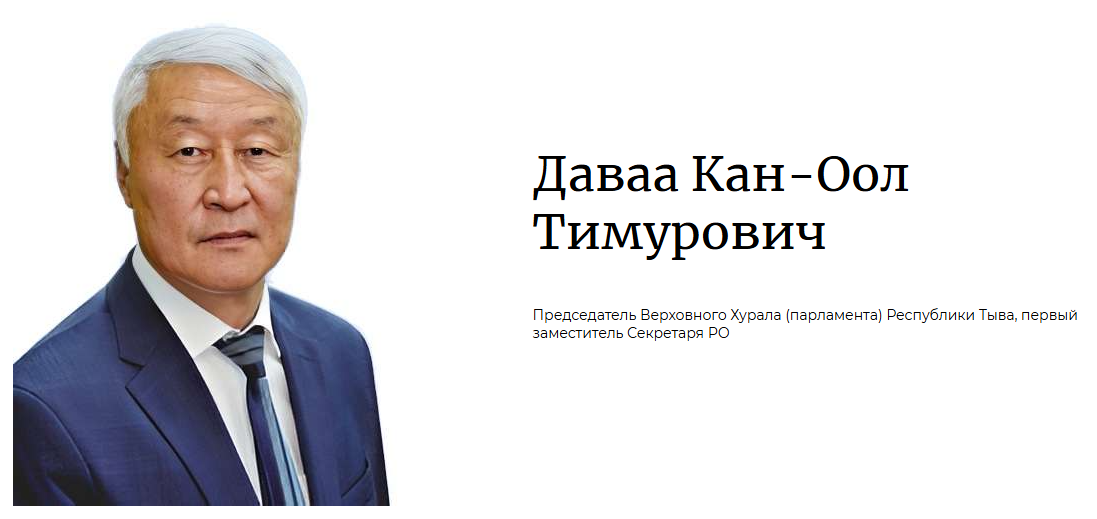
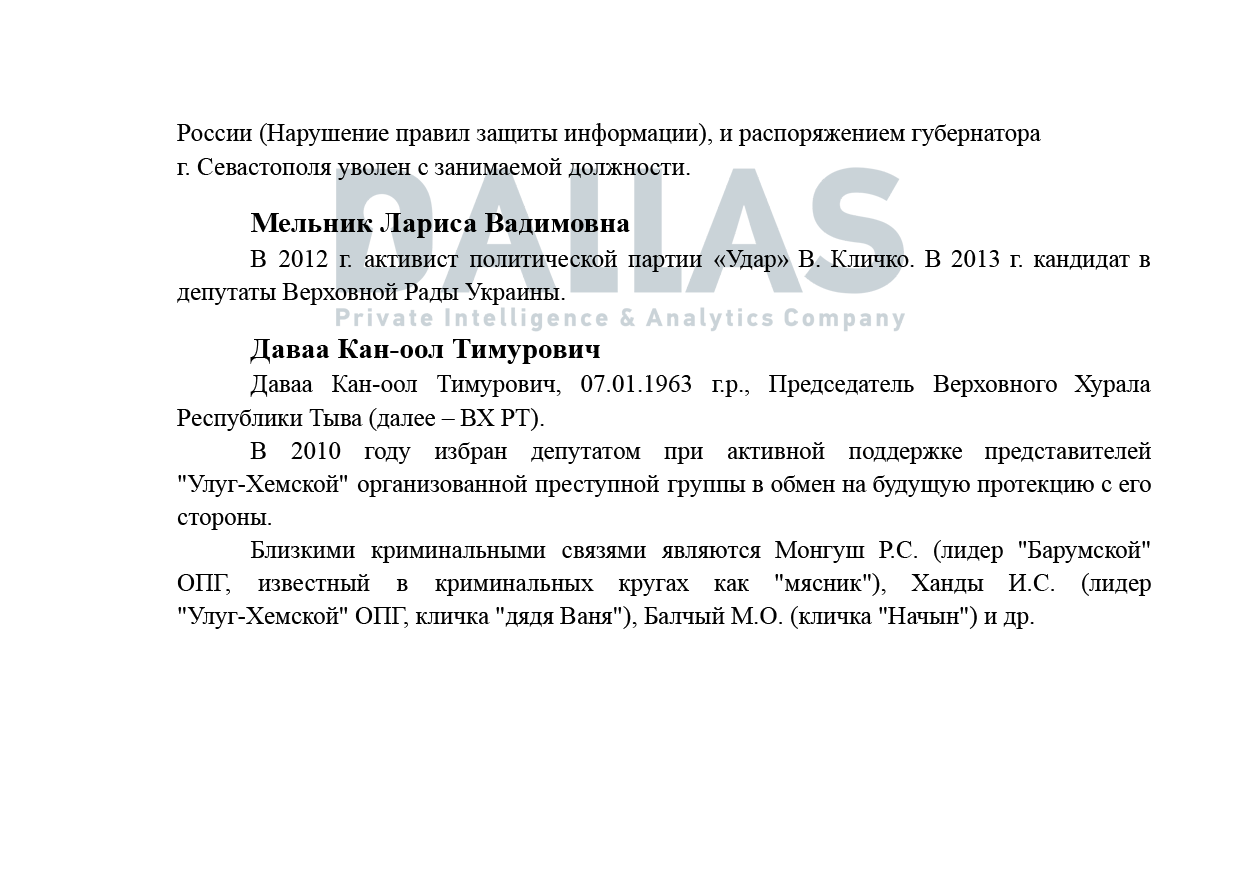
Party profile of Davaa
Not to be outdone by the Caucasian clans, the party’s Tuvan branch offers us Kan-ool Timurovich Davaa (born January 7, 1963), a man whose legislative ‘support staff’ includes characters straight out of a low-budget gangster film. According to the United Russia own assessment, Davaa’s political career was forged through a direct alliance with the underworld. In 2010, he was elected as a deputy with the active support of representatives from the “Ulug-Khem” organized crime group. This backing was reportedly provided in exchange for future protection and political patronage from Davaa once in office.
The dossier identifies several high-level criminal figures as his “close criminal associates,” including: Mongush R.S.: Leader of the “Barum” gang, known in criminal circles by the moniker “The Butcher”; Khandy I.S.: Leader of the “Ulug-Khem” gang, known by the alias “Uncle Vanya”; and Balchyy M.O.: known by the alias “Nachyn”.
As with Muradov, Davaa’s position at the pinnacle of regional power serves as a testament to the party’s willingness to integrate and protect individuals with deep-seated ties to organized crime.
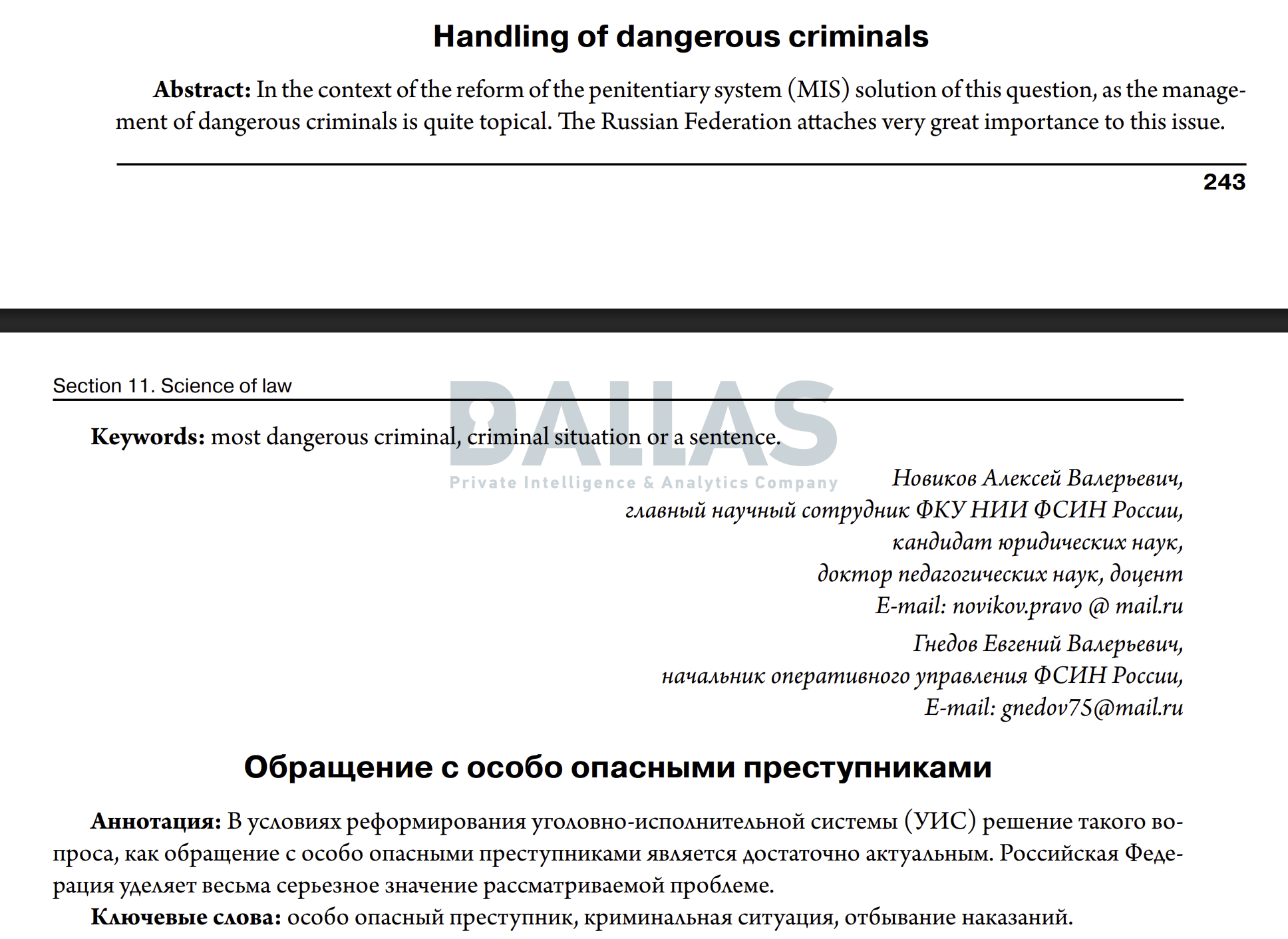
One can’t help but find it fitting that Evgeniy Gnedov once co-authored a scientific article titled “The Handling of Dangerous Criminals”. It’s almost poetic to think that when he walks through the Kremlin for official ceremonies his old FSIN publication likely provides all the necessary protocols for standing shoulder-to-shoulder with the party’s elite.
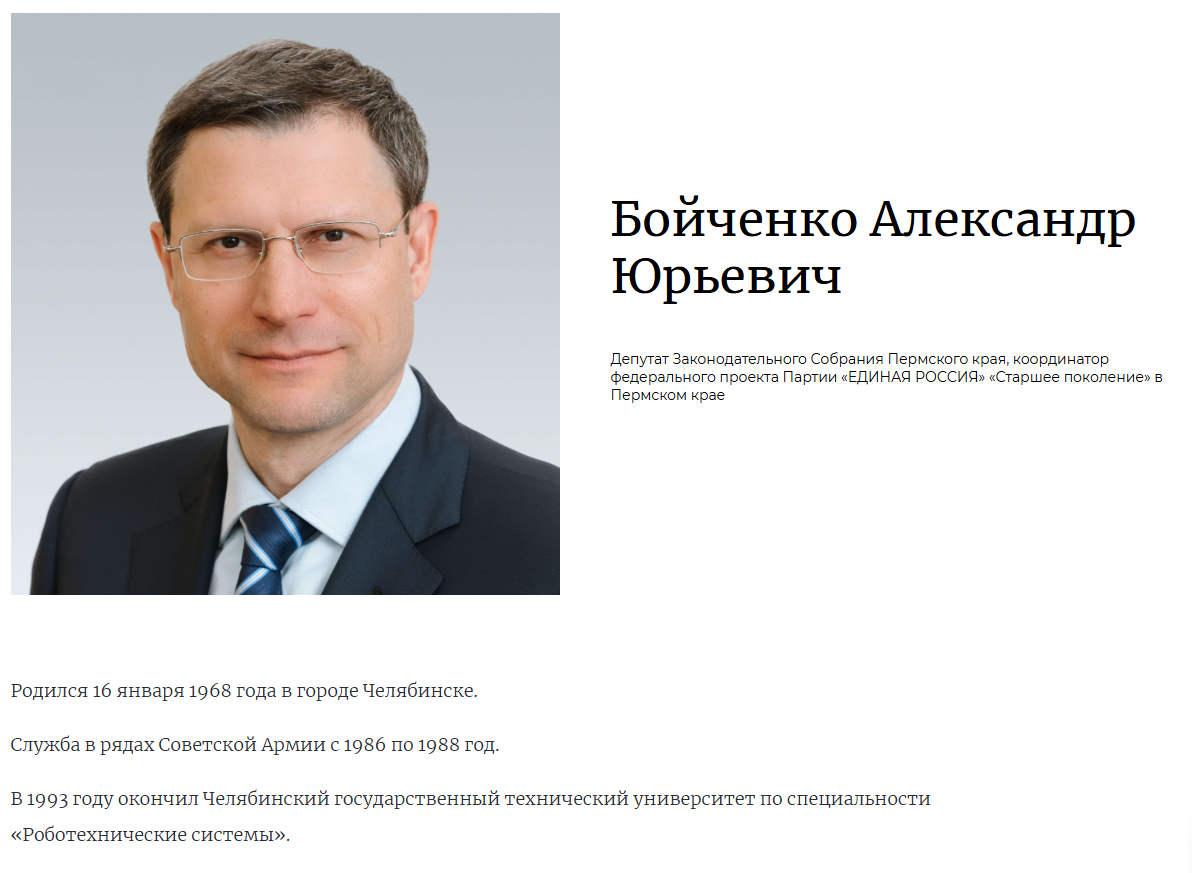
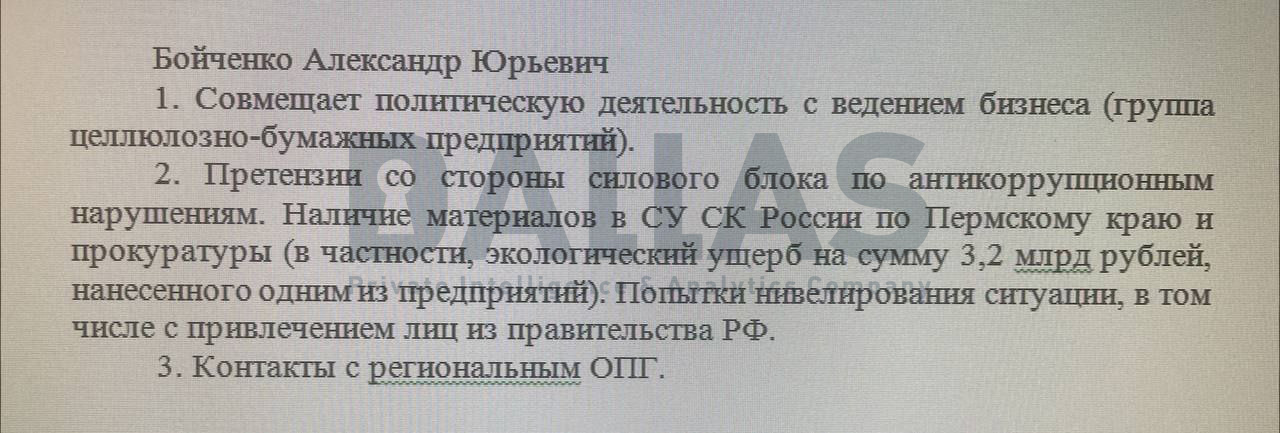
Party profile of Boychenko
Yet another high-risk profile within the regional United Russia ranks is Alexander Yuryevich Boychenko (born January 16, 1968) – a long-standing political fixture in the Perm Krai, currently serving as a Deputy of the Legislative Assembly. According to the Gnedov files, Boychenko’s political career is inseparable from his leadership of a major group of pulp and paper enterprises (specifically the PCBK Group). This dual status has placed him directly in the crosshairs of law enforcement regarding significant anti-corruption and environmental violations.
The internal assessment highlights several critical vulnerabilities:
Massive Environmental Liability: Investigative materials currently held by the Investigative Committee of Russia (SKR) for Perm Krai and the regional prosecutor’s office detail alleged environmental damages totaling 3.2 billion rubles attributed to his enterprises.
Federal Interference: The dossier reports documented attempts by Boychenko to mitigate these legal threats through high-level contacts within the Russian Federal Government, seeking to exert pressure on regional investigators to stall or dismiss the claims.
Criminal Associations: Most concerning to internal security is the reported evidence of Boychenko’s long-term contacts with a regional organized crime group.
As with many of his United Russia colleagues, Boychenko’s involvement in multi-billion ruble scandals and alleged underworld connections remains effectively shielded by his party affiliation.
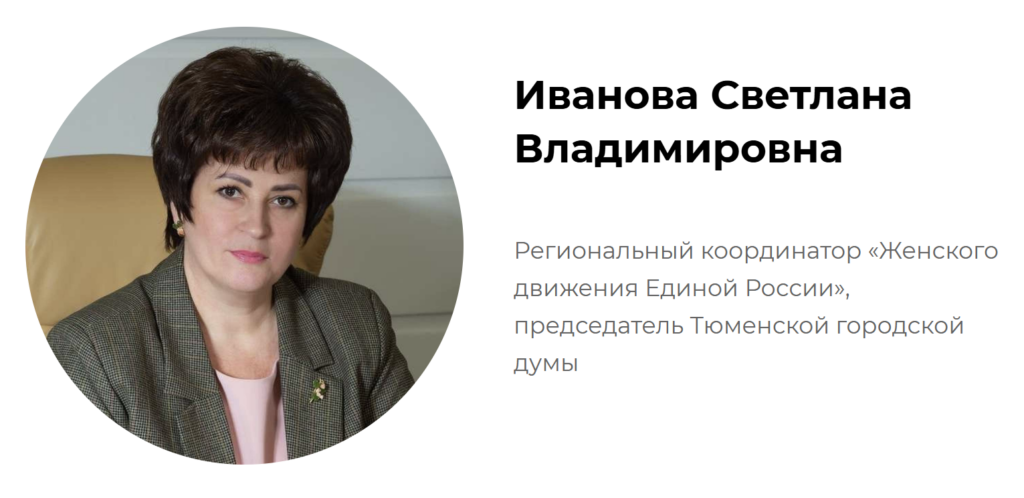
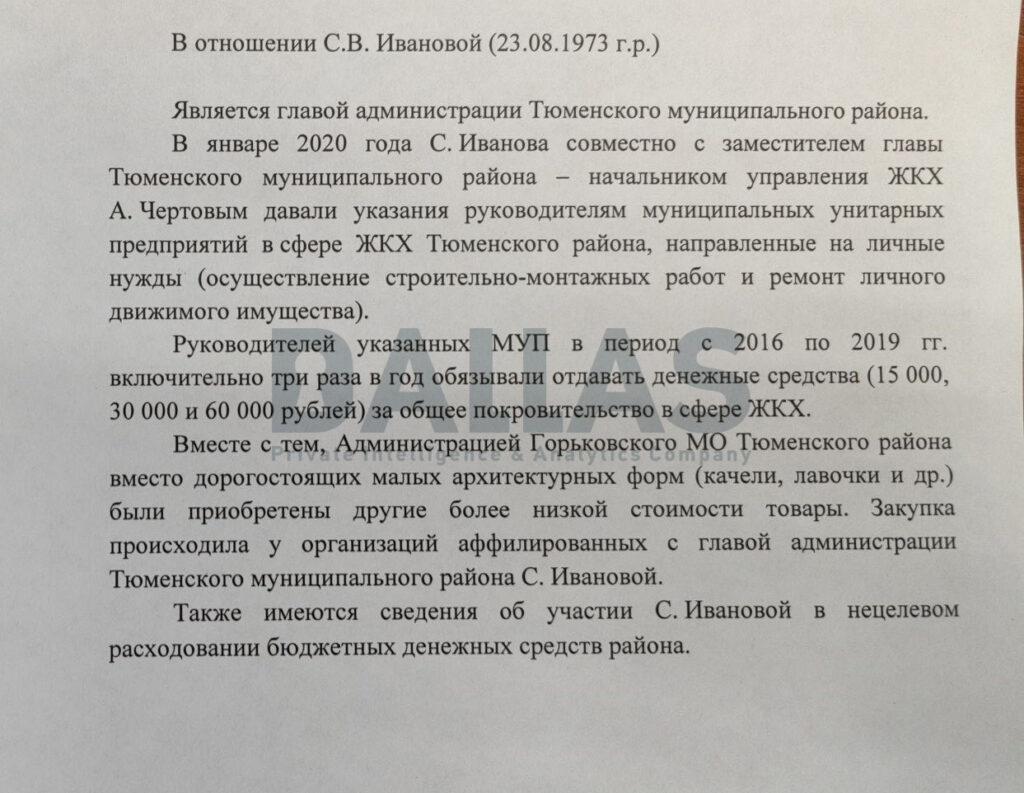
Party profile of Ivanova
The trend of “protected” leadership continues with Svetlana Vladimirovna Ivanova (born August 23, 1973), a powerful figure in Tyumen politics, having served over a decade as Head of the Tyumen Municipal District before ascending to the Chair of the Tyumen City Duma in 2023. However, internal party dossiers paint a picture of systemic graft. Intelligence reveals that in January 2020, Ivanova coerced municipal enterprise heads into diverting public labor and materials for her personal real estate needs.
Between 2016 and 2019, local utility heads had to her pay regular “dues” (ranging from 15,000 to 60,000 rubles) “for protection”. Ultimately, the dossier identifies Ivanova as a central figure in the deliberate misappropriation of district budget funds throughout her tenure.
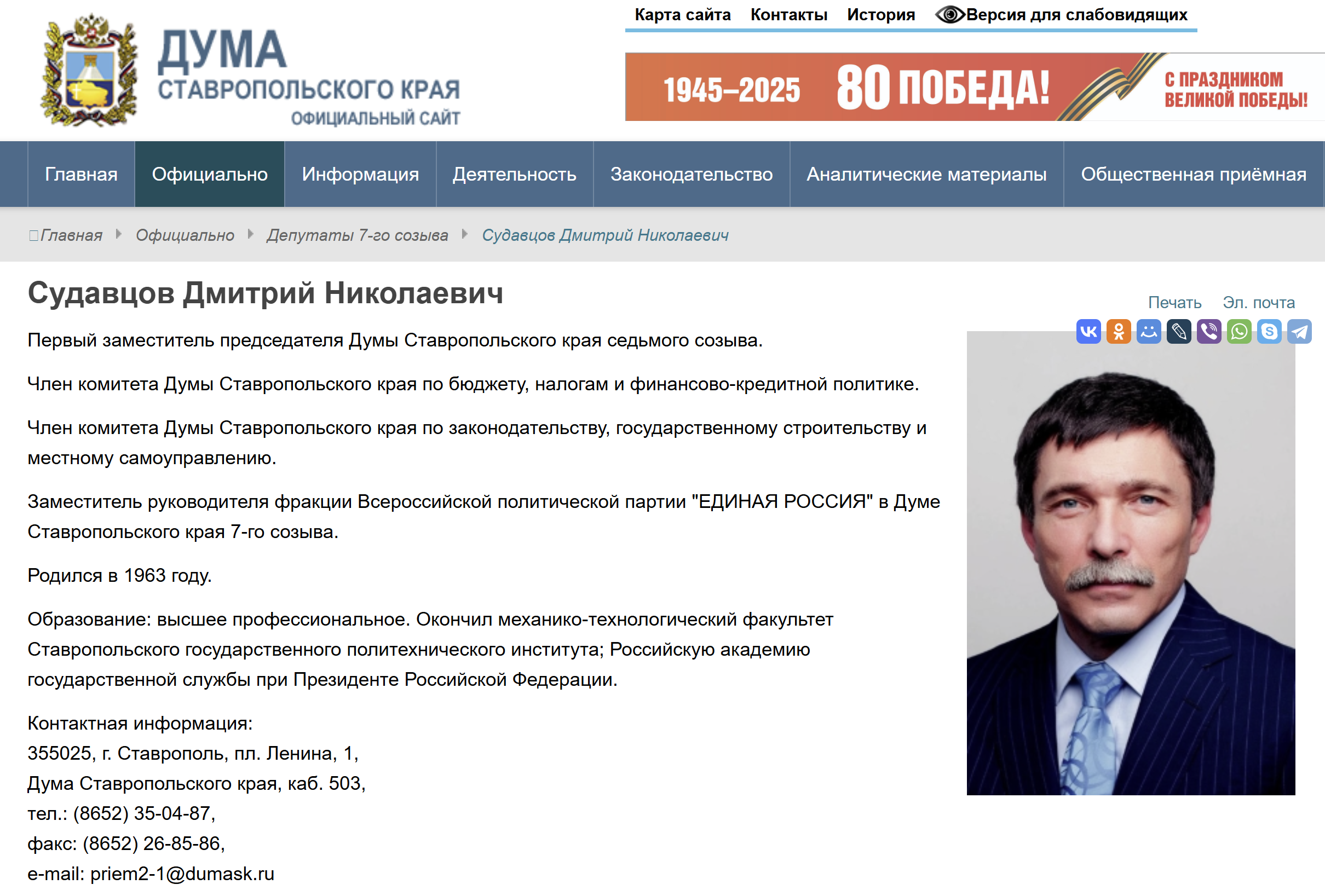
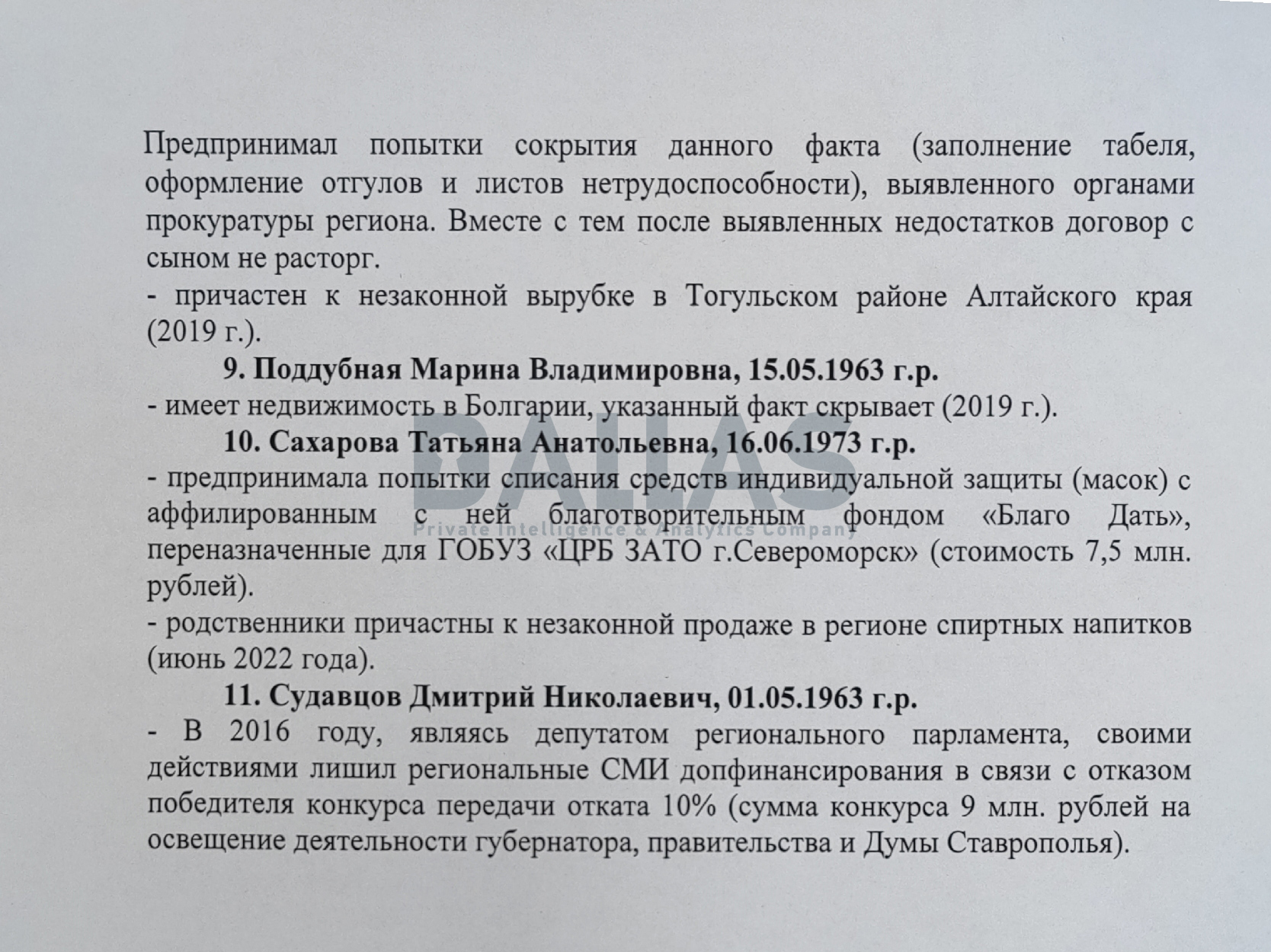
Party profile of Sudavtsov
In the Stavropol region, even the state’s own propaganda machine isn’t exempt from the local “service fee.” Dmitry Nikolayevich Sudavtsov (born May 1, 1963) serves as a legislative heavyweight in the region, holding the dual titles of First Deputy Chairman of the Stavropol Krai Duma and Deputy Head of the United Russia faction.
According to the Gnedov files, Sudavtsov’s commitment to “transparency” only extends as far as his own wallet. The dossier details a 2016 incident where Sudavtsov orchestrated the defunding of regional media outlets following a public tender worth 9 million rubles. The purpose of the funding was to cover the official activities of the Governor, the regional government, and the Duma. However, when the winner of the tender reportedly refused to pay a 10% kickback (900,000 rubles), Sudavtsov utilized his legislative power to cut the funding entirely.
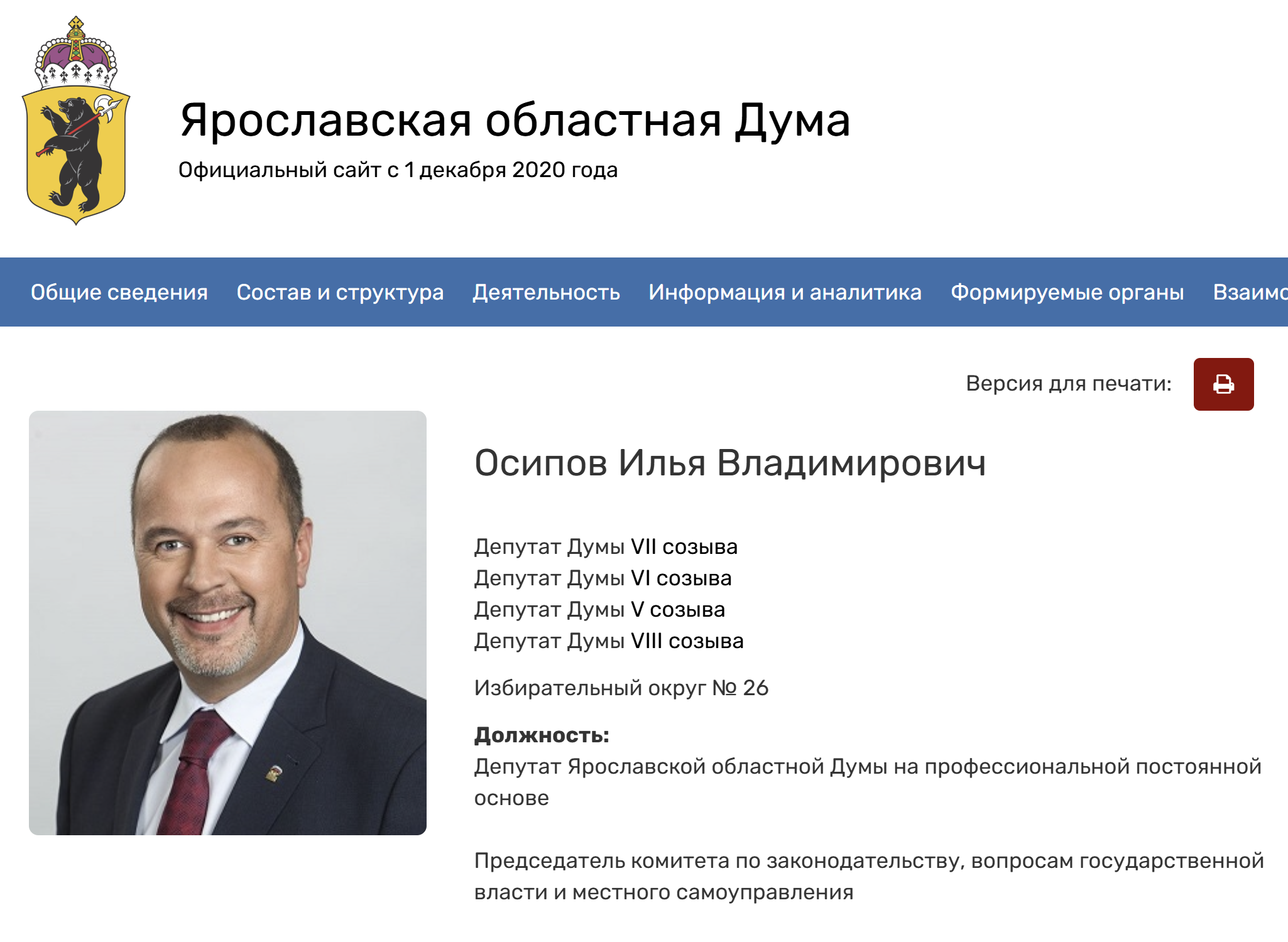
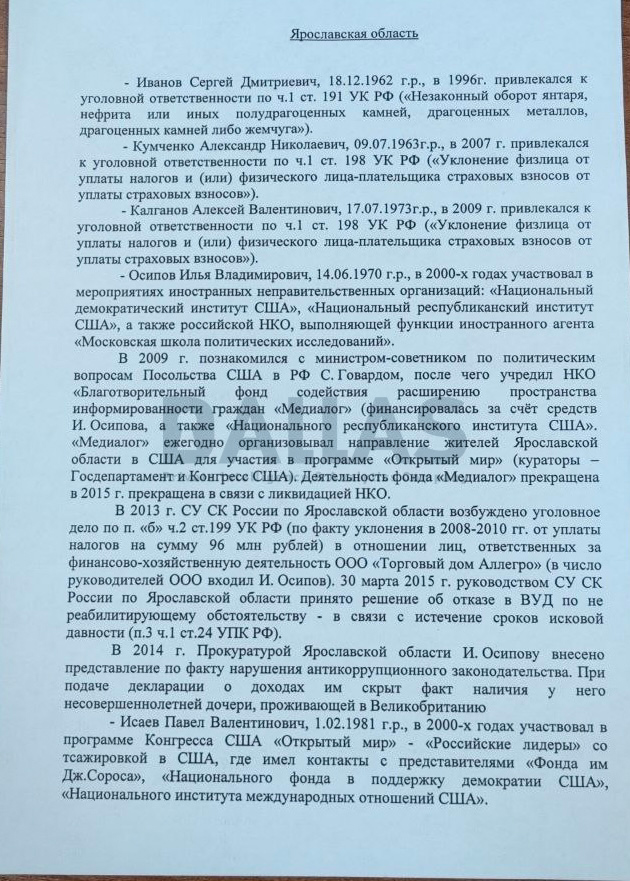
Party profile of Osipov
Ilya Vladimirovich Osipov (born June 14, 1970) is a testament to the power of a slow-moving clock. Now the Chairman of the Yaroslavl Regional Duma’s Committee on Legislation, Osipov’s career survived a 96-million-ruble criminal investigation not because he was innocent, but because he was able to outrun the statute of limitations.
Beyond financial irregularities, his records highlight significant political vulnerabilities. In 2014, the Yaroslavl Region Prosecutor’s Office issued a formal reprimand after Osipov concealed the existence of a minor daughter residing in the United Kingdom in his official income declaration. Furthermore, the internal assessment notes his extensive historical ties to Western political institutions during the 2000s, including his establishment of the “Medialog” foundation. This entity was reportedly funded by the International Republican Institute (USA) and collaborated with programs curated by the US State Department and Congress to send regional residents to the United States for study trips.
One could easily fill an encyclopedia documenting the extortion, embezzlement, and other criminal deeds that define the United Russia roster; we will leave the full forensic mapping to investigative journalists. However, one specific detail in the internal review process deserves mention. While the party’s vetting filters appear remarkably porous, they remain laser-focused on one particular “crime”: historical participation in US-sponsored study trips or international exchange programs.
Although this information doesn’t immediately disqualify an official, it is meticulously archived as a primary tool of internal control – a “leash” used to ensure that every deputy maintains a level of absolute, unquestionable loyalty.
Criminals in Good Standing
Following the confidential review, the party’s secretariat compiles a summarized roster of all vetted candidates. This document highlights critical red flags uncovered during the assessment and provides a final prognosis on whether each individual should be cleared for the ballot or purged from the ranks. However, these recommendations are frequently ignored in practice; quite often, the highest executive official in a region (usually referring to the regional Governor) – the Vyssheye Dolzhnostnoye Litso (VDL) – will personally insist on keeping a compromised candidate on the list to protect local patronage networks. Below is the internal candidates’ blueprint finalized ahead of the 2024 regional elections.
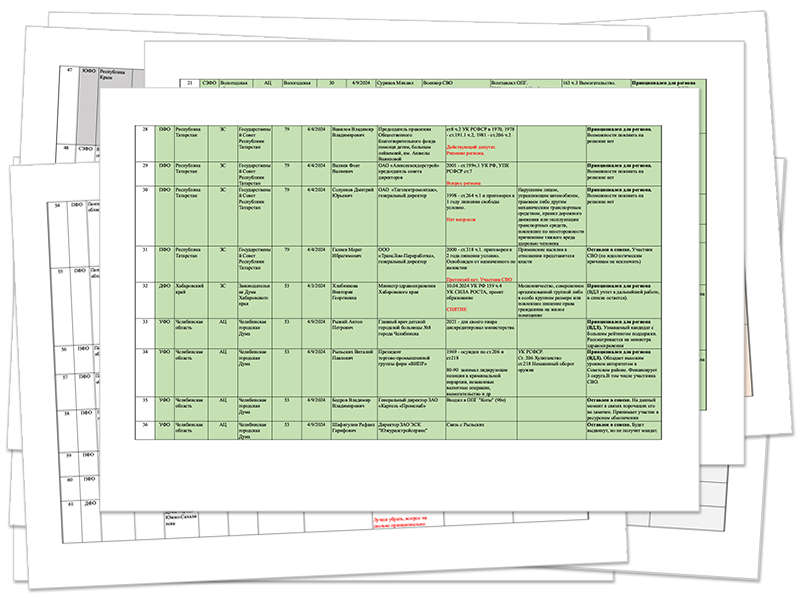
Vetting results for candidates in the 2024 regional elections
In addition to the aforementioned Aleksander Kombarov, here are a few examples of those who managed to secure approval and get elected despite the odds:
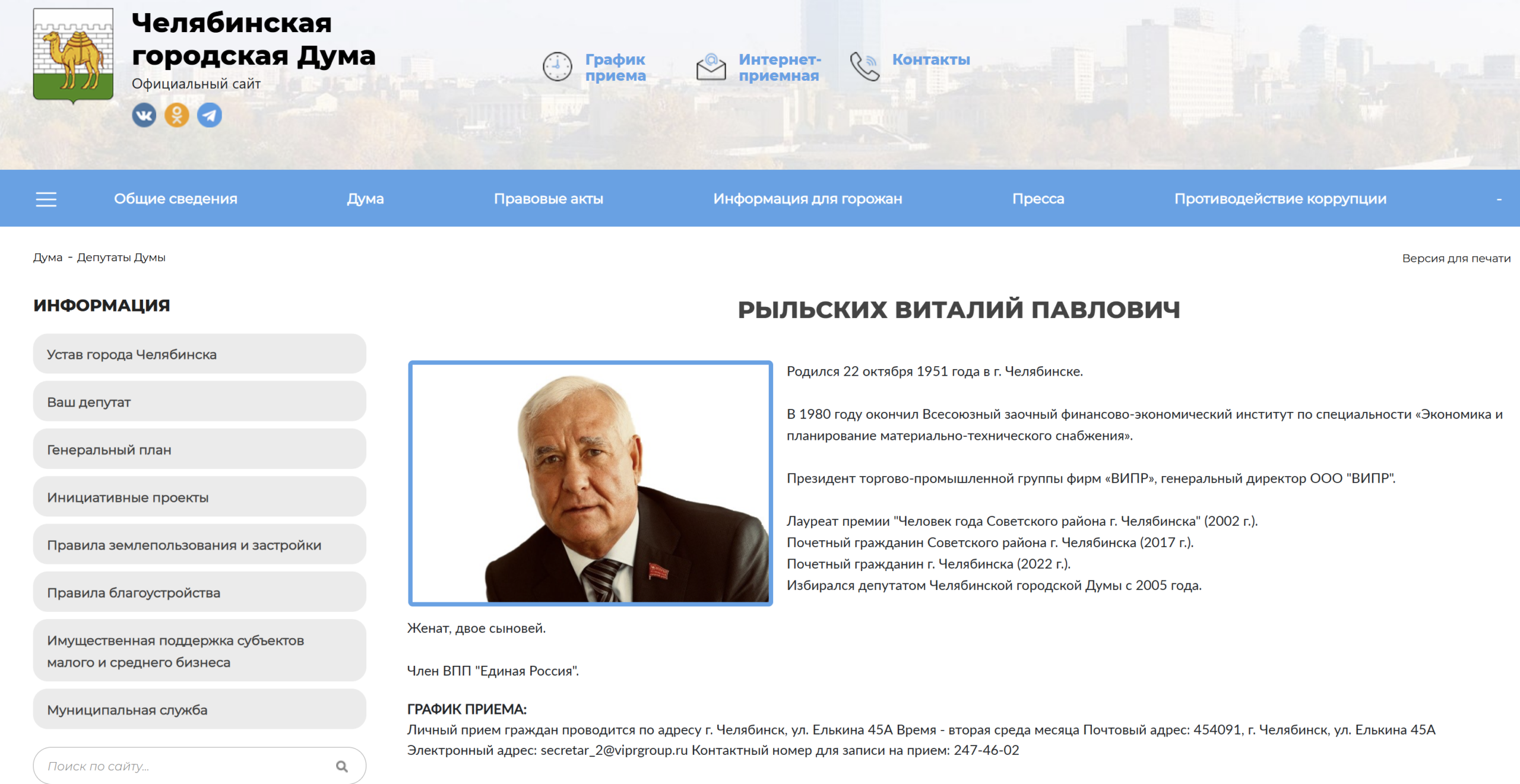
Vitaly Pavlovich Rylskikh (born October 22, 1951), President of the “VIPR” group and a 2024 candidate for the Chelyabinsk City Duma, has a documented criminal history that includes convictions for illegal arms trafficking and hooliganism, as well as leading positions in the criminal hierarchy during the 1980s and 90s involving extortion. Despite this extensive record, regional leadership deemed him a “critical” candidate due to his high level of local authority and his financial sponsorship of three districts, which includes funding an “SVO” participant.

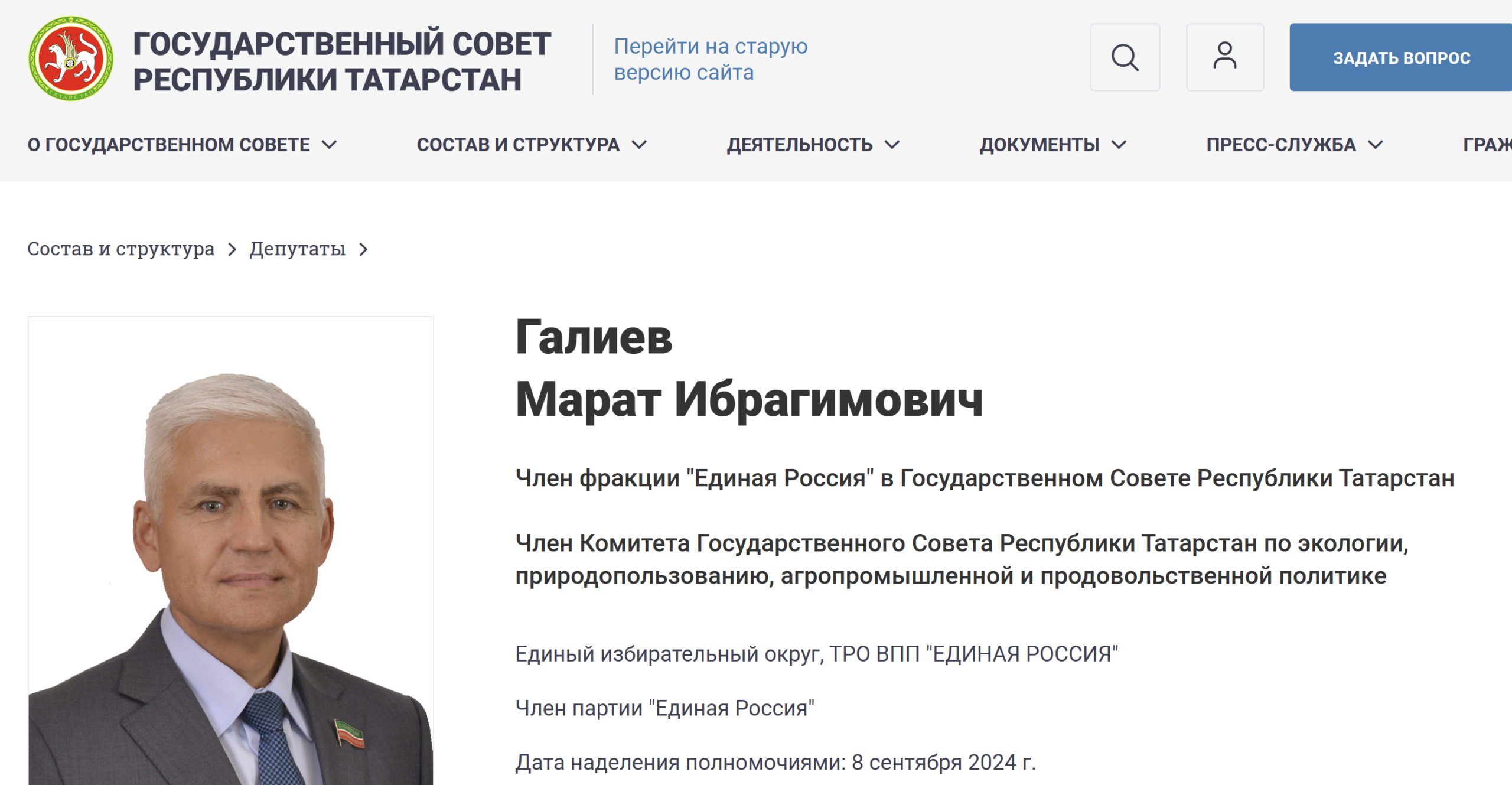
Marat Ibragimovich Galiev (born June 3, 1976), the General Director of “TransLom-Pererabotka” and a 2024 candidate for the State Council of the Republic of Tatarstan, has a past criminal conviction from the year 2000 for using violence against a representative of authority. Despite this record, which originally resulted in a two-year suspended sentence, internal vetting documents show that he was kept on the ballot due to his status as an “Special Military Operation” participant. The party explicitly noted that for “ideological reasons,” a veteran of the war could not be excluded from the candidate list.

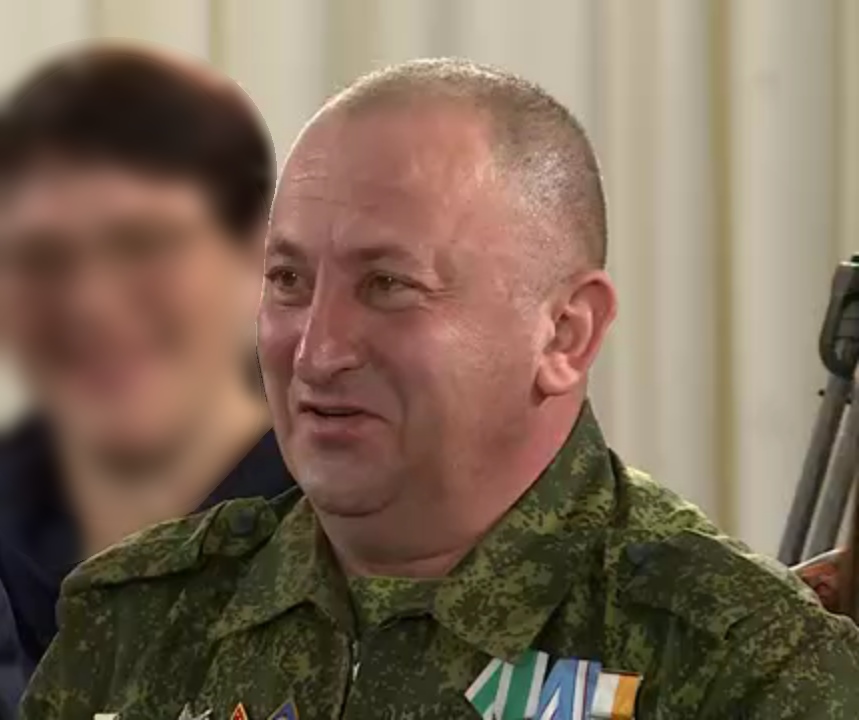
Armen Gamletovich Martoyan (born September 18, 1967), a Staff Advisor at “Chernomorneftegaz” and successful candidate for the Crimean State Council, carries a criminal record from 2000 involving murder, property destruction, and vehicle theft according to the Armenian Ministry of Internal Affairs. While these serious offenses legally rendered him ineligible to run for office, internal documents reveal that the Crimean leadership personally intervened to bypass these restrictions and “resolve the issue.” In the end, legal barriers were cleared to allow Martoyan to secure his seat.

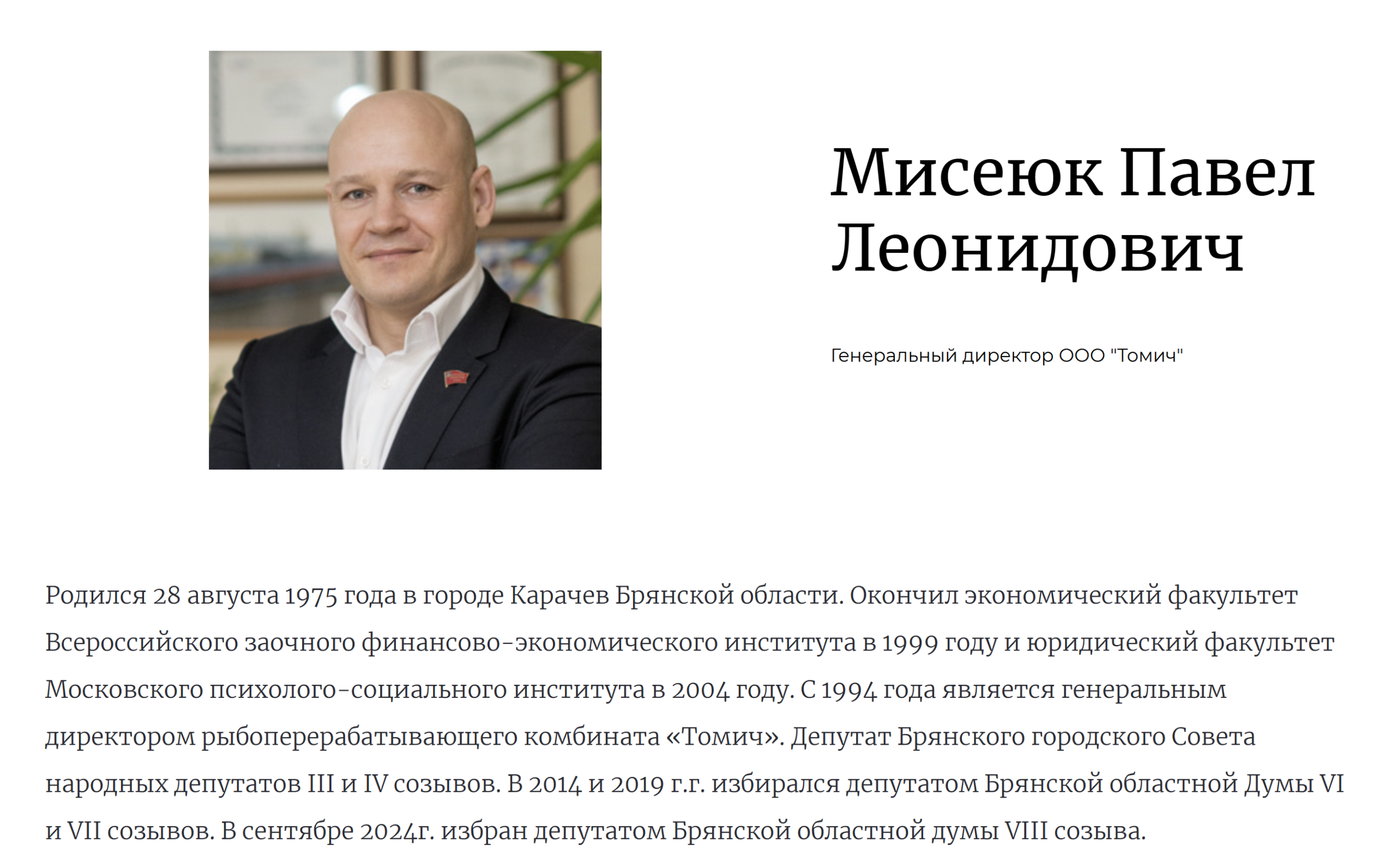
Pavel Leonidovich Miseyuk (born August 28, 1975) is a current deputy and General Director of the “Tomich” Fish Processing Plant, and was a 2024 candidate for the Bryansk Regional Duma. During internal vetting, he was flagged for having completed the “Open World” training program (U.S. Congress-funded leadership exchange) in 2005. Despite this flag, regional leadership retained him on the ballot, classifying him as a “critical” candidate whose placement could not be challenged.

Party Primaries: A Choreographed Illusion
In Russia, elections are not an exercise in public will but a carefully choreographed performance where voters are given a script they never wrote. This illusion begins long before the first ballot is cast. The United Russia candidate lists are populated through a strictly confidential quota system: 30% of seats are reserved for candidates handpicked by the Presidential Administration, 40% belong to the Governor’s quota, and the remaining 30% are allocated to the party itself. To illustrate how this power-sharing agreement functions in practice, let’s look at a blueprint from 2023.
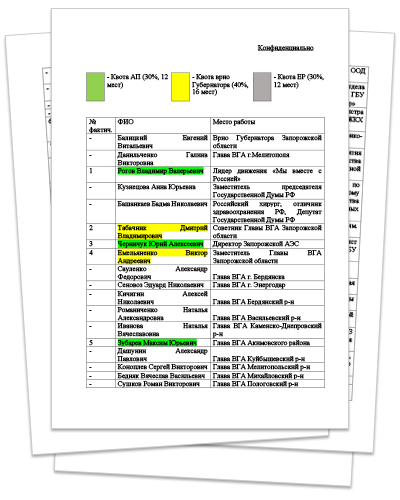
Confidential Zaporizhia region list
This document reveals the candidate list for the United Russia preliminary voting (primaries) for the illegal first convocation of the Legislative Assembly in the occupied Zaporizhzhia region. Based on the current political landscape, the majority of the high-level figures on this list have successfully transitioned from “candidates” to “permanent” officials, solidifying their grip on power. By analyzing these records, one can clearly see the underlying architecture of the occupation – specifically, which individuals serve as the foot soldiers for which competing centers of power.
These same pre-determined quotas and 2023 candidate lists were dictated by the central authorities for the occupied Kherson region, replicating the same architecture of control established in Zaporizhzhia.
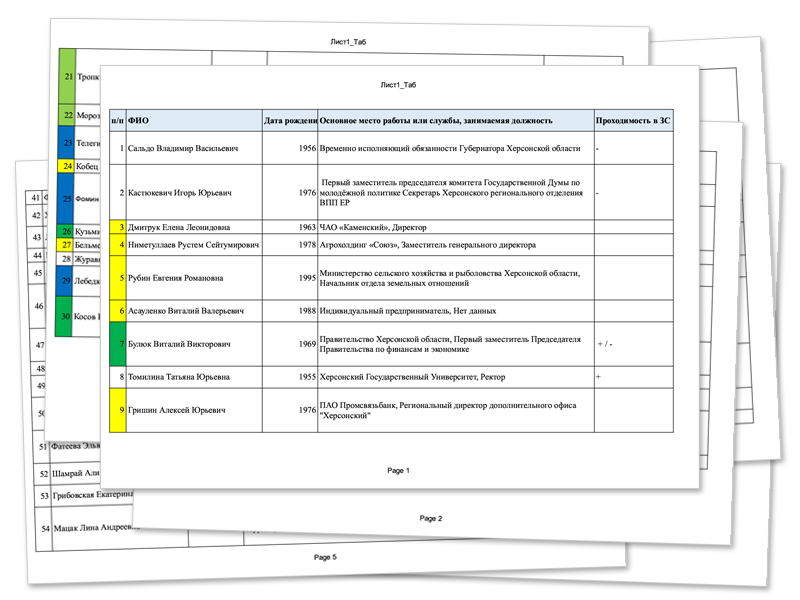
Confidential Kherson region list
The Russian public has long accepted a narrative of a besieged fortress, believing only Putin and his inner circle can prevent the country’s destruction. In this convenient fiction, the war in Ukraine serves as a massive curtain, drawn to ensure the public never looks too closely at the vetted criminals running the state. Make no mistake: the senior leadership is no better than the local deputies exposed here; the world would be appalled if their private dossiers were made public. While we do not expect this investigation to spark change within Russia, we hope those beyond the reach of Kremlin censorship – especially those still living under the shadow of the Soviet legacy – recognize that this “greatness” is hollow. Putin’s political army is a cynical, corrosive force, comprised of men so compromised they will follow any order without question.
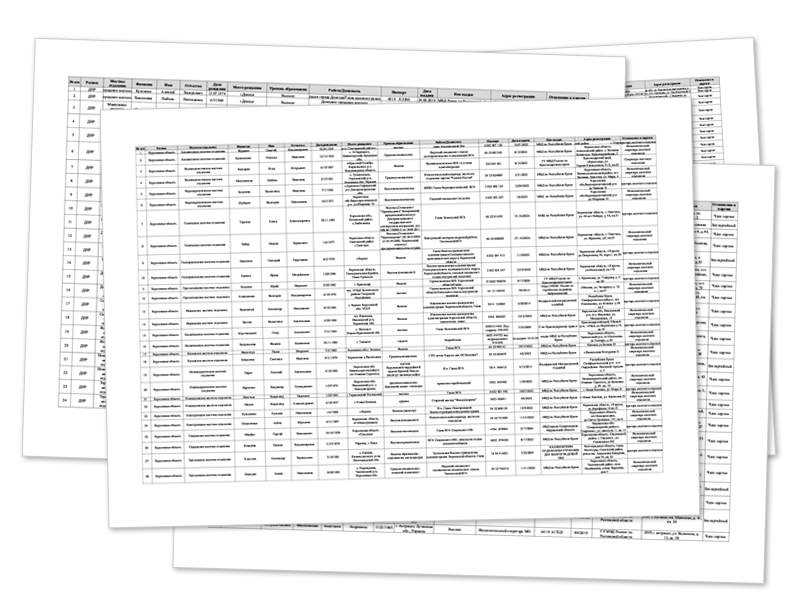
List of staff of the regional offices of “United Russia” in the so‑called “new regions”
P.S. A final note to the United Russia functionaries operating in the temporarily occupied Donbas, Zaporizhia, and Kherson regions: your anonymity has officially expired. While you may believe your service to Russia is shielded by the fog of war, we are ensuring these records reach Ukrainian and European authorities, as well as the international press. In the digital age, collaboration leaves a permanent geographic footprint, and we are making sure yours is visible to the world.