


On 31 July, Dallas Analytics published ananalysis of internal documents from Russia’s Khrunichev Centre concerning a programme to relocate and modernise production of Angara launch vehicles. The documents name likely suppliers of industrial equipment for the project. We contacted those companies with questions about their operations in Russia. Several responded, providing insight not only into their own positions but also into broader problems with the enforcement of sanctions against Russia.
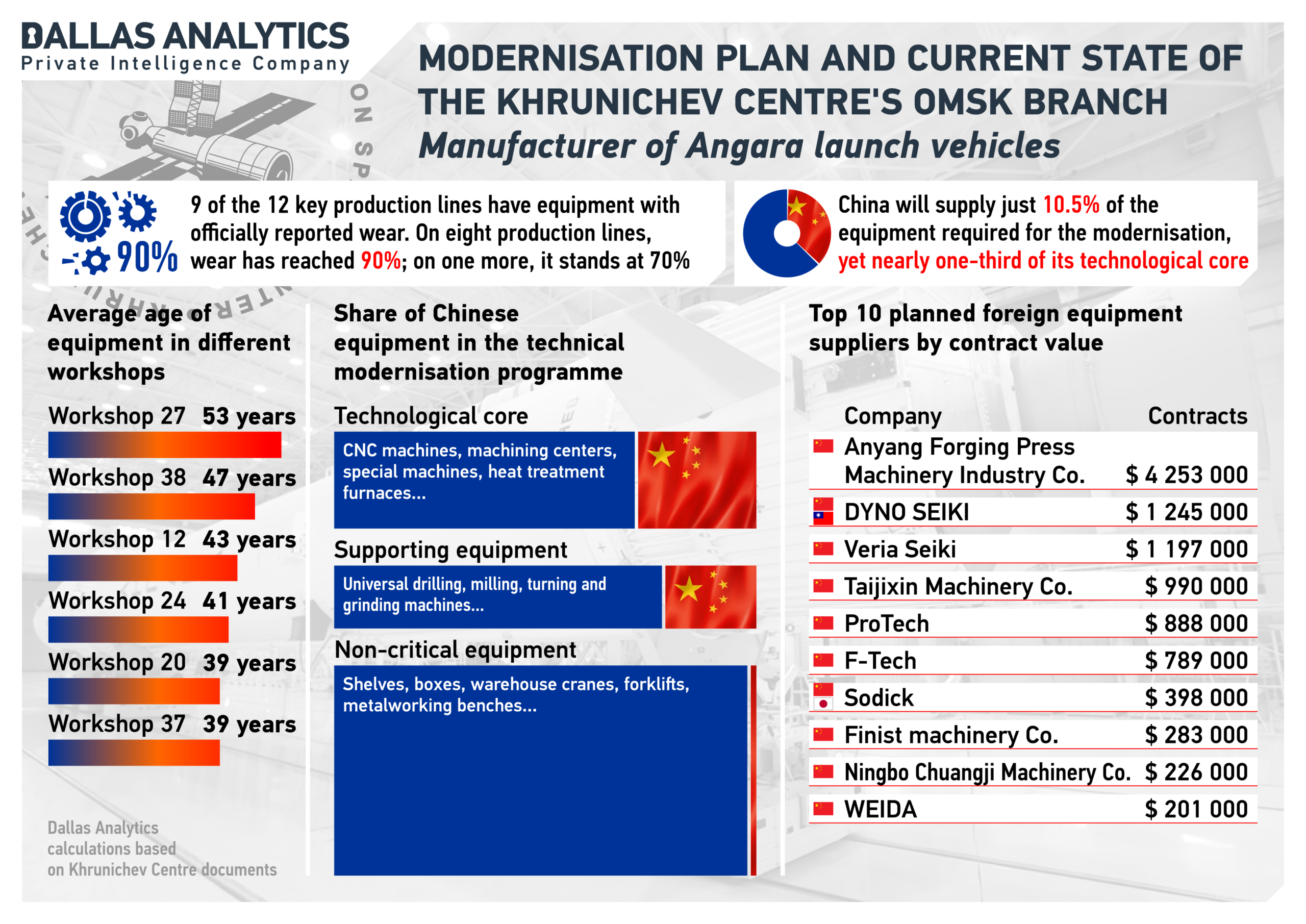
In analysing the Khrunichev Centre documents, we identified the ten largest foreign suppliers by the combined value of their planned contracts. The list also appears in our infographic on the current state and future plans of the Russian space giant.
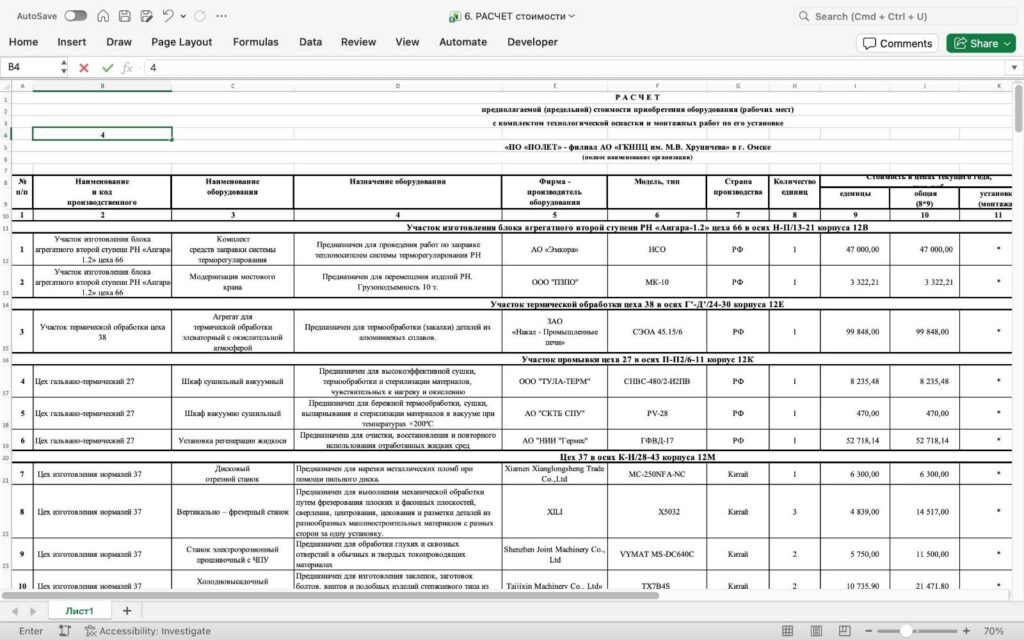
Cost Estimate
An original document from the Khrunichev Center archives listing all the equipment planned for purchase
All the equipment suppliers in the documents are described as Chinese. But that is only partly true. We carried out further research and contacted the likely manufacturers with questions about their trade with Russia, companies in Russia’s military-industrial complex and, specifically, the Khrunichev Centre.
Here are the key findings from the companies’ responses, or lack of them:
- A closer examination of individual companies reveals the inner workings of Russia’s “import substitution”. Russian companies, some of which describe themselves as machine-tool manufacturers, conceal the actual suppliers. The Khrunichev Centre documents provide direct evidence that this model is being used;
- Two companies not directly named in the documents acknowledged that they manufacture the machine models in question. They say they do not officially supply this equipment to Russia and have not granted other brands the rights to manufacture it. End-user tracking mechanisms either do not work or work poorly;
- A significant number of the Chinese companies did not respond. This makes it impossible to establish their role in the supply chains or obtain explanations for the facts we uncovered;
- Taken together, the findings suggest that sanctions mechanisms designed to control supplies of critical equipment to Russia need to be reconsidered, and that the governments of Taiwan, Japan and China need to become more involved. Private-sector initiatives are not enough, nor are Ukraine’s efforts alone. The European Union, meanwhile, has considerable leverage that it has yet to use fully: access to the EU market is critically important to Asian manufacturers.
Below, we examine each of these points in more detail.
Unsanctioned “Russian” Brands
The ProTech, F-tech and Finist brands rank fifth, sixth and eighth respectively among the largest planned suppliers of foreign machine tools. Brands, not manufacturers. They share a business model now widespread in Russia’s industrial-equipment market. These companies present themselves, at least in part, as Russian manufacturers but are in fact importers of foreign machine tools.
In the Khrunichev Centre’s internal documents, equipment from all three brands is classified as Chinese. We established who may actually manufacture it.
The Khrunichev Centre plans to order five different machine-tool models from ProTech.
| № | Наименование и код производственного подразделения | Наименование оборудования | Назначение оборудования | Фирма – производитель оборудования | Модель, тип | Страна производства | Количество | Стоимость единицы, руб. |
|---|---|---|---|---|---|---|---|---|
| 43 | Цех изготовления ДСЕ из неметаллов 20 | Токарный станок | Предназначен для токарной обработки наружных и внутренних поверхностей деталей типа тел вращения разнообразного осевого профиля | ProTech | LM-1840 | Китай | 1 | 3 830 000 |
| 108 | Цех кузнечно-прессовый | Вертикально-сверлильный | Предназначен для сверления отверстий в деталях типа штампов, пресс-форм, а также изделий имеющих пространственно-сложную конфигурацию | ProTech | VDM-5050 | КНР | 1 | 1 200 000 |
| 110 | Цех кузнечно-прессовый | Ленточнопильный станок | Предназначен для резки поковок и заготовок из черных и цветных металлов | ProTech | BS-460DSAL | КНР | 4 | 7 600 000 |
| 114 | Цех кузнечно-прессовый | Плоскошлифовальный станок | Предназначен для выполнения шлифовальных работ | ProTech | PFG-50150AHR | КНР | 2 | 15 917 720 |
| 115 | Цех кузнечно-прессовый | Токарный станок | Предназначен для механической обработки деталей типа тел вращения: фланцев, валов и т.п. На Оборудовании выполняются такие операций как точение, растачивание, отрезание, сверление | ProTech | LM-1840 | Китай | 1 | 3 830 000 |
We examined the origins of the most expensive of them, the PFG-50150AHR.
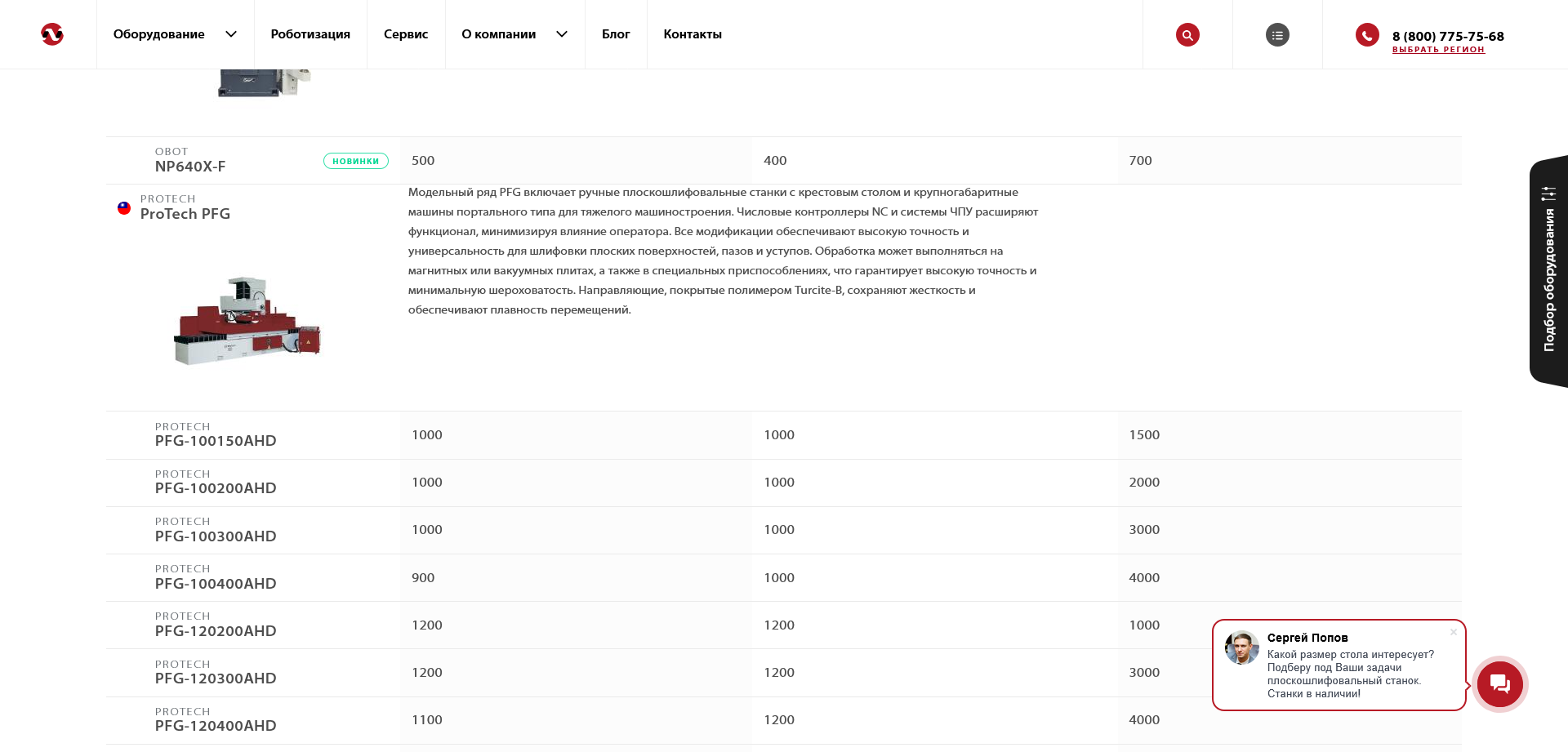
This machine belongs to the product range not of a Chinese manufacturer, as indicated in the Khrunichev documents, but of PERFECT, a Taiwanese company that has been operating since 1988.
On the Russian ProTekhnologii website, a machine that appears identical and carries the same model designation, but comes in a different colour scheme, is sold under the ProTech brand.

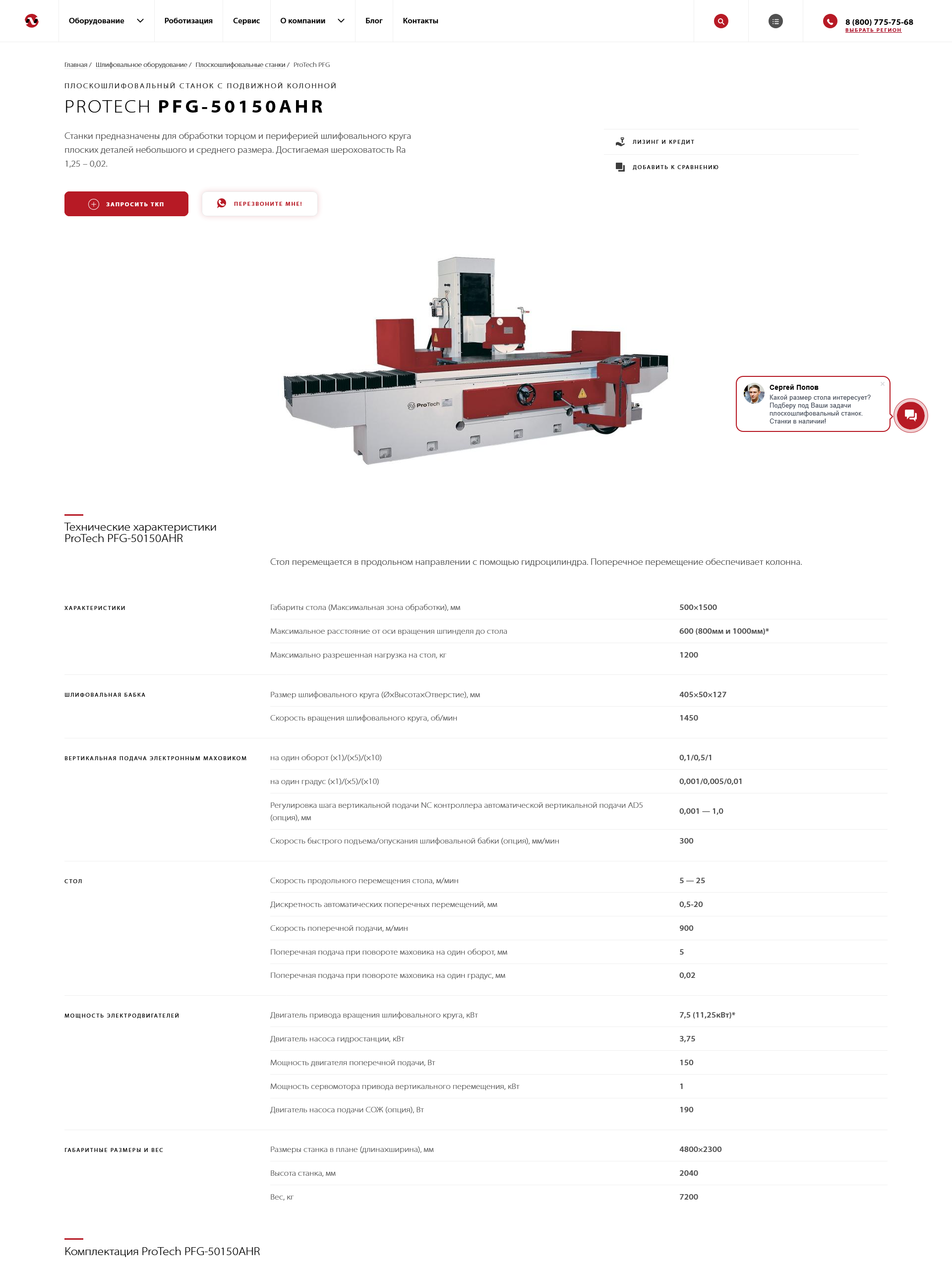
We contacted the Taiwanese company PERFECT for comment. It said it had worked with ProTech until March 2024. The company also said that during its official relationship with the Russian firm it had not sold ProTech the PFG-50150AHR model.
At the same time, PERFECT said it had “many distributors worldwide” that also sell machines of this model. The company added that it “cannot be 100% certain” whether other manufacturers also use the same model name for their products.
PERFECT did not, however, provide a direct answer to at least three of our questions:
- Does the company provide warranty servicing, repairs or replacement parts in Russia?
- What procedures does the company use to identify the end users of its products, and do such procedures exist?
- Does the company intend to launch an investigation based on the information uncovered in the Khrunichev Centre documents?
On its own website, Russia’s ProTech describes itself as a “company supplying industrial equipment throughout Russia”. It also says it is developing its own manufacturing capacity.
PFG-series machines, one of which appears in the Khrunichev Centre documents, are advertised on the website under the Taiwanese flag rather than that of mainland China.
The Russian brand is directly linked to two registered legal entities. JSC ProTekhnologii (Tax ID 7810890724) is listed in the disclosure section of the official website. The company is registered in St Petersburg. LLC ProTekhnologii (Tax ID 7810467149) is registered in the same city, but at a different address. It is based on the premises of the Izhorsky Plant, Russia’s oldest machine-building enterprise. The declared activities of both legal entities include the manufacture, repair and sale of various types of machine tools. The companies are also linked through changes in ownership: Viktor Polyakov, the current director of the JSC, previously owned a stake in the LLC.
We found neither JSC ProTekhnologii nor LLC ProTekhnologii on any of the sanctions lists we examined. This is despite direct evidence that machine tools were imported from Taiwan into Russia at least until 2024. And now, equipment imported by the company also appears in the Khrunichev Centre’s procurement plans. The Centre is one of the main contractors involved in Russia’s military space programme.
Another example from the same category is the F-tech brand.
| № | Наименование и код производственного подразделения | Наименование оборудования | Назначение оборудования | Фирма – производитель оборудования | Модель, тип | Страна производства | Количество | Стоимость единицы, руб. |
|---|---|---|---|---|---|---|---|---|
| 113 | Цех кузнечно-прессовый | Обрабатывающий центр с ЧПУ | Предназначен для механической обработки деталей типа штампов, пресс-форм, а также изделий имеющих сложную конфигурацию | F-Tech | FVM 650 | КНР | 2 | 30 935 500 |
The story is broadly similar. The FVM-650 model listed in the Khrunichev Centre documents is offered for sale on the brand’s official website.
F-tech’s website also claims that the company works with 12 Chinese machine-tool manufacturers. Yet it directly identifies only one legal entity in Shanghai: F-tech Industrias Company, which “facilitates interaction with Chinese manufacturers and the shipment of equipment to a warehouse in China”.
We were unable to find information about this Chinese company. Russia’s database of declarations of conformity, however, contains information about another company, F-TECH CNC LATHE, and gives its address as: “Industrial zone, Yujing Road, Chizhou, Anhui Province, 24000 P.R. CHINA”.
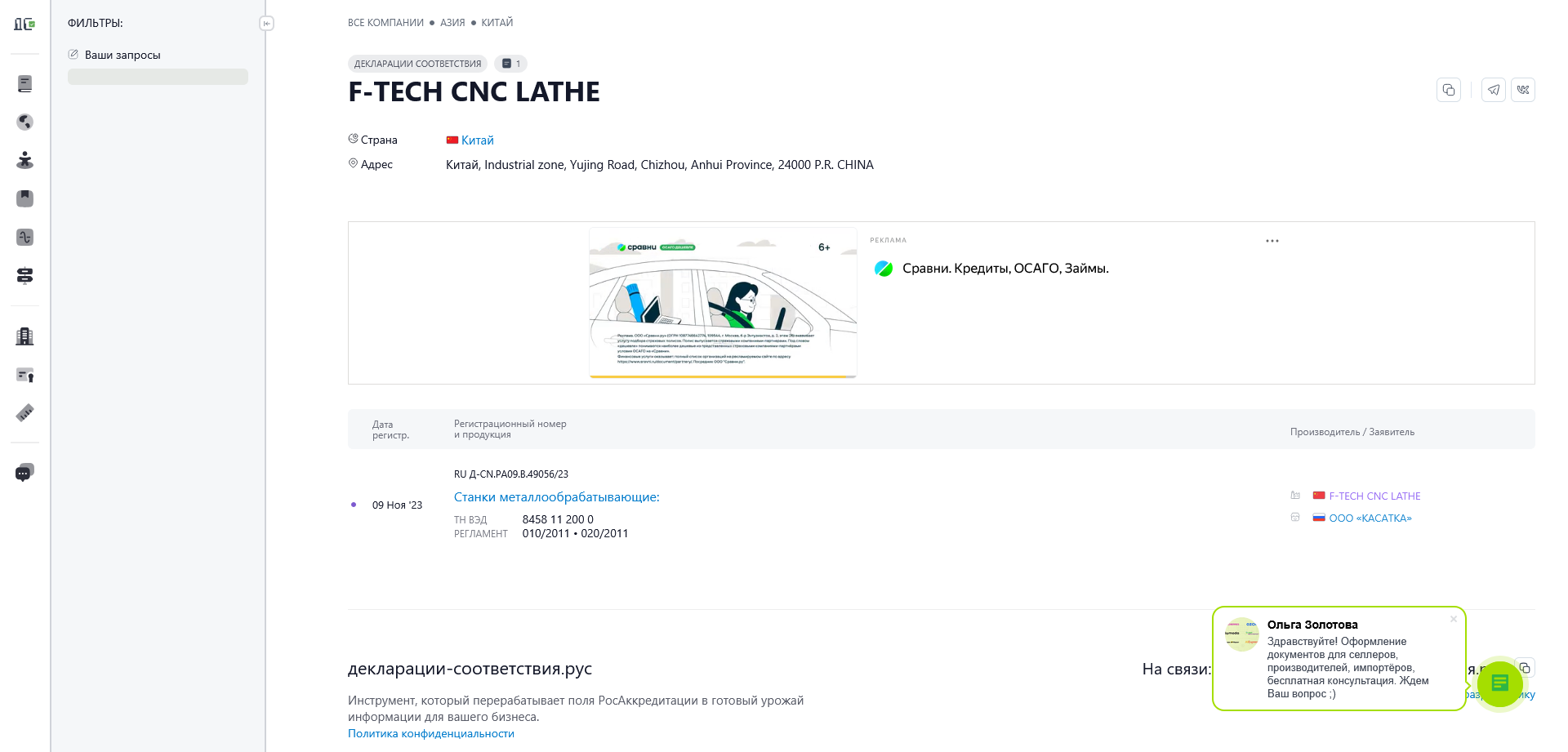
The Chinese machine-tool manufacturer WMT is located at the same area. We were unable to establish with certainty whether this company manufactures F-tech machines. However, the WMT VMC600L and the F-Tech FVM-650 listed in the Khrunichev Centre documents share many of the same specifications. We contacted WMT for comment but have not received a response.
We also established a direct link between the F-tech brand and two Russian legal entities based in Chelyabinsk: TD VtorTsvetMet LLC (Tax ID 7447142689) and ChVCM-RESURS LLC (Tax ID 7448219856). We found neither VtorTsvetMet nor the affiliated ChVCM-RESURS among the legal entities directly designated under the main US, EU or UK sanctions regimes.
A Russian Umbrella Brand
| № | Наименование и код производственного подразделения | Наименование оборудования | Назначение оборудования | Фирма – производитель оборудования | Модель, тип | Страна производства | Количество | Стоимость единицы, руб. |
|---|---|---|---|---|---|---|---|---|
| 14 | Цех изготовления нормалей 37 | Автомат продольного точения | Предназначен для механической обработки детали типа ниппели с высокой точностью и качеством получаемой поверхности при большой производительности с использованием калиброванного прутка. Одновременная обработка 2-х деталей | Finist machinery Co., Ltd | FF-38BSY | Китай | 1 | 22 200 000 |
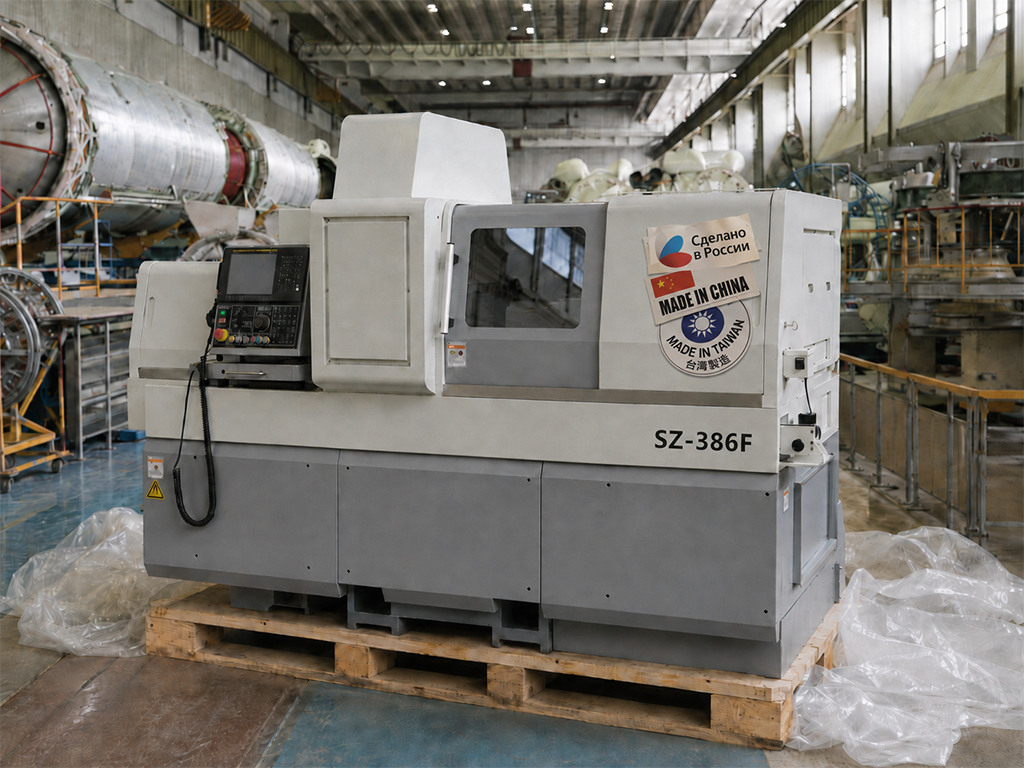
The Finist brand appears only once in the Khrunichev Centre documents, but the model concerned is among the most expensive. There is one important difference from the previous cases. The manufacturer is identified not merely by the brand name but by the full company name: Finist Machinery Co., Ltd. According to Russian declarations of conformity, this Chinese company itself manufactures the FF-38BSY model.
But that is not true.
In Russia, the Finist brand is marketed by the Finval group of companies, which, according to its website, “specialises in the development and manufacture of metalworking equipment and tools”. The website also states that “the FINIST industrial group brings together manufacturing companies and research laboratories in Russia, Brazil, India, Turkey and China”.
As in the other cases, Finval does not disclose the addresses or owners of these companies. Its website does, however, name its partners. They include the Chinese machine-tool manufacturer SOWIN, or Shenzhen SOWIN Precision Machine Tool.
A comparison of the models shows that the FF-38BSY listed in the Khrunichev Centre documents is in fact SOWIN’s SZ-386F machine. The two machines are visually identical and have the same technical specifications. Moreover, Finval’s entire FF series mirrors SOWIN’s range of equivalent machines. This is one case in which the process literally amounts to replacing the nameplate on the machine before selling it in Russia.
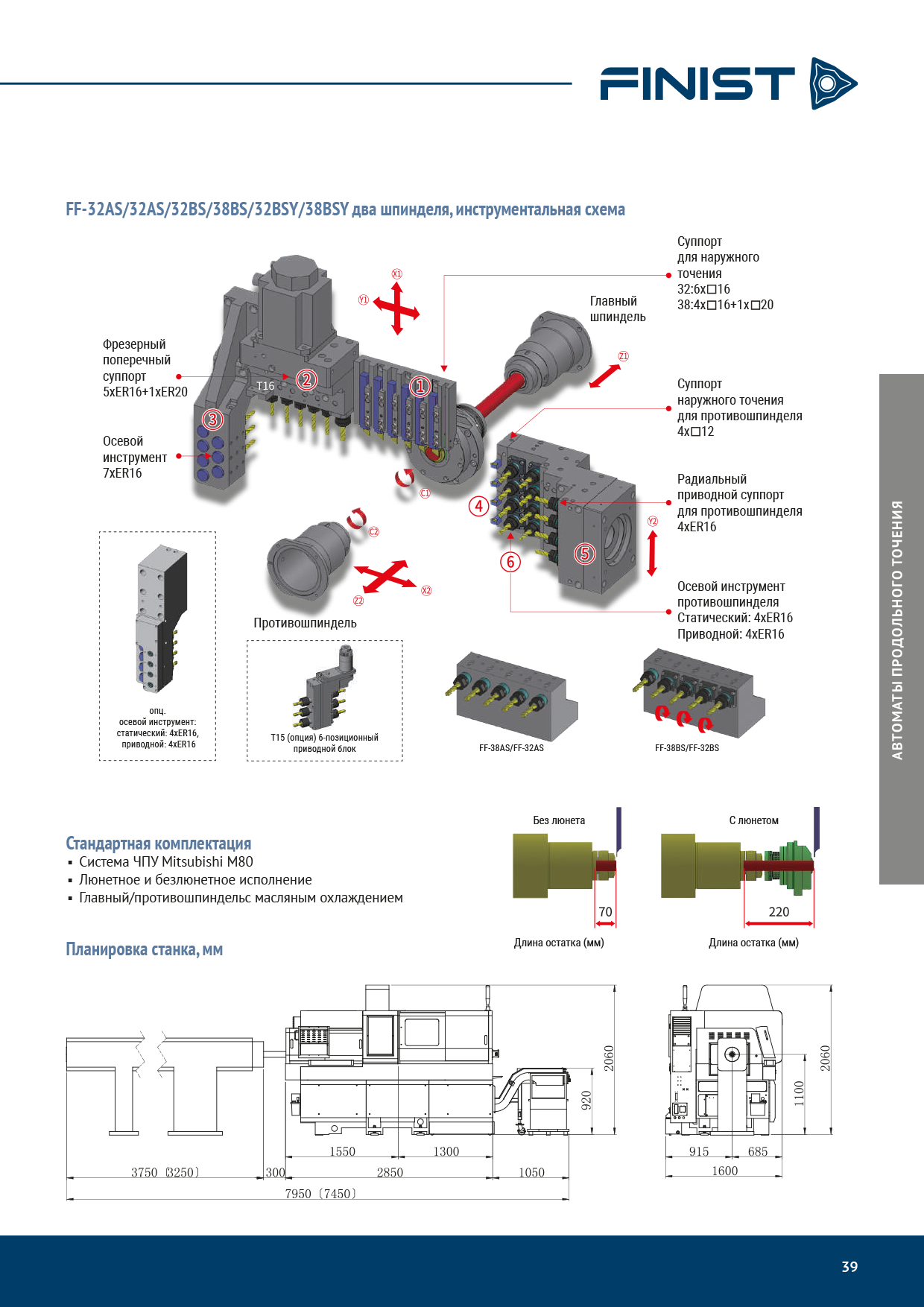
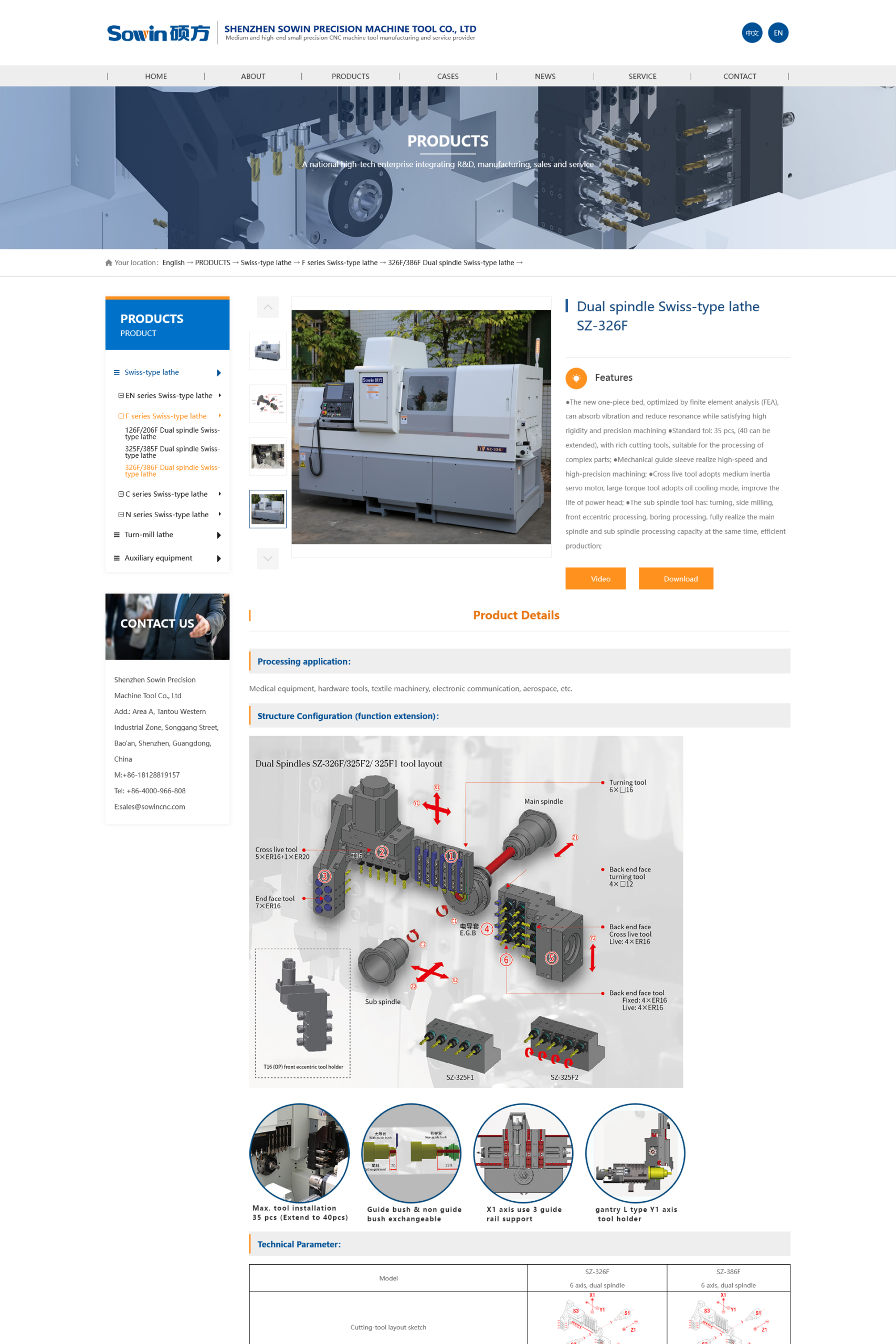
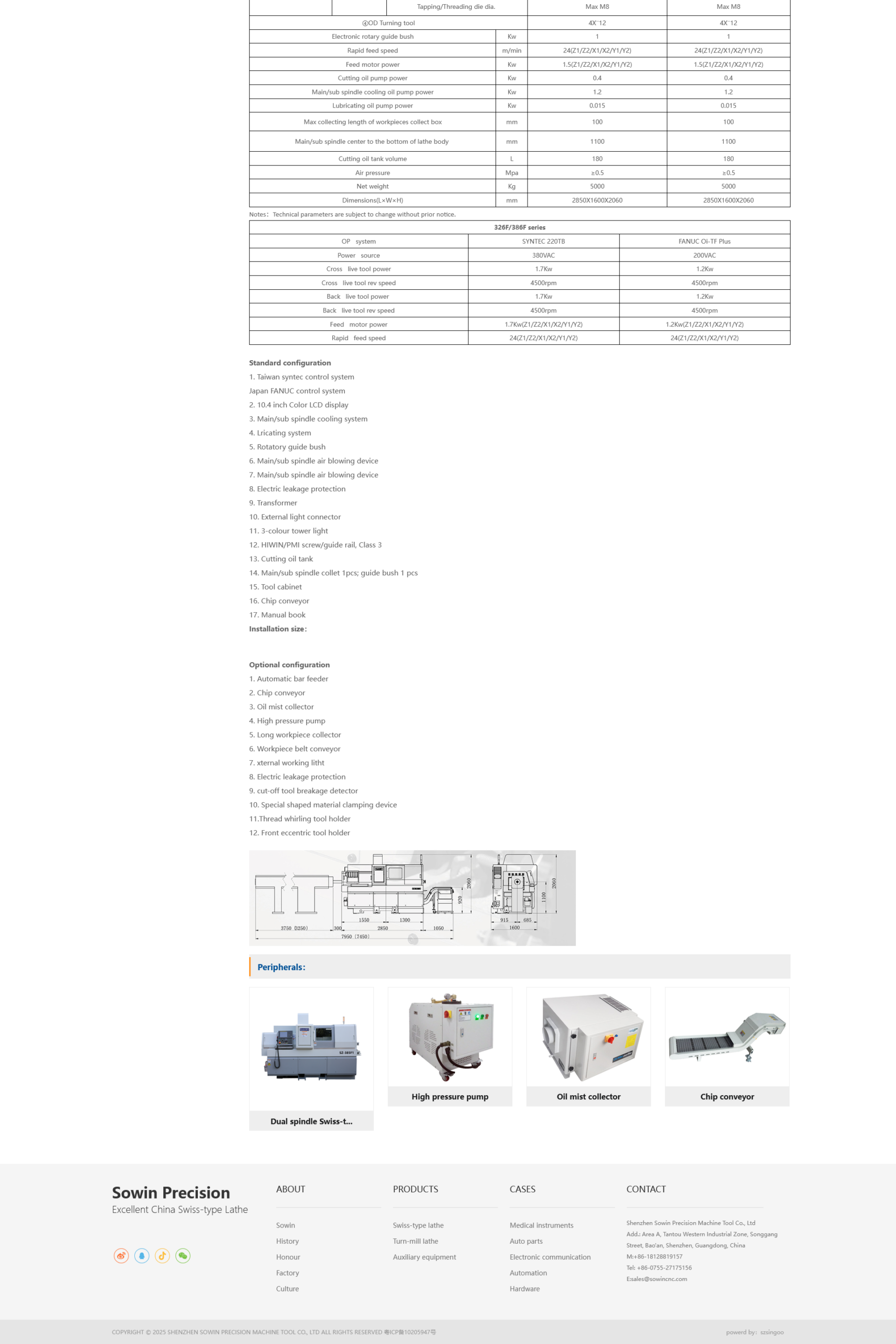
We contacted SOWIN for comment, but the company did not respond. This reaction proved fairly typical among the Chinese manufacturers we contacted. More on that below.
Importantly, two of the companies mentioned above are under sanctions in different jurisdictions. SOWIN is sanctioned by Ukraine and, since February 2026, by the United Kingdom. The UK designation describes it as a “supplier of dual-use goods to Russia and its enablers”. The company is not, however, under EU sanctions. Finval, meanwhile, is sanctioned by OFAC. Finist Machinery Co., Ltd., which is identified in the documents as the potential supplier the Khrunichev Centre, is not subject to sanctions.
Silence from China, and Beyond
A lack of clear answers from Chinese companies about specific instances of co-operation with Russia appears to be more the rule than the exception. Anyang Forging Press, the largest of the Khrunichev Centre’s ten key planned foreign suppliers by equipment value, did not respond to our request.
The model range attributed in the documents to an unknown supplier, Taijixin Machinery Co., Ltd., corresponds to products made by the actual manufacturer, Guangdong Taishin Machinery Co., Ltd. The company told us that it does not trade with Russia but declined to provide further details.
WEIDA denied trading specifically with the Khrunichev Centre but did not answer our questions about trade with Russia more broadly. Our subsequent follow-up questions also went unanswered.
Ningbo Chuangji Machinery Co., Ltd., the manufacturer of LOG injection-moulding machines, did not respond to our request.
The large Taiwanese machine-tool manufacturer Goodway Machine Tool Group likewise did not respond. In analysing the Khrunichev Centre documents, we established that the actual manufacturer of DYNO SEIKI products, which rank second by equipment value, may be one of Goodway’s divisions, most likely AWEA. We asked the company to comment on this finding but received no response.
The Japanese company Sodick responded differently, providing detailed answers to each of our questions. It said it had not traded with Russia since 2022, had not authorised the use of its brand and checks the end users of its products. This monitoring does not, however, extend to equipment sold in Russia before 2022. If the company identifies a violation, it reports the matter to Japan’s Ministry of Economy, Trade and Industry (METI).
We asked one further question: would Sodick report to METI the information uncovered through our analysis of the Khrunichev Centre documents, as well as the numerous advertisements for Sodick machine tools on Russian websites? The company did not respond this time.
The reference to the ministry neatly illustrates the central conclusion of this research. Governments hold the real levers of influence over manufacturers. Whether a sanctions regime works or is riddled with holes depends above all on how willing governments are to use those levers when they are needed.